Get Full Government Meeting Transcripts, Videos, & Alerts Forever!
Get email alerts on the Tax Exemptions topic
No spam. Unsubscribe anytime.
House Finance hears technical tax bill updating reporting, data-center and medical-equipment rules
Summary
The House Finance Committee heard testimony on Thursday, March 13, on SB 54 31, a technical corrections bill that updates tax‑preference reporting, clarifies employment conditions for a rural data‑center sales and use tax exemption, codifies billing rules for medical equipment, and changes the schedule for the statewide tax‑exemption study.
The House Finance Committee heard testimony on Thursday, March 13, on SB 54 31, a technical corrections bill that makes multiple, mostly administrative changes to tax law, including updating tax‑preference reporting, clarifying employment conditions for a rural data‑center sales and use tax exemption, codifying billing rules for medical equipment sales, and moving the due date for the statewide tax‑exemption study.
Christina King, staff to the committee, summarized the bill’s four main components and walked members through current law and the proposed changes. King said the bill replaces outdated references to a Department of Revenue survey with a requirement that taxpayers file an annual tax performance report to the Department of Revenue by May 31 to claim a tax preference. King told the committee the change gives the Joint Legislative Audit and Review Committee (JLARC) access to the correct report when it conducts reviews of tax preferences.
Kate Armstrong of the Department of Revenue told the committee she supports the bill and described the changes as “fiscally and policy neutral” and intended to aid taxpayer compliance and department administration. Armstrong said the bill clarifies conflicting language that had prompted taxpayers to seek guidance.
On the data‑center exemption, staff described the existing sales and use tax exemption for eligible data centers: the exemption is available to an owner and up to 10 tenants for server equipment and power infrastructure when a facility has combined dedicated server space of at least 100,000 square feet and is located in a rural county. Under current law, within six years of issuance of an exemption certificate, the applicant must show that net employment increased by at least a specified floor—staff described the requirement as the lesser of 35 family‑wage positions and 3 family‑wage positions per each 20,000 square feet of newly dedicated server space. The bill clarifies how positions that are vacant or do not yet exist at the time the Department of Revenue issues an exemption certificate are treated for the employment requirement.
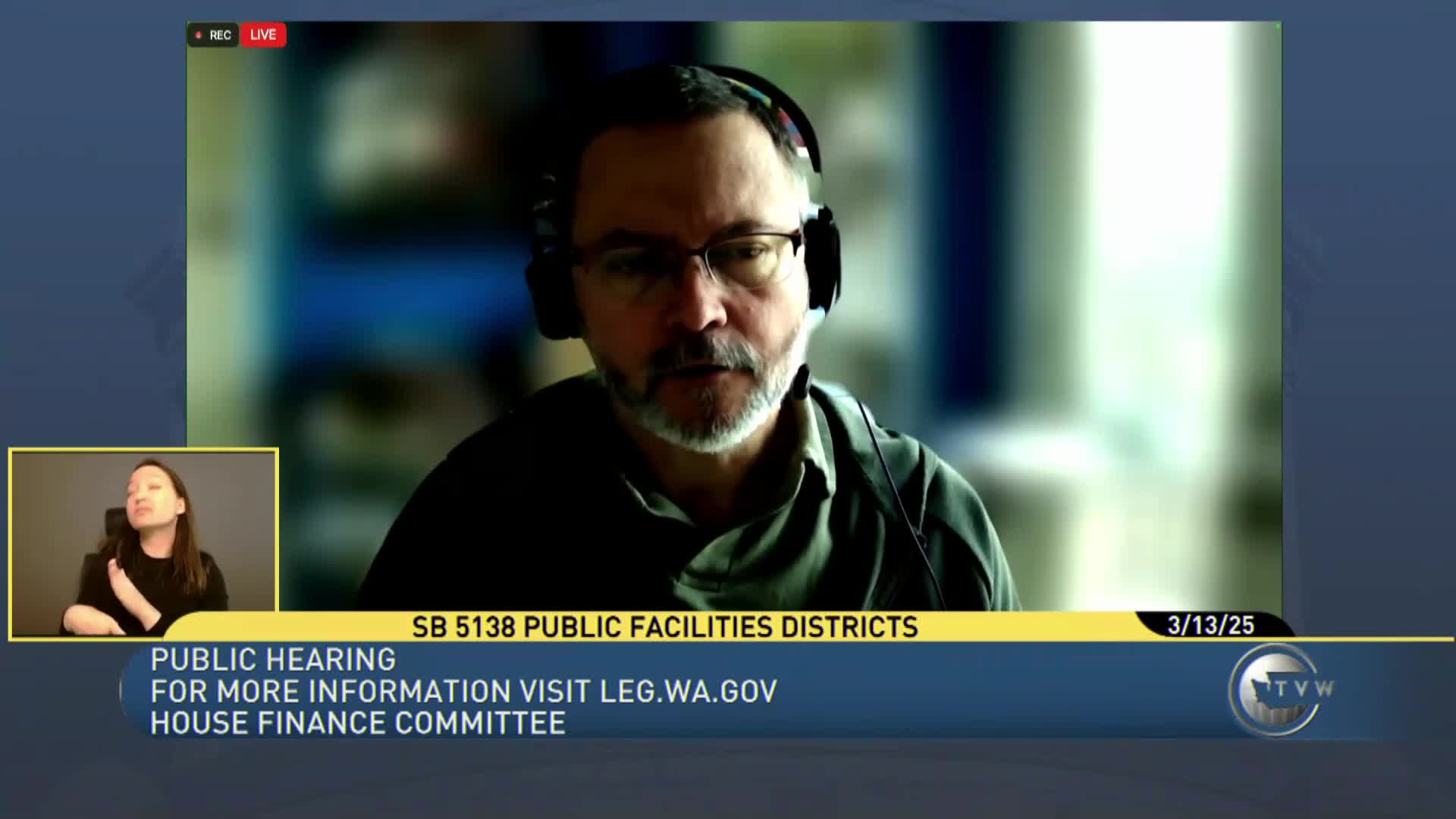
A remote testifier, Richard Schilling, representing himself and identifying as a tech manager and recent layoff victim, urged the committee to consider stronger accountability for data‑center tax preferences. Schilling said employers can lay off staff “at will” and still retain tax exemptions tied to hiring, and asked the Legislature to require more frequent reviews (he suggested about every six months) and explicit performance metrics for firms receiving exemptions so the tax incentives better align with sustained local hiring.
The bill also codifies a process for how medical‑equipment vendors may collect and remit retail sales and use tax when health insurance plans pay for durable medical equipment and mobility‑enhancing equipment. Staff said the statutory text adds a definition of “health insurance provider” to include commercial insurers and the Medicaid and Medicare programs, and moves an existing vending‑machine exemption provision for organizational clarity.
Finally, staff noted the bill changes the due date for the next tax‑exemption study to January 2029 and every four years thereafter to align the study with the start of the biennial budget process; the 2024 tax‑exemption study identified 786 tax preferences. Staff said the bill is exempted from a tax preference performance statement, JLARC review, and the bill’s provisions will not trigger automatic 10‑year expiration. The Department of Revenue provided a fiscal note saying the bill does not affect state revenues but anticipates a one‑time implementation cost of about $23,000 in fiscal 2026.
There were no committee votes recorded during the hearing; staff and advocates answered members’ questions and the committee closed the public hearing on SB 54 31.
The department and a member of the public offered the primary testimony; no formal amendments or actions were taken at the hearing.