Get Full Government Meeting Transcripts, Videos, & Alerts Forever!
Get email alerts on the School Budget topic
No spam. Unsubscribe anytime.
Middletown budget update shows multi-line deficits; district plans special-education academy requiring up to $1.5M in renovations
Summary
Finance director reported several projected deficits in the 2024–25 budget and outlined a proposal to create a Middletown Legacy Academy at Kegwin School that would require up to $1.5 million in renovations; board approved minutes and adjourned.
The Middletown School District’s budget committee was told Tuesday that the district is projecting deficits across several salary and contract lines in the 2024–25 budget while pursuing a proposal to open an in-district special-education program that would require building renovations.
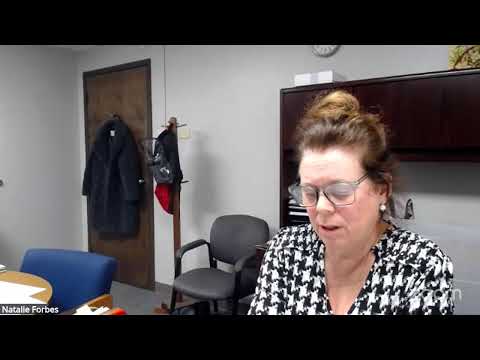
Natalie Forbes, the district’s director of finance, told the committee that “the total line item transfers from December through February are $8,228.43,” and summarized a set of projected shortfalls including a $240,000 deficit in classified salaries, a $59,986 deficit in employee benefits, a $50,000 shortfall in purchased services tied to substitutes and paraeducators (line 53200), a $320,000 deficit for special-education contracted services (line 53400), a $163,000 projection for out-of-district special-education transportation (line 55109), and an $886,500 projected deficit for tuition to private providers (line 55630) for students placed outside the district.
“The attrition number is 2.5%,” Forbes said when board members asked how the district is estimating vacant-time savings; she added that the district therefore projects 97.5% of positions will be filled over the school year. Forbes cautioned that many amounts are projections tied to timing of invoices, enrollment changes and the timing of grants.
Forbes briefed the committee on a draft proposal with the Center for Children with Special Needs to create a Middletown Legacy Academy for grades 7–12 at Kegwin School. The program would “provide supportive, inclusive, and individuated educational environment for students ... who face mental health challenges, learning differences, school refusal and other behavioral difficulties,” she said. The district estimates renovations to Kegwin could cost up to $1,500,000 and said renovation funding is “paramount” to opening the program in the 2025–26 school year.
Forbes said bringing such students back into district classrooms could reduce outplacements and might allow the district to offer services to neighboring districts for a fee. The committee heard that Mr. Gaylord is securing quotes to refine the renovation estimate.
Committee members asked for line-by-line clarifications. Forbes explained why FICA and Medicare projections vary—some grants prohibit payment of benefits, grants sometimes include benefit lines that are recorded centrally, and certified staff are subject only to Medicare, while noncertified staff pay both FICA and Medicare. On gasoline and transportation expenses, Forbes said invoice timing and usage can make deficits grow month to month.
The committee also discussed federal and state grant risk. Forbes listed the district’s major federal, state-administered grants: entitlement grants (Title I–IV) totaling about $1,300,000 this year, five 21st Century after-school grants totaling about $443,000, and the district’s IDEA (special education) allocation of about $1,390,000. She said the district is monitoring reports at the state and national level and working with state agencies and nonprofits for updates. Regarding the governor’s proposed two-year budget, Forbes said it includes a competitive incentive grant—proposed for FY 2026–27—of $9.9 million statewide to encourage creation of in-district special-education programs to reduce outplacements, and that any increase in ECS (Education Cost Sharing) dollars would be restricted for direct classroom supports and require a written plan for approval.
The committee clarified that several deficits reflect unavoidable costs for contracted services when the district cannot fill licensed positions, and that the tuition-to-private-sources line can vary when students with expensive needs enter the district. Forbes emphasized that some items are timing or enrollment driven and that final figures will be known at fiscal year end.
Votes at a glance: the committee approved minutes from its Dec. 9 meeting (motion made by Susan Owens; second not specified in the transcript) and later moved to adjourn (mover and seconder not specified in the transcript); both motions carried by voice vote.
Next steps identified by the committee include completion of superintendent budget development (the superintendent will collate school and department requests and present a consolidated proposal), further review of renovation cost estimates for Kegwin, continued monitoring of federal grant developments, and follow-up meetings with special education and pre-K budgets.