Get Full Government Meeting Transcripts, Videos, & Alerts Forever!
Get email alerts on the Transportation Naming topic
No spam. Unsubscribe anytime.
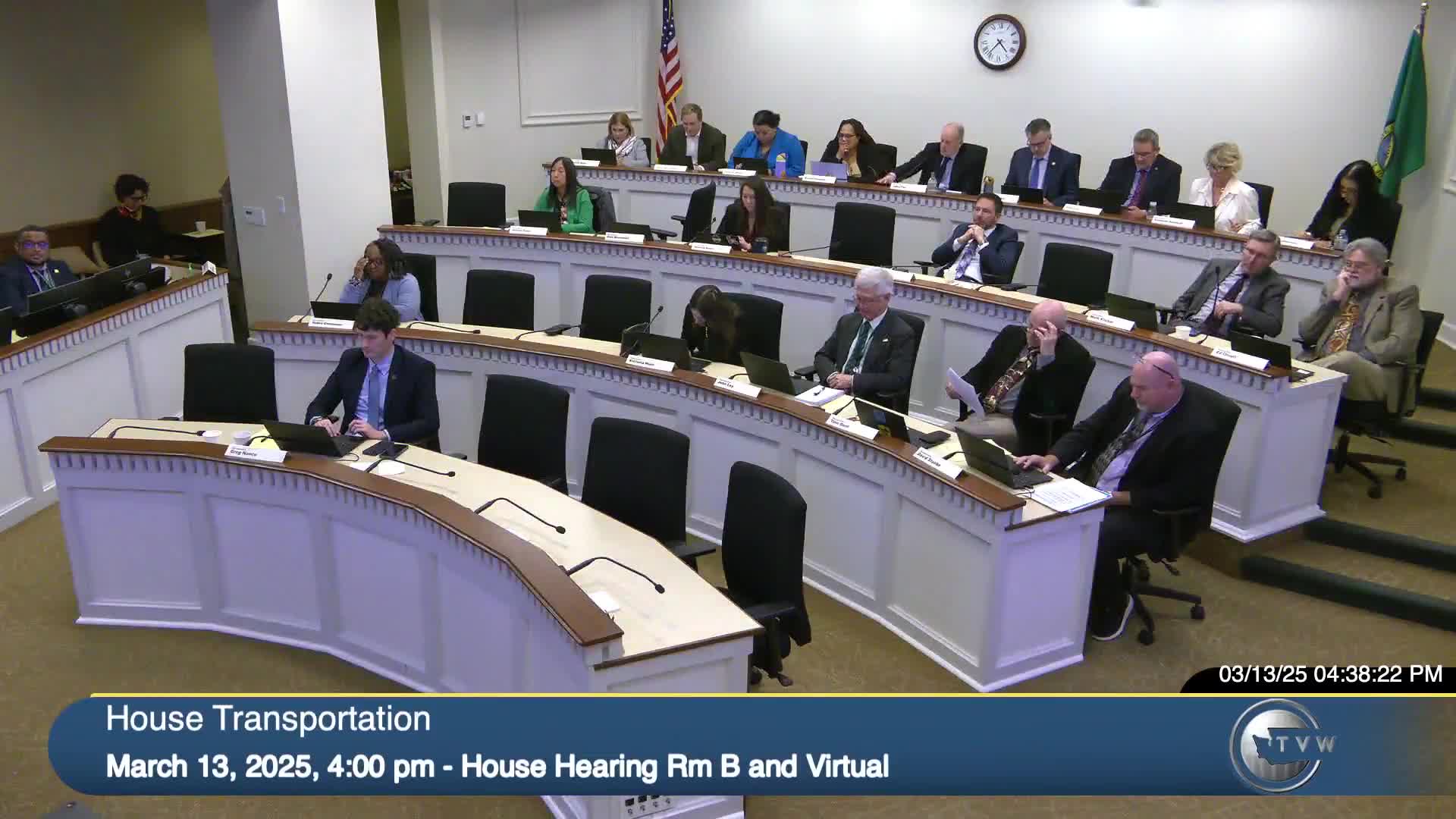
Panel reviews memorial to extend Martin Luther King Jr. Way along SR 900 and SR 515
Summary
A joint memorial would ask the Washington State Transportation Commission to extend the naming of Martin Luther King Jr. Way along State Route 900 into Renton and along State Route 515 in Kent; sponsors said the renaming honors Dr. King and echoes prior community-driven efforts.
Substitute Senate Joint Memorial 8000 would request that the Washington State Transportation Commission commence proceedings to extend the naming of Martin Luther King Jr. Way along Washington State Route 900 to its termination near Milepost 10 in Renton and along the full length of State Route 515 from I‑405 to SR 516 in Kent.
Committee staff Chris Thomas briefed the memorial’s process: the Transportation Commission names state transportation facilities after receiving evidence of community support, including letters from local legislators and following a public hearing. Senator Claudia Kaufman, who presented the request, said the extension acknowledges Dr. Martin Luther King Jr.’s legacy and reflects community efforts to memorialize civil‑rights history; Kaufman described the renaming as a ‘‘visual reminder’’ and recounted past efforts to honor Dr. King in the region.
Thomas noted no appropriation is attached; after the commission takes final action, WSDOT designs and installs signs. The memorial’s request follows an established process for naming state transportation facilities and asks the commission to initiate proceedings and hold a public hearing.
Why it matters: naming a state facility is a symbolic act that state practice reserves for proposals with demonstrated community support; sponsors argued the change would honor civil‑rights history in a visible, place‑based way.
No formal committee vote was recorded during the hearing.