Get Full Government Meeting Transcripts, Videos, & Alerts Forever!
Get email alerts on the Educational Technology topic
No spam. Unsubscribe anytime.
Madison schools pilot virtual reality in classrooms; district library secures six Meta Quest headsets
Summary
Madison district staff described a pilot using six Meta Quest 2 headsets for curriculum-aligned experiences (including an EVA Corps Holocaust app for Grade 7), explained parental notifications and medical cautions, and reported positive student and teacher reactions.
Paige Przyvlski, the media specialist at Polson, told the Curriculum & Student Development Committee that the district library has begun piloting virtual-reality classroom experiences with six Meta Quest 2 headsets purchased with support from the Madison Foundation.
"When I started talking to our students, I realized many of them are very familiar with VR headsets," Przyvlski said, describing how student familiarity reduced basic training time and allowed staff to focus on selecting curriculum-aligned apps.
The pilot included an EVA Corps Holocaust experience used as an optional activity for a Grade 7 unit on unsung heroes. The EVA Corps app presents a 360-degree tour of four locations at Auschwitz with survivor Eva Kor narrating, the presenters said. Participation was optional; staff sent an eNotify message to parents ahead of the sessions and discussed medical cautions in advance (VR headsets typically carry warnings for people with a history of seizures or pacemakers).
Przyvlski said sessions ran in the library during social-studies periods with groups of up to six students at a time and that reaching the whole grade required multiple days of scheduling; she estimated the rotation took six days to cover most students. Teachers and students reported strong engagement: students remarked on the physical scale of spaces in the experience — for example, how small cattle cars felt and how large barracks appeared — and classroom discussion afterward included ethical questions about artifacts and survivor testimony.
The media specialist also described other apps piloted or previewed for classroom use: Flow (guided meditations used in small groups with the school psychologist, Ivana Shine), Art Plunge (immersive experiences that let students step inside famous paintings), and a National Geographic ancient-Egypt tour aligned to a revised sixth-grade social-studies sequence. Przyvlski said the district added carrying cases and spare batteries to make classroom use practical.
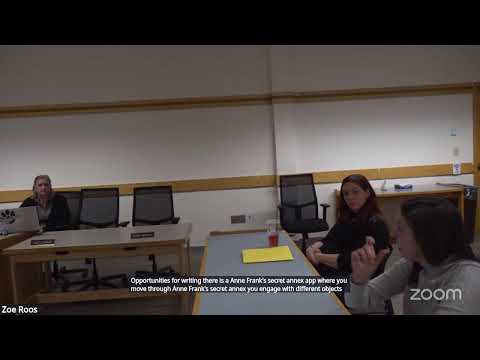
Funding for the six headsets came from the Madison Foundation, Przyvlski said. Staff described an implementation approach that included teacher collaboration, optional participation, an in-class debrief to connect VR experience to prior learning, and follow-up station work (for writing or extended activities) tied to elements of the VR experience.
Committee members praised the presentation and the debriefing method as critical to turning an immersive experience into instructional learning. No formal action or district-wide rollout decision was made; staff said they will continue piloting and coordinating with teachers across departments to identify curriculum matches and to manage scheduling with the limited number of devices.