Get Full Government Meeting Transcripts, Videos, & Alerts Forever!
Get email alerts on the Student Discipline Special Education topic
No spam. Unsubscribe anytime.
Committee examines suspension data and how special-education needs are handled in in‑school and out‑of‑school discipline
Summary
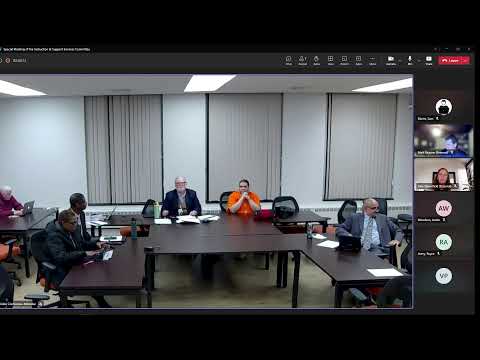
Bridgeport School District staff and committee members reviewed disciplinary data through Feb. 28 and discussed how the student code of conduct interacts with obligations to students who have individualized education programs (IEPs).
Bridgeport School District staff and committee members reviewed disciplinary data through Feb. 28 and discussed how the student code of conduct interacts with obligations to students who have individualized education programs (IEPs).
The committee heard a slide presentation from district staff showing expulsions, out‑of‑school suspensions (OSS) and in‑school suspensions (ISS) by grade, race/ethnicity and special‑education or English‑learner status. Staff said the highest counts were at the high‑school ninth‑grade level and that Hispanic and Black students made up the largest shares of suspensions by number. Staff noted the district is paying attention to transition supports (for example, 8→9 programs) and piloting summer and year‑long components to ease transitions.
Data highlights provided by staff - High school expulsions: 30 total; 11 of those were students with special education services (≈37% of expulsions at the high‑school level). 3 expulsions were ELL students (≈10% at high school). (slide summary) - High school out‑of‑school suspensions (OSS): 695 total; 269 were listed as special‑education students (about 39% of OSS at high school). 158 were ELL students (about 18%). - High school in‑school suspensions (ISS): 481 total; 170 were special‑education students (≈35%); 31 were ELL students (≈27% of ISS at high school level where recorded). - Elementary OSS: 399 total; 85 were special‑education students (≈21% of elementary OSS in slides) and 57 were ELL students. - Elementary ISS: 648 total; 220 were special‑education students (≈34%); 105 were ELL students (≈16%).
Staff emphasized legal obligations and practice District staff reminded the committee that a single student code of conduct governs discipline but administrators must consider a student’s eligibility for special education, behavior intervention plans (BIPs), and whether the student can understand the consequence when determining discipline for a student with an IEP. Staff said suspensions (ISS or OSS) do not relieve the district of the obligation to provide special‑education services so students continue to make progress on IEP goals even while suspended.
Interventions and supports described District staff listed current and planned supports designed to reduce suspensions and better serve students with behavioral needs: Board‑funded Board Certified Behavior Analysts (BCBAs) who consult with schools, an Effective School Solutions (ESS) partnership at five schools, social‑work supports and trauma‑informed professional development (e.g., Community Resilience Model via Lightbridge at several high schools), school‑level safety plans, behavior intervention plans, in‑school suspension rooms intended to provide academic work and restorative support, and pilot programs (CT RISE summer and year‑long transition elements).
Committee follow-up and next steps Committee members requested school‑level denominators (enrollment, special‑education counts by school and program placement) to normalize discipline rates and asked staff to meet between committee meetings with the superintendent, special‑education leadership and board members to examine particular parental concerns and whether the district is following state guidance on discipline of students with disabilities. Staff said they will schedule that follow‑up meeting and return findings to the committee.
Direct quote Michelle (district special‑education staff): “When students with disabilities receive ISS and OSS and expulsion … they still have to have access to their services.”
Closing The committee asked staff to supply school‑level enrollment and placement counts and to convene a smaller working group to analyze cases, discipline practices and compliance with state guidance before the committee’s next meeting.