Get email alerts on the Housing topic
No spam. Unsubscribe anytime.
Work group debates housing chapter and ADUs as one option for attainable housing
Summary
The Citizen Work Group reviewed housing chapter data, Weldon Cooper population estimates, single‑family permit counts and discussed accessory dwelling units (ADUs) and affordability constraints as potential tools to broaden housing options in Powhatan County.
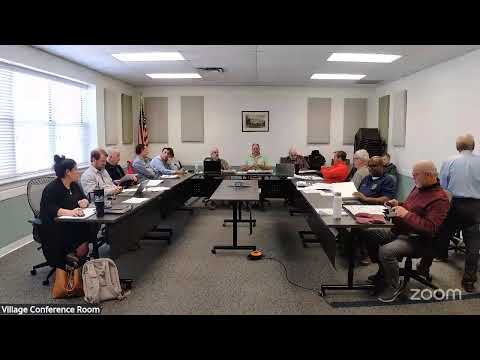
Powhatan County’s Citizen Work Group reviewed Chapter 5 (Housing) on March 4, focusing on population trends, recent single‑family permit activity and options to increase attainable housing. Staff presented census and Weldon Cooper estimates, single‑family permit counts and median sales prices; members discussed accessory dwelling units (ADUs), multifamily rentals and the fiscal implications of new residential development.
Planning staff and data presenters summarized population trends using Weldon Cooper projections and county permit data. They noted estimates for 2030 carry widening confidence intervals at the county level and that Weldon Cooper flags longer‑range projections as increasingly uncertain; staff said the center’s county‑level margin of error grows for 10‑ to 20‑year horizons.
On housing supply, staff presented single‑family permit year‑to‑date counts and historical annual totals and said recent years showed variation with a notable dip in new single‑family permits in 2024. Several members asked staff to compile comparable permit counts and median new‑sale prices for neighboring jurisdictions (New Kent and Hanover were suggested as useful comparisons) so the group can benchmark county activity.
ADUs drew extensive discussion as a tool to increase lower‑cost housing options. Staff noted the county’s ordinance allows ADUs in residential districts; participants discussed how ADUs can provide a lower‑cost rental or family‑housing option without subdividing a parcel. The group heard an example: building a smaller accessory dwelling typically costs much less than building a second full single‑family home and lets households share driveway and utilities. A staff presenter noted ADUs remain tied to the principal parcel and therefore do not create separate tax parcels unless subsequently subdivided through a family division (which has its own rules about ownership duration and minimum lot sizes).
Members also discussed affordability math: staff presented sample monthly payment and income thresholds for median sale prices in local subdivisions (for example, a median price in the Scottville area was cited near $487,000), showing how prevailing mortgage rates and standard lending guidelines can make median single‑family housing unaffordable to many households without two incomes or significant down payments. Attendees repeatedly raised the point that housing that is “attainable” for the working class will likely require different products than the county’s prevailing single‑family market.
Several members recommended waiting for additional market and permit data and for the county’s ongoing housing needs study (noted by staff to be under way) before finalizing housing policies in the comprehensive plan. Staff agreed to gather permit and MLS new‑sales data for nearby counties and to circulate updated housing metrics before the next CWG meeting.
Ending: The group asked staff to compile additional comparative permit and median‑sale data for neighboring jurisdictions, to provide updated first‑quarter 2025 permit counts when available, and to coordinate with the county’s housing study to inform any policy recommendations. No changes to the draft housing text were adopted at the meeting.
AI generated
The text on this page is AI generated. Summaries, highlights, analysis, and video transcripts are all produced from the original source material.
AI can make mistakes, so if you spot one, and we will fix it for everyone.
Note: the source content is unaltered by us. Any content source we link to, be it a video, an audio recording, or a document, is presented exactly as its publisher released it. That publisher is usually a government body, sometimes an individual official or another organisation.