Get Full Government Meeting Transcripts, Videos, & Alerts Forever!
Get email alerts on the School Safety Attendance topic
No spam. Unsubscribe anytime.
District 60 details safety upgrades and attendance plan as chronic absenteeism improves to 35%
Summary
District leaders described new safety equipment, expanded radio communications with first responders, discipline supports and a multi‑tiered attendance plan. Officials reported chronic absenteeism has fallen to 35% after peaking post‑pandemic; the board asked for clearer, district‑wide attendance triggers and more consistent use of truancy court.
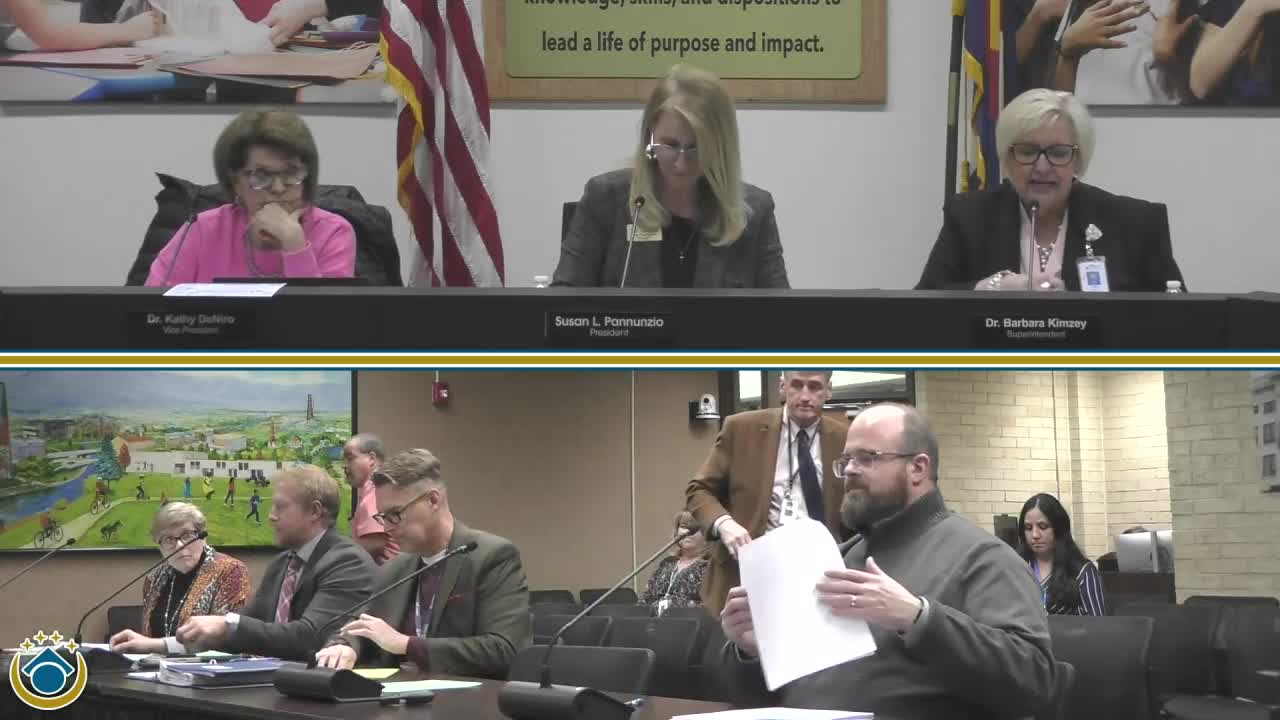
Andy Burns, executive director of student support services for Pueblo School District 60, and Mike Bayer, the district’s director of culture, safety and wellness, presented a combined report Feb. 11 on school safety, discipline and chronic absenteeism.
Burns and Bayer outlined multiple safety upgrades — including a citywide radio link to first responders, a district visitor‑screening system integrated with Infinite Campus and Raptor, rotating metal detectors at large events and selected secondary campuses, and vape‑detection sensors in secondary restrooms — and described discipline and intervention efforts intended to reduce suspensions and expulsions.
The presentation also covered the district’s attendance work. Burns reported the district’s chronic absenteeism rate has declined from a post‑pandemic peak of 49% in 2022 to about 41% last year, and “as of this week, our district chronic absenteeism rate is down to 35 percent.” He said the district uses a multi‑tiered system of supports (MTSS) with universal, targeted and intensive interventions and a new attendance‑incentive program called “Be Present.”
Bayer described the district’s emergency protocols, available in a 250‑page manual and condensed quick‑reference guides, and emphasized partnerships with Pueblo Police Department school resource officers and local first responders. He said the Secret Service reviewed the district’s threat‑assessment process and called it “robust and very well thought out,” highlighting multidisciplinary teams and attention to student social‑emotional supports.
On discipline, district staff said supports include the student code of conduct, restorative practices, alternatives to suspension, intervention coordinators and services for expelled students. Presentation slides compared referrals, in‑school and out‑of‑school suspensions and expulsions across elementary, middle and high schools from 2018 through the current year and showed many measures moving toward pre‑pandemic levels.
The board pressed for consistency and earlier intervention on attendance. Director Mays said Colorado law allows filing a truancy petition after four unexcused absences and urged the district to avoid waiting until 10 or more absences. District staff described a lengthy progressive process — attendance improvement plans, 30‑day affidavits, home visits, transportation and utility assistance, referrals to wraparound services — before court referral; when those steps fail, truancy court can provide resources and supports through diversion‑style services.
Staff provided approximate caseload and filing numbers: they said an average elementary school files about seven to eight new truancy cases annually, middle schools file roughly 12–15, and some high schools file about four to five new cases per year; carryover caseloads were described as larger (middle schools with 20–27 ongoing cases, high schools averaging about 15, elementary about 12–13). Staff said truancy court dockets run Wednesday and Thursday mornings and that the court uses a “rocket docket” for students showing marked improvement.
On security staffing and technology, Burns and Bayer said the district employs 24 security guards systemwide, typically about two per middle school and three per high school, and that the radio bridge system allows district radios, school radios and Pueblo Police dispatch to communicate across the city.
District leaders said they are building a written progression chart for MTSS with clear cut‑points and consistent interventions across schools and have begun a partnership with Panorama Education to provide more timely, district‑wide data to guide attendance and behavioral interventions.
Board members asked for follow‑up data and written procedures; Superintendent Kimsey said the administration will provide exact filing and caseload numbers for the last three years and a standardized attendance progression document for principals.