Get Full Government Meeting Transcripts, Videos, & Alerts Forever!
Get email alerts on the Early Childhood Preschool topic
No spam. Unsubscribe anytime.
District 60 proposes halving preschool sites as Colorado UPK rules and 4‑day week constrain funding
Summary
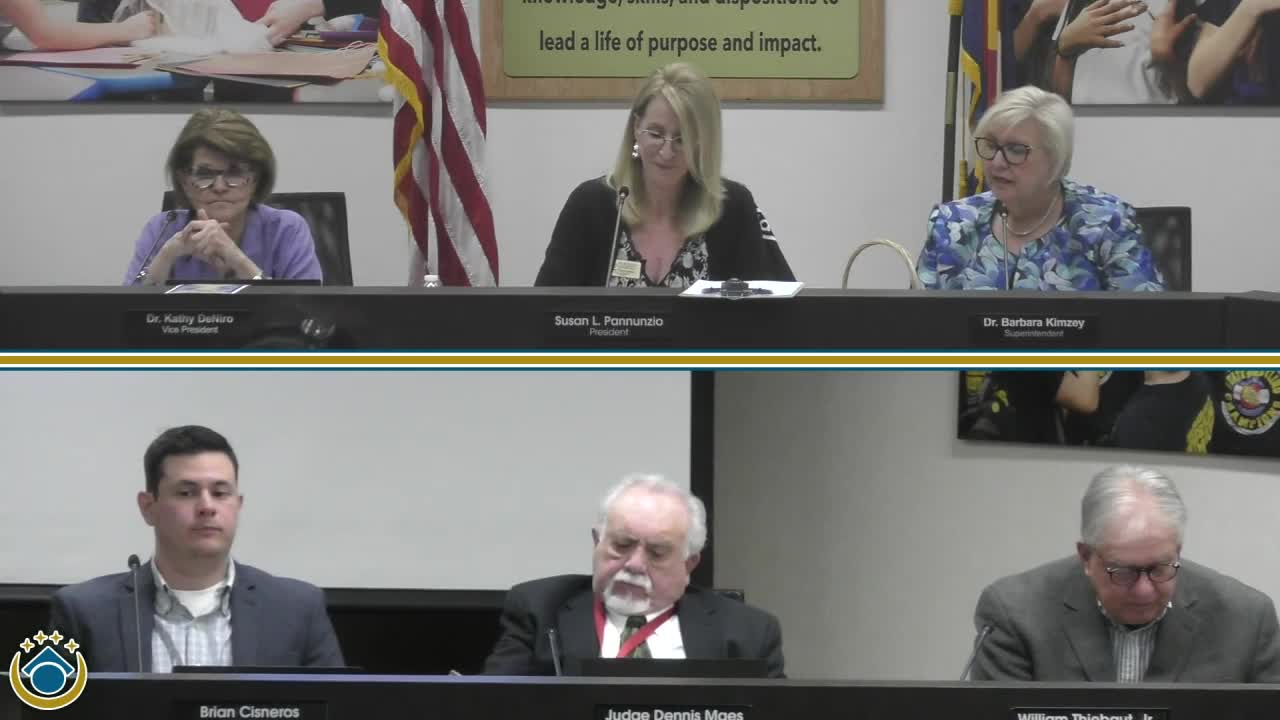
District staff told the board Feb. 25 that new Universal Pre‑K funding rules and the district’s four‑day school week make the current preschool model unsustainable, and recommended consolidating 32 preschool classrooms to 16 sites with AM/PM three‑hour sessions.
The Pueblo School District No. 60 Board of Education on Feb. 25 heard a staff report recommending consolidation of the district’s preschool program from 32 classrooms to 16 classrooms to align with Colorado’s Universal Pre‑K (UPK) funding rules and the district’s four‑day school week.
Ms. Kim Kura, the district elementary schools presenter, told the board that House Bill 22‑1295 established UPK funding in 2022 and that the Colorado Department of Early Childhood (CDEC) calculates funding by hours of student attendance and other local cost factors. Under the state guidance cited by district staff, part‑day funding reflects 10 hours per week, half‑day funding 15 hours per week, and full‑day funding 30 hours per week.
Kura said the district’s four‑day schedule and current operational structure prevent District 60 from meeting the 15‑ or 30‑hour thresholds without major structural and contractual changes. The presentation recommended consolidating preschool classrooms so each site would run two three‑hour sessions (AM and PM) and would be staffed with two early childhood educators (ECEs).
During Q&A, the board and finance staff discussed funding figures offered in the presentation: staff said the 10‑hour (part‑day) funding rate is $5,111 per student and the 15‑hour (half‑day) rate is $6,444 per student; however, administration and finance staff cautioned that the district’s salary and benefit costs would rise if programming expanded to full‑day models and that the legislature’s final UPK funding decisions for fiscal year 2025‑26 remained uncertain.
Board members pressed for additional budget detail. Director Cisneros asked for confirmation of funding differentials; Director De Niro asked how many students would be affected and received an estimate that consolidating to 16 sites could impact roughly “close to 200” students under certain assumptions. Director Thiebaud and Director Tebow said they want more time to review the district’s FY25‑26 budget and available reserves before accepting a plan that reduces sites.
Superintendent Kimsey said the district is supplementing state UPK dollars with general fund resources to preserve preschool and expressed a long‑term goal of restoring and expanding preschool access, but added that current budgetary and contractual constraints require “rightsizing” now.
Why it matters: UPK funding rules and operational constraints could materially change access to preschool slots, particularly for three‑year‑old students who must meet one of five eligibility factors to qualify for some funding rates. Consolidation would reduce the number of preschool sites and require families to travel to fewer locations.
Next steps: Board members asked staff for additional budgetary modeling and clarification about reserves and what the legislature will fund for FY25‑26; the board did not take a final vote on a preschool consolidation plan at the Feb. 25 meeting.