Get Full Government Meeting Transcripts, Videos, & Alerts Forever!
Get email alerts on the School Improvement Plans topic
No spam. Unsubscribe anytime.
Chapel Hill‑Carrboro board approves 2024–26 school improvement plans for 20 schools
Summary
The Chapel Hill‑Carrboro City Schools Board of Education voted to approve the district'wide 2024–26 school improvement plan cycle for 20 schools after presentations from district directors on planning, monitoring and supports.
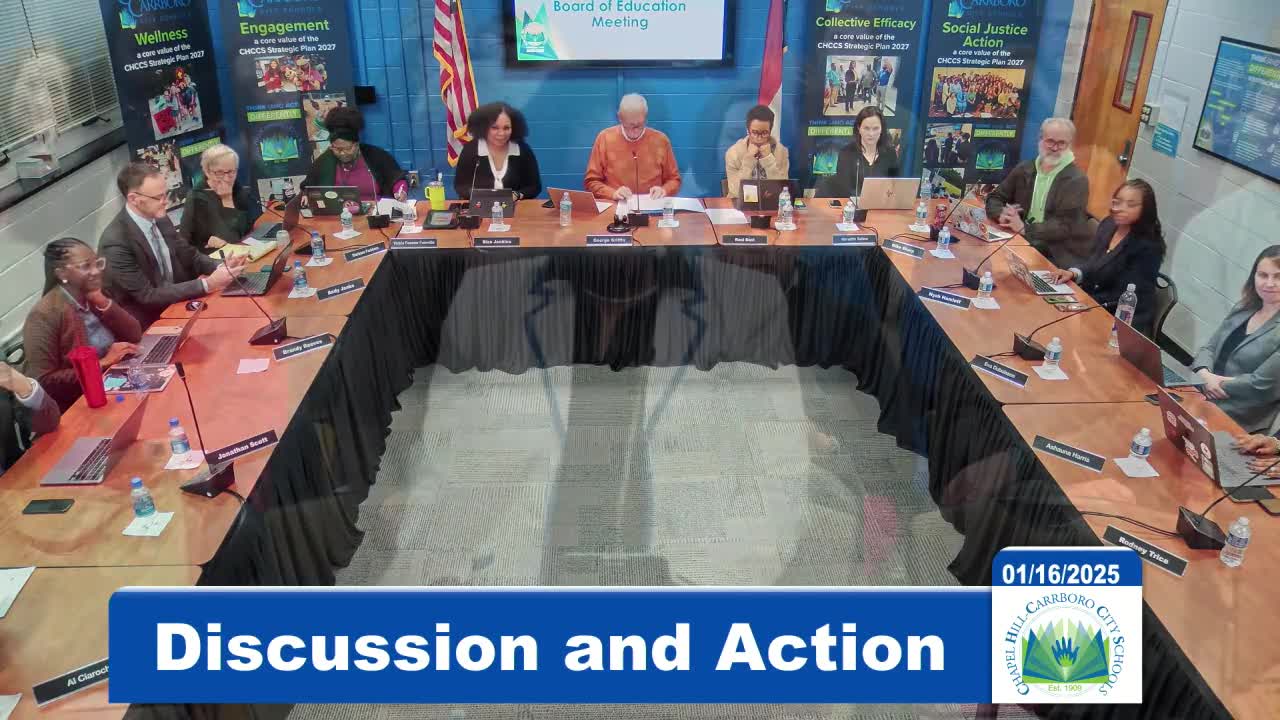
The Chapel Hill‑Carrboro City Schools Board of Education on Jan. 16 approved the district'wide 2024–26 school improvement plan (SIP) cycle for 20 schools.
District executive director of elementary schools Ayesha Howard and executive director of secondary schools Dr. Robin Buckram presented the plans and described the district'level supports, coaching and review process used to develop and monitor each school's goals. Howard said the district provides training for school improvement team co-chairs, facilitated assessment resources and one-on-one coaching; Buckram described monthly co-chair meetings and follow-up coaching notes used to refine plans.
The presenters told the board the district used a rubric-based feedback process after schools presented draft plans in the fall; schools revised indicators and strategies before bringing final plans to the board. Buckram emphasized implementation and monitoring supports, including monthly meetings with principals and coaching notes in Indistar, the district's improvement planning platform.
Board members asked about goal setting, attendance goals and metric choices. Board member Barb said she found plans grounded in data and asked for consistent use of metrics such as the Panorama student-survey results and the teacher working-conditions survey to improve readability across plans. Howard said the focus should be on the specific actions schools commit to rather than solely on numeric targets. Buckram noted small subgroup sizes can make percentage targets look large in absolute terms and encouraged emphasis on the actions that drive growth.
Board member Vicki asked whether the board would receive a mid-cycle update if the board moved to two-year approvals. Howard and Buckram said schools will continue to make annual presentations and the board's liaisons and the student success committee can review progress; the district will continue to invite board participation in district-level update sessions. The presenters also said attendance goals were a required element and noted a district attendance campaign and specific outreach strategies such as home visits and teacher outreach are in use; they reported early decreases in chronic absenteeism at the secondary level.
After discussion, the chair moved that the board approve the SIP cycle for the 20 plans included in the packet. The motion was seconded and approved.
The board and district staff said the plans will remain "living documents" that schools may tweak during the cycle as long as changes do not fundamentally change the plans' intent. District staff said they will continue to hold principals accountable for the action steps and report progress to the board.
The vote: the motion to approve the 2024–26 school improvement plan cycle for the 20 included plans passed.