Get Full Government Meeting Transcripts, Videos, & Alerts Forever!
Get email alerts on the Career Education Cte topic
No spam. Unsubscribe anytime.
District task force reports expansion of career, technical and pathway options after community survey
Summary
District 51’s Robust and Aligned Options task force reported progress expanding CTE offerings, completing two K–12 pathways, rolling out teacher‑readiness and trades programs, and creating an application and accountability process for new programs after reviewing a parent and family survey of about 1,100 responses.
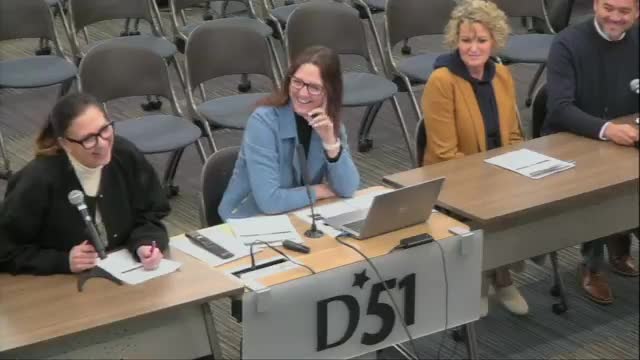
Jen (role stated in meeting as task force presenter) and members of the district’s Robust and Aligned Options task force updated the Mesa County Valley School District No. 51 Board of Education on Year 3 work to expand career and pathway options and improve accountability and access.
Sherry Taylor, who led the task‑force report on career and pathway alignment, said the task force has taken inventory of current programs, expanded career technical education (CTE) teacher certification, and moved from mapping offerings into supporting personalized pathways for students. She said the district’s earlier work produced 44 CTE programs on paper and that teachers have increased certified CTE course delivery to 50 teachers offering CTE courses across the high schools.
Zeb Hayward, assistant principal at Palisade High School and task‑force member, summarized a spring 2024 parent survey that the team used for planning: about 1,095 English responses and roughly 20 Spanish responses for a total around 1,100. He said survey feedback emphasized maintaining strong existing programs while addressing gaps, improving communication and access, expanding academic rigor and career readiness, and strengthening K–12 coherence for pathways such as language, STEM and IB.
Carrie (task‑force member) listed recent accomplishments: a new application process for schools to propose new programming; work toward an accountability framework for existing programs; expanded CTE and community partnerships; a teacher cadet program; an arts pathway; ICAP (Individual Career and Academic Plans) integration at four elementary schools for grades 4–5; and adding Mesa View Elementary (STEAM), Taylor Elementary (Primary Years Program) and two high‑school biliteracy pathways, which the team said creates two complete K–12 pathways for language and IB.
Board members asked for program‑level participation numbers and per‑program cost data. Director (unnamed) requested a breakdown of enrollment and program cost; Sherry said she could provide the requested data within a week. Board members also asked for clarity about how AP and concurrent‑enrollment credits transfer; staff explained that AP credit requires a subject exam (score thresholds vary by college) while concurrent enrollment is course‑based, locally administered and guaranteed to transfer in‑state under Colorado rules.
Board members and task‑force presenters discussed outreach to Spanish‑speaking families and noted limited Spanish survey returns; staff said principals and bilingual personnel did targeted outreach, tours and family nights to increase access. Members also discussed new and expanding trade and construction programs at Palisade and plans to scale to other high schools with community support from the Home Builders Association and other business partners.
Task‑force members said next‑year priorities include completing partial pathways (particularly middle‑school STEM), strengthening program accountability, refining ICAP alignment and improving communication and access for families.