
Ashe County board reviews extensive updates to 2000‑series policies covering meetings, public comment and closed sessions
Get AI-powered insights, summaries, and transcripts
Sign Up Free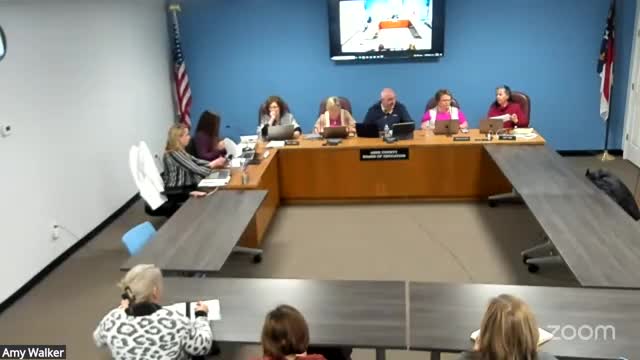
Summary
Board members and staff spent the bulk of the meeting reviewing proposed revisions to district policies (2000 series) on board meetings, committees, remote participation, public participation, recordkeeping/minutes, closed sessions and related procedures; several items will return for legal clarification or future adoption.
The Ashe County Schools Board of Education spent the majority of its meeting reviewing and discussing proposed revisions to the district's 2000‑series policies, which cover governance and meeting procedures.
Board members and staff worked through proposed changes to policies on board committees (policy 2230), meeting types and notice requirements (policy 2300 series), remote participation (2302), public participation in board meetings (2310), compliance with open‑meeting requirements (2320), minutes and recordings (2320/2321), closed‑session rules (2321), news coverage (2325), agenda procedures (2330 series) and other governance items. Staff said the draft language is drawn from model policies and legal guidance; the board discussed a range of technical and local‑practice choices, and flagged several items for legal review and final drafting.
Several recurring issues dominated the discussion: how to define standing vs. ad hoc committees in a small district; whether to keep or delete model policy footnotes; how to count days for agenda deadlines (working days vs. calendar days); the existing limit on remote participation ("remote participation no more than three times per year") and whether to require a two‑thirds vote or a majority to waive that limit; procedures for public comment sign‑up and whether to require noon‑day sign‑up or allow sign up 30 minutes before the meeting; whether audio/video recordings that are posted online can serve as minutes; and expanded statutory language the district's attorney recommended for closed‑session limits.
Staff described the housekeeping process for the policy set: "All the footnotes will be gone completely the date that it's adopted, which more than likely will be March 3, will be added to those. And these will get cleaned up, as soon as I as soon as we finish these, they'll get cleaned up, and they'll do a, like, a real copy of it. And that's what you will approve at the next meeting or consider for approval that you're considering them now." Board attorney Sam was asked about the two‑thirds vs. majority threshold for waiving the limit on remote participation; Sam advised the board it could change the language, saying, "Sam says you can change it if you'd like." Board members debated which threshold made sense for a five‑member board and asked staff to verify legal soundness before finalizing the draft.
On public comment, board members discussed switching the district's practice from permitting sign‑ups 30 minutes before the meeting to requiring sign‑up by noon the day of the meeting; staff explained different boards take different approaches and noted the policy must be explicit about the chosen practice. The draft retains a 30‑minute cap on total public‑comment time and a three‑minute limit per speaker, but the board asked staff to bold language clarifying that only the person who signs up may speak and to ensure procedures match current practice—staff said they will update and return the cleaned drafts.
Closed‑session language added by legal counsel includes explicit limits consistent with open‑session law; the attorney and staff recommended keeping the new wording. On minutes and recordings, staff explained that when the meeting or a portion of it is preserved by audio or audio‑visual recording and posted on the district website, that material can serve as the minutes once the superintendent or designee has reviewed and posted it.
The board also discussed policy items tied to other governance functions: membership and use of North Carolina School Boards Association model policies, the business advisory council for CTE programs (the CTE director and district staff said the council will formalize membership and procedures in March), and a housekeeping recommendation to remove duplicate policy text. Board members requested that staff and the attorney finalize legal phrasing for several provisions and return a cleaned, consolidated policy packet for consideration and formal adoption at a future meeting.
Board members and staff set follow‑up steps: staff will clean the drafts, check specific legal questions (for example, the 2/3 vs. majority voting threshold), and circulate the updated packet to the board and the attorney. Several board members suggested scheduling an additional work session for policy review; staff proposed an earlier April date and offered to provide electronic drafts in advance.
No formal policy adoptions were recorded during this meeting; the session was a working review of model and draft language with targeted follow‑up assigned to staff and counsel.