
Hamilton County Schools, City of Chattanooga approve interlocal agreement to support students experiencing homelessness
Get AI-powered insights, summaries, and transcripts
Sign Up Free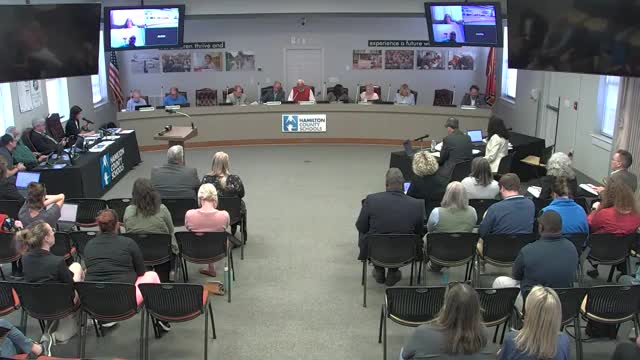
Summary
The school board approved an interlocal agreement with the City of Chattanooga to pilot an 18‑month initiative that uses Title I set‑aside funds and partner resources to move students and families into housing; board members pressed for clearer funding and service details.
The Hamilton County Schools Board approved an interlocal agreement with the City of Chattanooga to participate in an 18‑month pilot aimed at placing school‑age students and their families into stable housing.
Dr. Stewart, deputy superintendent, told the board the district will use Title I set‑aside funds to support the initiative. “It’s being funded through our Title I set aside,” he said, and the district has earmarked $250,000 within a $15,000,000 Title I budget; the board was told $150,000 of that amount is allocated for the pilot. The initiative was described as a collaboration among the school district, the city of Chattanooga, Hamilton County, and the local homeless coalition.
Board members pressed administration for details about who will operate the program and where money will come from. Board member Stockton moved to approve the agreement and the motion was seconded; the board carried the item in a roll‑call vote. Several board members emphasized the human cost behind the numbers: “Many people don't know that . . . our students actually are considered homeless and they're living in motels scattered throughout the city,” board member Groan said during public discussion.
Administrators said the effort grew out of the county's Children's Cabinet and a previously paused state voucher program that could have prioritized local students. Dr. Stewart said staff are working with the city and county to use available resources, and county officials said the county has matched school system funding and will contribute opioid‑settlement money to the pilot. The city is expected to reassign some existing staff to the initiative.
Board members asked for performance and timeline details before broader expansion. Dr. Stewart and other administrators said they expect one‑on‑one family meetings to start after spring break and that staffing and placement conversations will take place at individual IEP or family meetings where applicable.
Why it matters: board members flagged chronic absenteeism and housing instability as drivers of lost classroom time; the district reported more than 1,100 students identified as experiencing homelessness (administrators cited figures “over 1,100,” with one internal count near 1,178). Supporters said the pilot aims to reduce absenteeism by moving families into more stable housing, while some board members urged the district and partners to match funding levels to the scale of need.
Board direction and next steps: the board approved the agreement and asked administration to provide follow‑up details on program staffing, how voucher or other housing resources will be deployed, and measures the pilot will track to determine success. Administrators said the program will be evaluated during the pilot period and that the Children's Cabinet partners will coordinate housing prioritization when state voucher programs resume.