Get Full Government Meeting Transcripts, Videos, & Alerts Forever!
Get email alerts on the Recovery Housing topic
No spam. Unsubscribe anytime.
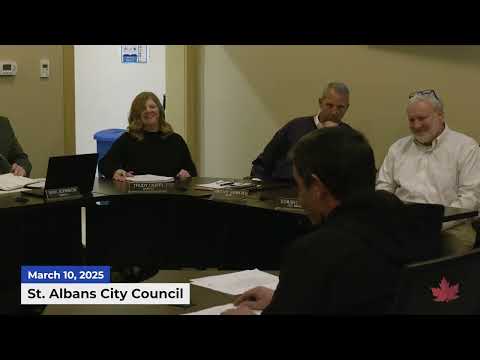
St. Albans council approves resolution to pursue state CDBG funds for women's recovery house
Summary
After a public hearing and discussion, the council voted to approve a city resolution allowing Hope Grove Recovery Residence to apply for Vermont Community Development Program (VCDP) funding to acquire and renovate a building at 296 South Main Street as a certified recovery residence for women.
The St. Albans City Council on Monday approved a resolution authorizing a local nonprofit to apply for state Community Development Block Grant (CDBG/VCDP) funds to acquire and renovate a house at 296 South Main Street for a women's recovery residence.
The proposal, presented by Kate Lewin, founder of the nonprofit pursuing the project, calls for a level-3 certified recovery residence that would house up to five women with on-site staffing and structured programming. Lewin said residents would typically arrive after an initial period of stabilization or treatment and remain in the program from about six months up to two years. "This is a higher-level residence with 24/7 staffing, drug testing and a recovery curriculum to support employment and reintegration," Lewin said.
City staff explained the grant process and the city's role if the award is made. Chip Sawyer, speaking for municipal staff, described the city's standard approach: the city would act as the applicant/administrator for the VCDP reimbursement grant, review invoices and, if the project moves forward, record a mortgage on the property to protect the city's and state's interests. Staff said VCDP awards are reimbursement-based: the nonprofit incurs eligible project costs, the city requests reimbursement from the state, and the city then pays the nonprofit from those funds.
Several councilors asked about neighborhood impacts, program oversight, and accountability. Lewin and staff said the house will follow certification standards and have written admission agreements, house rules, drug testing and a safety plan; residents who cannot meet house requirements would be referred to higher-level clinical care. A resident who identified herself as Melinda White spoke in favor of the project and described local demand for women's recovery housing.
Council members also discussed tax and funding implications. Staff said if the property is owned and operated by a nonprofit for its charitable purpose it would likely become tax-exempt, and that the city and applicant would work to identify other potential funding sources (opioid settlement funds and other grants) in addition to the VCDP award.
After public comment the council voted to approve the resolution and authorize staff to sign the required application and related documents. No count of individual yes/no votes was recorded in the meeting transcript; the mayor called for the aye/nay vote and announced the motion passed.
The city and applicant will next complete the VCDP environmental review and application materials. If awarded, the grant would reimburse eligible acquisition and renovation costs and impose monitoring and reporting conditions; the city's mortgage would protect repayment to the grant program if conditions were not met.