Get Full Government Meeting Transcripts, Videos, & Alerts Forever!
Get email alerts on the Budget topic
No spam. Unsubscribe anytime.
County board approves second interim budget showing modest reserve growth; staff to file positive certification
Summary
The San Bernardino County Board of Education approved the second interim financial report for period ending Jan. 31, 2025, projecting a modest increase in the general fund balance and reducing the assumed salary cost‑of‑living adjustment to 2.0% based on benchmark district settlements; staff said there are no cash flow issues and they will fi
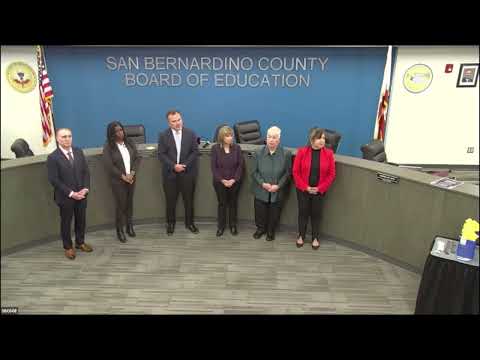
The San Bernardino County Board of Education on Wednesday approved the district—s second interim financial report for the fiscal period ending Jan. 31, 2025 and authorized staff to file a positive certification with the California Department of Education.
Chief business and budget staff presented the report, saying statewide revenue trends were stronger than the governor—s forecast year‑to‑date but noting some monthly variability. The county—s unrestricted general fund revenues rose slightly in the second interim, driven by local revenue increases linked to district participation in early literacy and related fee‑for‑service programs. Restricted revenues decreased modestly as some federal and state grant spending shifts across fiscal years were reconciled.
Jessica Hurst, the county—s budget lead, summarized changes from the adopted budget and first interim. Her office reduced the budgeted salary and benefit escalation assumption from 2.5% to 2.0% after seeing settlements in the board—s 12 benchmark districts and because most districts have finalized contracts; the current average settlement among the group is about 1.76% with one district outstanding. The second interim report projects a $4.2 million increase in the general fund balance driven by reduced one‑time unrestricted spending and carryover of federal funds.
The report also reflected adjustments for technology equipment, district pass‑throughs for career pathways, and changes in planned professional services. The board discussed several line items: the perpetual Footsteps to Brilliance license payment (the final one‑time county share was discussed as about $2.166 million), shifts of ESSER and other federal program costs across fiscal years, and legal/SELPA expense patterns. Staff and board members asked for additional detail on pass‑throughs and special education costs; staff agreed to provide follow‑up information by board correspondence.
The board approved the second interim report by a voice vote with one nay recorded; staff said they would submit a positive certification to the state and continue to monitor state budget developments.
Why it matters: Second interim reviews are a statutory checkpoint for school agencies to confirm fiscal solvency through the current fiscal year and to update assumptions for the coming year. The county—s decision to lower the assumed salary escalation reflects settled contracts in most benchmark districts and reduces near‑term cost pressure in the budget assumptions.
What comes next: Staff will file the positive certification with the CDE, continue budget development work for next year and return requested pass‑through and expense detail to the board.