Hanover administrators lay out priorities for restoring staff and programs if override passes
Loading...
Summary
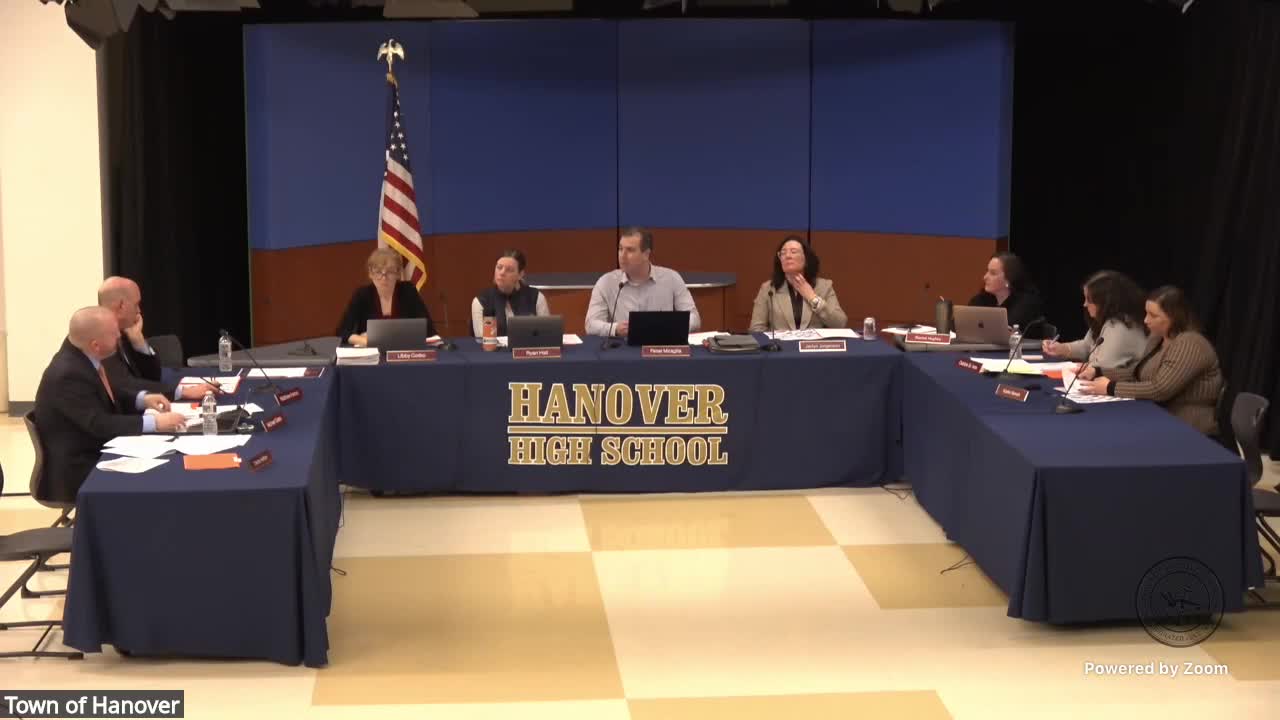
At the Feb. 26 Hanover School Committee meeting, administrators presented a tiered plan for restoring staff and programs if the town override succeeds, and outlined what the district can maintain under the town manager's proposed base budget.
At the Feb. 26 Hanover School Committee meeting, Superintendent Mr. Farren and district leaders presented a multi-tiered restoration plan that would guide how the district spends additional revenue if a proposed override passes and how it would operate under the town manager's proposed base budget.
The presentation, led by district leadership, grouped potential restorations into five general focus areas: lowering elementary class sizes and restoring special-education supports under the base budget; restoring core middle- and high-school course offerings and electives; further reducing elementary class size and adding reading/art/music staff; rebuilding curriculum leadership and administrative supports; and restoring arts and wellness offerings.
The nut graf: Committee members pressed administrators for specifics about how many positions each funding tier would restore and emphasized that any restoration will not be a simple one-for-one replacement of prior staffing. Mr. Farren said the district has prioritized classroom-facing needs but also must balance administrative support needed for systemwide planning and safety.
Superintendent Mr. Farren said the town manager's base school budget submission of $38,702,869 gives the district about $500,000 over level services and "would provide some opportunity to restore some additional positions over level services if the override is unsuccessful." He outlined that 3'4 elementary classroom positions would bring class sizes down toward the low 20s and that the district needs an additional BCBA and a special-education teacher to meet student needs. "If we had to make this decision today we would basically... do this," Farren said of the base-budget priorities.
Administrators emphasized the many variables that will shape a final restoration plan: the override outcome, retirements and resignations, evolving special-education needs, costs tied to new hires, private tuition obligations, transportation and unforeseen expenses, and the availability of state and federal grant funding such as IDEA and Title I. The presentation reiterated that the district is building multiple plans (A, B and C) so it can hire key specialized staff early if candidates are available.
Committee members repeatedly framed the trade-offs: one member said parents and voters typically prioritize classroom-facing positions, while others argued administrative and curriculum leadership positions are necessary to make any restored staffing effective. As one committee member put it, without adequate administrative support "you need the oversight and support at the administrative level to have a team that can handle those decisions and those conversations."
Administrators told the committee they will prepare more detailed options by April vacation so voters can see what specific staffing or program restorations an override would fund. They also said some specialized positions (for example, a BCBA) will be posted soon so the district is competitive in hiring regardless of the override outcome.
Ending: Committee members praised the transparency of the restoration menu while stressing they expect administration to return with clear, prioritized options before voters are asked to approve an override.