Get Full Government Meeting Transcripts, Videos, & Alerts Forever!
Get email alerts on the Student Technology And Discipline topic
No spam. Unsubscribe anytime.
Wayland working group reviews surveys, considers more consistent phone rules and education
Summary
A multi-stakeholder cell phone working group presented survey results showing broad support for limits during learning time and divergent preferences by school level; members plan more outreach, a middle‑school panel on March 17 and follow-up recommendations to the School Committee.
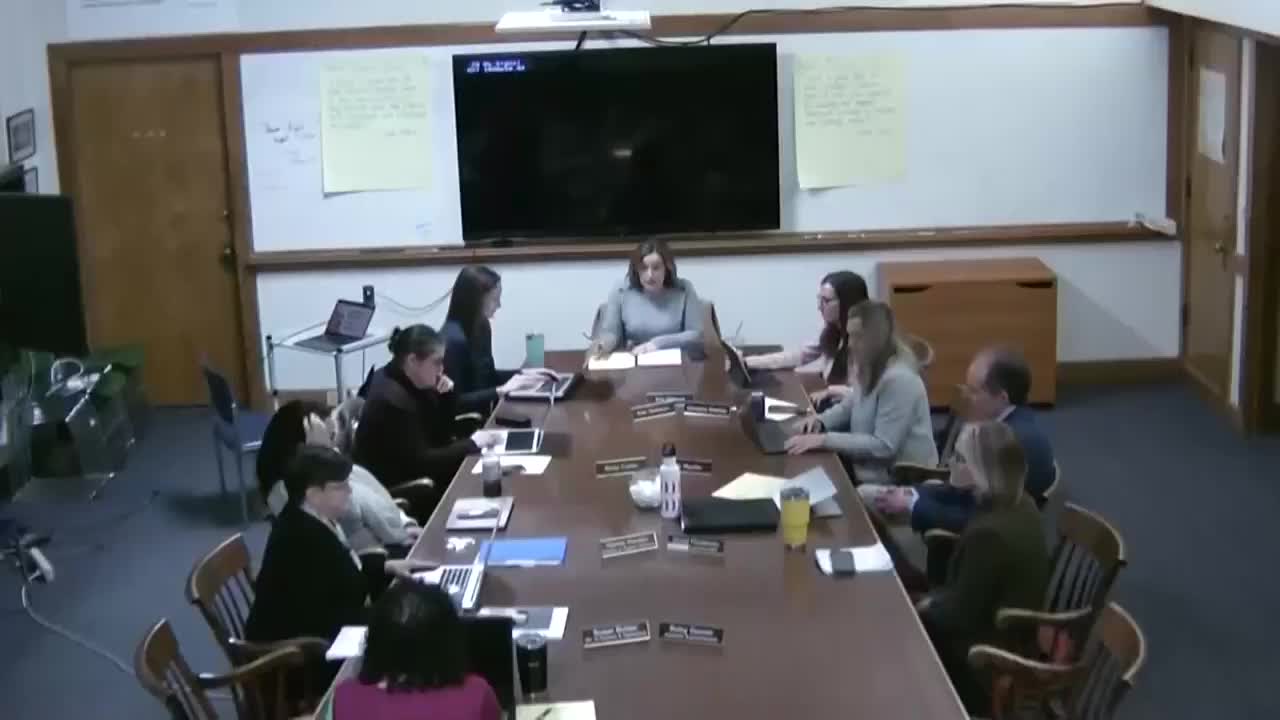
The Wayland School Committee on Feb. 26 heard a progress report from the district’s cell phone working group that summarized surveys of parents, students and staff and outlined next steps, including a March 17 panel of middle‑school leaders.
The working group, which includes school committee members, building and district administrators, faculty, staff, parents and students, reported that parents, students and staff generally support clearer expectations for devices during school hours but differ by grade band on how restrictive those expectations should be. David Fleishman and colleagues presented survey findings for high school, middle school and elementary school families, students and staff and described follow‑up panels with principals from neighboring districts.
Parents: High school parents (253 respondents) reported nearly universal device ownership and were split on how phones affect learning; aggregated responses that described phones as distracting accounted for about half of responses, the presentation said. A strong majority of respondents across grade bands — roughly mid‑80s percent — said there should be an expectation for device behavior during school hours. In the high school sample, roughly 46% of families said students should be allowed device use during non‑learning times, while about 30% said no and the remainder were unsure.
Students: High school students overwhelmingly (96%) said they should be able to use phones during non‑learning times; middle school students were more mixed but a majority favored limited access during passing times and lunch. Student comments cited communication, bus rides and free periods as common times for phone use, while some students and parents supported stricter limits to reduce distraction.
Staff: About 95 staff members responded to the survey. High school staff were most likely to report use of classroom phone holders or bins; middle school staff reported “off and away” in backpacks for almost all respondents. Staff responses showed disagreement on consistent enforcement: many teachers said enforcement varies across classrooms and buildings.
Panel findings and next steps: The working group convened a panel with three high school principals from nearby districts — Josefa Blocker (Natick High School), Jamie Chisholm (Wellesley High School) and Amy Davenport (Westwood High School) — to discuss approaches. The panelists described common themes: “off and away” during instructional time with access permitted during non‑instructional periods, the challenge posed by open campus high schools, and the importance of consistent application and community education. The working group has scheduled a March 17 meeting with middle‑school panelists (Teresa Carney of Wilson Middle School, Margita of Wellesley Middle School and Kim Leissett of Brown Middle School in Newton) to review alternative enforcement and storage models, including locker or pouch systems.
Committee members pressed the group to publish the survey data publicly after internal review; the working group said it will post the results shortly. Presenters emphasized that enforcement consistency — not just policy design — will be central to any prospective change, and said future materials to the School Committee will include policy options, pros and cons and model language.
The working group did not propose a final policy at the meeting. Instead it recommended further study, community outreach and a report back to the School Committee after the March 17 middle‑school panel and subsequent meetings.