Get Full Government Meeting Transcripts, Videos, & Alerts Forever!
Get email alerts on the Transportation Bike Lanes topic
No spam. Unsubscribe anytime.
Jersey City council approves design contract for Heights bike lanes with Manhattan Avenue to remain two-way
Summary
Council approved a resolution to advance a NJDOT bikeways design contract for Manhattan and Franklin Avenues with a council-added condition that Manhattan Avenue remain a two‑way street; the decision drew months of debate and divided votes.
The Jersey City Municipal Council voted to approve a resolution advancing a design contract under the New Jersey Department of Transportation (NJDOT) Bikeways program for the Manhattan Avenue–Franklin Street corridor in The Heights, with a council amendment that Manhattan Avenue retain its two‑way orientation.
The amendment, read into the resolution during the meeting, conditions the award on the designer providing drawings that “maintain the orientation of Manhattan Avenue as a 2 way street for the entire length of the corridor,” language presented by Transportation Director Mike Mansella.
The resolution responds to an NJDOT grant to design protected bike lanes on the corridor. Mansella told the council the award would authorize the selected firm to prepare preliminary and final design work to satisfy the grant requirements, but that the council had asked the infrastructure department to remove Manhattan Avenue direction changes from the design alternatives.
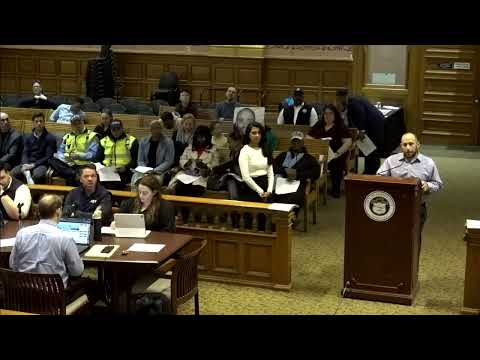
The decision followed more than two hours of public comment and detailed back-and-forth among council members, department directors, first‑responder representatives and neighborhood residents. Supporters said the protected lanes would slow vehicle speeds and improve safety for cyclists and pedestrians; opponents — including some firefighters, hospital and nursing‑home representatives, and visually impaired residents — warned the changes could complicate emergency access and cited specific operational concerns.
Mansella said the department’s work balances those concerns. “We fully understand that the Department of Public Safety has a responsibility and a directive to save lives when there are emergencies,” he told the council, and added that “it is proven time and again, both in this city and in national and state level research that incorporation of bike lanes increases safety for all road users, and reduces the number of crashes.”
Council members also discussed timelines. Infrastructure staff warned the schedule is tight and that consultants had responded to a request‑for‑proposals based on an aggressive timetable; department staff said they would press the NJDOT for extensions where possible but could not guarantee them.
Public comment at the meeting was extensive and sharply divided. Speakers who live in The Heights said they want safer streets and pointed to recent serious crashes; other residents, business owners and representatives of St. Joseph’s School for the Blind said the corridor as proposed raised safety or operational concerns. A number of speakers urged the council to find a compromise that preserves emergency access and parking where feasible.
On the final vote, the council approved the measure 5–3–1. The clerk’s later tally recorded Councilpersons Ridley, Baggiano and Rivera voting no and Councilperson Gilmore abstaining. The resolution includes the amendment that Manhattan Avenue remain two‑way and advances the design contract process so work can begin if grant and schedule conditions are met.
The design contract advanced by the council must still be executed and designers must produce the required plans for NJDOT review. Next steps described by staff include completing design documents, addressing safety and emergency‑access concerns during the design phase, and returning to the council if further substantial changes are proposed.