Get Full Government Meeting Transcripts, Videos, & Alerts Forever!
Get email alerts on the Budget Public Finance topic
No spam. Unsubscribe anytime.
School committee hears FY26 budget proposal; special-education costs and revenue assumptions draw scrutiny
Summary
Business staff presented a proposed FY2026 operating budget that meets a 4.93% town target; committee members pressed officials on special-education cost assumptions, Circuit Breaker and IDEA reimbursements, and use of revolving funds and personal-service contracts.
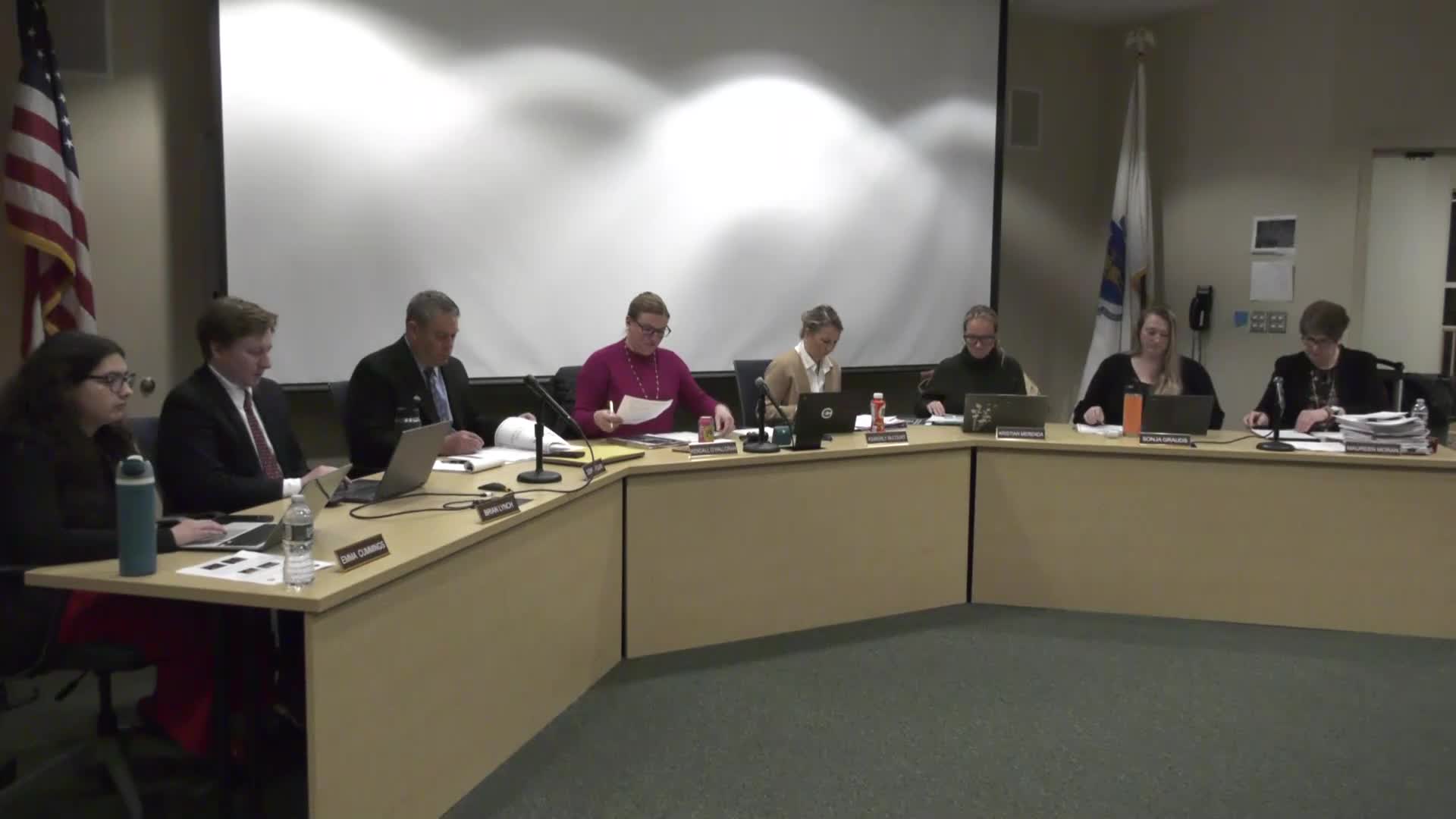
Business staff presented Canton Public Schools’ proposed FY2026 operating budget at the school committee meeting on Feb. 27, 2025, explaining the plan meets the town-set target of a 4.93% increase and totals $59,033,748.
The presentation by district finance staff said the proposed budget represents a roughly $2,000,010 increase from the current year and covers a line‑by‑line review of 1,347 budget codes. The district plans to rely on Circuit Breaker and the federal IDEA grant to offset special‑education tuition and transportation costs; the presentation cited a working assumption of roughly $4.7 million in Circuit Breaker reimbursement and about $975,000 in IDEA funds for FY26. The district estimated out‑of‑district tuition at approximately $8 million and out‑of‑district transportation at roughly $2 million, for a combined special‑education expense in the neighborhood of $10 million that the grants would partially offset.
Committee members pressed officials on those revenue assumptions. Member concerns focused on Circuit Breaker reimbursement trends and the share of transportation costs the state reimburses. A committee member reviewed recent years showing a decline in the transportation reimbursement percentage — from roughly 75% in earlier years to about 44% in FY25 — and questioned the prudence of building a $4.7 million reimbursement assumption into the FY26 plan. Members also cautioned that IDEA is a federal grant and subject to federal funding levels, which could change year to year.
The finance presenter described a multi‑year “payroll cleanup” that reallocated employee pay lines to correct DESE chart‑of‑accounts coding and said the district is not currently proposing to use the town’s special‑education reserve for FY26. Athletic fees and other revolving accounts were proposed to support extracurricular and athletics program costs; the presenter reported about $40,000 in activity fees collected so far, a significant increase over prior years.
Committee members asked for more detail on several items to help track costs and liabilities: the full compensation packages for staff with personal‑service contracts (stipends, tuition reimbursement, buy‑back benefits and other non‑salary costs), a central‑office headcount/cost breakout comparable with building‑level pages, a clearer listing of FTEs by year, and a line‑by‑line reconciliation of what was approved in prior capital or operating votes but not yet spent. Several members said they want the committee and the public to see a regular status update on capital projects and prior approved items so that town meeting appropriations do not languish.
Staff said they will continue to refine the proposal before the next committee meeting and noted the following items for follow-up: trimming approximately $490,000 to balance the proposed total before the Finance Committee review; reconciling projected retirements and classroom enrollments; and supplying requested breakout documents showing central‑office costs, full compensation details for personal‑service contracts, and a detailed fees/revolving‑account analysis. The budget hearing and a committee vote on the operating budget are scheduled for the committee’s March 13 meeting.
Votes and procedural items at the Feb. 27 meeting were limited to approval of the consent agenda (with one meeting minute held for separate review) and adjournment; no final vote on the FY26 operating budget occurred that night.