Get Full Government Meeting Transcripts, Videos, & Alerts Forever!
Get email alerts on the Municipal Budget topic
No spam. Unsubscribe anytime.
Manager presents tight FY26 draft budget; council weighs cuts, TIF and undesignated funds to limit tax increase
Summary
Town staff presented draft FY26 revenues and spending, highlighted conservative revenue projections, multiple department wage increases and one‑time capital cuts; staff outlined two tax‑impact scenarios that depend on how much undesignated fund balance is used and noted the town hall bond payment is partially offset by TIF.
South Berwick officials presented a conservative FY26 draft budget at the March 4 town council workshop, flagging limited revenue upside, several departmental wage increases and one‑time reductions in capital improvement funds to reduce immediate tax impacts.
The Town Manager said staff worked through 19 drafts and met repeatedly with department heads to constrain spending. "This is a very tight budget this year," the manager said, noting staff built almost no contingency into recurring accounts and made one‑time reductions that could not be sustained beyond a single year.
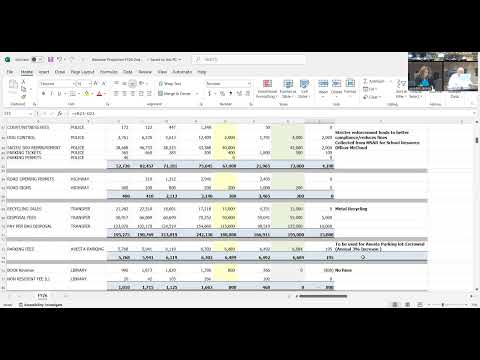
On revenue, finance staff raised vehicle excise tax revenue by an estimated $55,000 and projected a total net revenue increase of about $140,295. The manager and Danica (finance staff) warned the town had not yet received county and school budgets and that state revenue sharing remained uncertain because of pending legislative proposals. Officials proposed drawing $900,000 from undesignated funds in one scenario to reduce the tax increase; they also outlined an alternate scenario that used $1,000,000 from undesignated funds.
Key budget changes described by staff included: a town‑wide cost‑of‑living adjustment of about 3% (3.5% for police under the union contract); a merit program for non‑union employees; identified wage adjustments in the clerk's office and finance; and department‑specific increases including a roughly 18% rise in the fire department wages tied to added EMS coordination and wage adjustments for firefighters. The police budget showed a 10.3% increase largely driven by salaries, new training and a new line for ammunition and range costs ($7,500) that had previously been embedded elsewhere.
Staff also detailed several contracted and external cost increases that the town could not control: York Ambulance contract adjustments, a 25% April 1 water rate increase applied to hydrant costs, an estimated 1% employer cost for the Paid Family Medical Leave Act (about $42,200), an IT consultant contract increase and routine benefit cost increases that raised payroll taxes and retirement contributions.
On capital (CIP), the manager proposed roughly $167,175 of one‑time cuts across CIP accounts to free funds for staffing requests; those reductions were repeatedly described as "one‑year" measures that staff would recommend restoring later. Staff highlighted that certain debt service items could be paid in part from TIF dollars (for example, a portion of the town hall renovation payment), and that fiscal 26 would include an interest‑only payment on the new town hall with about $122,500 remaining as the general fund share after the 50% TIF offset.
Staff presented two headline tax scenarios for council consideration: using $900,000 of undesignated funds would yield an expenditure‑budget increase of about 3.71% (3.71% before the town‑hall payment) and a total budget impact that included the town‑hall bond payment of about 4.92%. Using $1,000,000 from undesignated funds would lower the net expenditure increase to about 2.71% (3.93% after factoring the town hall bond payment). Councilors asked for supplemental scenario runs showing the effects of restoring specific CIP lines and of itemizing wage adjustments beyond the uniform COLA.
Ending
Councilors did not adopt a budget at the workshop. Staff said they will prepare additional scenario detail, provide clearer line‑item breakdowns for large wage and program changes, and return at follow‑up meetings before the town—s formal FY26 budget adoption process.