Get Full Government Meeting Transcripts, Videos, & Alerts Forever!
Get email alerts on the Fy26 Operating Budget topic
No spam. Unsubscribe anytime.
Sharon school leaders propose 4% FY26 operating budget; debate centers on kindergarten funding, DEI post and cuts to elementary PE and middle‑school teams
Summary
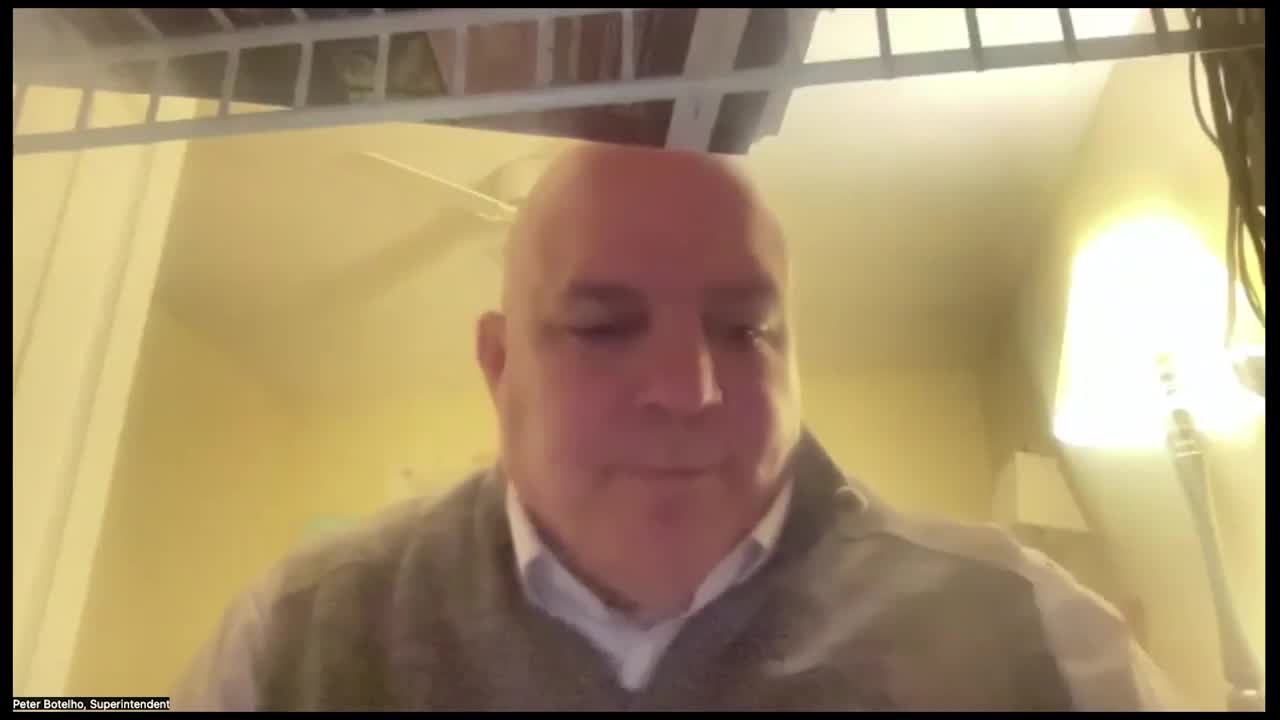
At the Feb. 26 Sharon School Committee meeting, Superintendent Dr. Botello presented a proposed fiscal 2026 operating budget based on a 4% town priorities allocation and outlined a package of program cuts and fee increases intended to close a roughly $791,000 shortfall.
At the Feb. 26 Sharon School Committee meeting, Superintendent Dr. Botello presented a proposed fiscal 2026 operating budget based on a 4% town priorities allocation and outlined a package of program cuts and fee increases intended to close a roughly $791,000 shortfall.
The superintendent said salaries remain the largest pressure on the district budget, telling the committee, "84.5% of budget is driven by salaries," and that step/lane and cost‑of‑living adjustments alone amount to a 5.1% personnel increase that must be absorbed in a tight revenue environment.
The proposal packages about $820,682 of offsets — slightly more than the gap — from a mix of one‑time savings, restructuring and fee hikes. Major items the administration proposed or discussed include ending the central office Director of Diversity, Equity and Inclusion position (about $95,000 in budget relief, with roughly $72,000 coming from the operating fund), an elementary special‑education and specials reconfiguration that would reduce 1.2 full‑time equivalent (FTE) physical education positions (estimated savings roughly $90,000), combining seventh and eighth grade middle‑school teams and program reductions at the high school tied to a resignation in visual arts and other possible section cuts. The administration also proposed a 15% athletics fee increase and a parallel 15% rise in paid yellow‑bus fees.
Why it matters
District leaders said they tried to preserve core classroom staffing while targeting administrative and nonmandated program costs. The administration emphasized enrollment declines and projections across grades as a rationale: several elementary grades show small declines that the administration says allow modest reductions without exceeding typical class‑size guidelines, while middle‑school cohorts are projected to decrease further in coming years. The superintendent framed the goal as balancing short‑term pain with longer‑term sustainability: "If we do make some kind of cuts this year… those should be pretty manageable for the foreseeable future based upon these trends," he said.
Public comments and staff concerns
Public commenters repeatedly raised concerns about kindergarten fees, special‑education supports and staff compensation. Katie Conroy told the committee she had asked for an agenda item on full‑day kindergarten after learning the town’s finance committee had provided $600,000 and that families were still being charged fees: "This means that full day kindergarten is fully funded in the school budget through our taxes, and the parents of kindergartners are essentially being double charged when they enroll their child in full day kindergarten," Conroy said. The administration and priorities process did not vote on any immediate change to fees during the meeting; kindergarten fee discussion was moved to the Monday follow‑up meeting.
Representatives of the Sharon Teachers Association urged clearer budget transparency, better compensation for instructional assistants (IAs) and protections for teacher positions. "We have concern over the lack of transparency in the budgeting process. We deserve clear and accurate information about how funding is being allocated," said Julie Fuller, speaking on behalf of the union. Co‑president Erin Silver highlighted staff worries that class sections could exceed contractual or practice targets, warning middle‑school sections could rise above 26 in some scenarios.
Multiple speakers described the critical role of IAs. Kindergarten and elementary teachers described IAs as essential to daily classroom functioning and warned that cuts to those roles would harm early‑grade learning and teacher capacity.
DEI post and community debate
The administration confirmed district policy on nondiscrimination and affirmed support for all students. Dr. Botello said the district “continues to do everything in our power to support all students, whether they be of different races, cultures, our LGBTQ plus community.” That statement followed lengthy public comment both opposing and defending DEI positions and related school signage. The superintendent and committee members agreed to circulate a written memo affirming the district’s position on inclusion, and committee members urged that communication be distributed to families.
Key numbers and budget drivers
- $600,000: amount community members said the finance committee funded for full‑day kindergarten in the prior year (public commenter claim; committee agreed to discuss allocation publicly). - $3,635: cited by a public commenter as the per‑student fee parents currently pay for full‑day kindergarten. - 84.5%: percentage of the district operating budget accounted for by salaries (administration figure presented by the superintendent). - ~30%: the share of operating costs related to special‑education services when salaries and programmatic costs are combined, the superintendent said. - 5.1%: incremental cost of step/lane and COLA changes included in FY26 baseline. - ~$791,000: gap between the administration’s level‑service budget and the 4% priorities allocation set by the town priorities committee. - ~$820,682: package of proposed offsets presented to close the gap (administration figure; includes fees and program reductions, before final committee action). - ~$95,000: approximate operating‑fund portion of savings if the DEI director position is eliminated (administration estimate; some salary offset by grant funds).
Spending trade‑offs and curricular impacts
The administration emphasized trade‑offs among elementary specials (art, music, PE, library, world language), middle‑school teaming, and high‑school electives/AP offerings. Under the proposed elementary reconfiguration, kindergarten through grade 2 students would stop receiving regular Spanish; grades 3–5 would receive Spanish twice weekly instead of the current model. The administration framed the change as preserving overall world‑language FTEs while reducing travel inefficiencies among specialty staff, but several committee members — and multiple public commenters — expressed strong concern about reducing elementary PE from two sessions per week to one, citing child health and developmental impacts.
At the middle school, the proposal to combine seventh and eighth grade teams would reduce the number of standalone teams and alter the teaming model some staff and committee members described as a core organizational strength of the middle school. Several committee members urged exploring deeper high‑school schedule efficiencies (for example, department‑head models or increased use of the regional tech course consortium for hard‑to‑offer electives) rather than cutting teaming at the middle school.
Fees and contracts
The administration recommended a 15% athletics fee increase (from $375 to $431 for a first season, with lower costs for additional seasons) and a 15% increase in yellow‑bus paid ridership fees (from $600 to $690), each intended to generate additional revolving‑fund revenue. The district’s new bus contract with Connolly (first year effective July 1, 2024) reflects multi‑year price increases; the three‑year contract was presented as part of the transportation cost picture. Early‑childhood center tuition is also proposed to rise (administration recommended a 9% increase in ECC fees), noting the district’s ECC program remains lower‑cost than local private options and that a waiting list persists for peer‑model slots.
Process, next steps and committee reaction
Committee members praised the depth of the presentation but said they needed more time to digest assumptions and to confirm which proposed reductions are contractually feasible. Several members asked the administration to verify potential legal or collective‑bargaining limits before any change is finalized (for example, how many students can be assigned to a teacher under the STA contract and how that interacts with proposed middle‑school team changes). Committee members scheduled additional meetings Monday and Wednesday to continue budget deliberations; no formal vote on the FY26 operating budget occurred on Feb. 26.
Votes at a glance
- Batch policy updates (noncontroversial policy revisions): motion to approve moved by Dan, seconded by Shauna; vote recorded as unanimous (Avi, Jeremy, Allen, Shauna, Adam, Dan and Chair voted yes); outcome: approved. - Approve minutes (Feb. 5): approved unanimously; outcome: approved. - Approve minutes (Feb. 12): approved unanimously; outcome: approved. - Overnight out‑of‑state field trip — Sharon High debate team nationals, University of Iowa (June): motion moved and seconded; unanimous approval recorded; outcome: approved.
What to watch next
The committee will reconvene for additional budget deliberations early the following week to prioritize add‑backs or further reductions and to review fee proposals (including the kindergarten fee discussion requested by a community member). Committee members also asked the administration to provide clearer, line‑by‑line comparisons and the contractual analysis necessary to identify cuts that would violate agreements before formalizing a FY26 proposal for the warrant and town meeting.
(Reporting note: the article summarizes testimony, staff presentations and committee discussion recorded at the Sharon School Committee meeting on Feb. 26, 2025. Quotations are verbatim from meeting transcript.)
Ending
The committee closed the meeting with routine votes on policy and minutes and set follow‑up sessions early the next week to continue the FY26 budget debate, keeping the final proposal open to revision based on committee direction, bargaining constraints and additional stakeholder input.