Get Full Government Meeting Transcripts, Videos, & Alerts Forever!
Portage City, Strand Associates update wastewater plant redesign and raise cost estimate to about $55 million
Summary
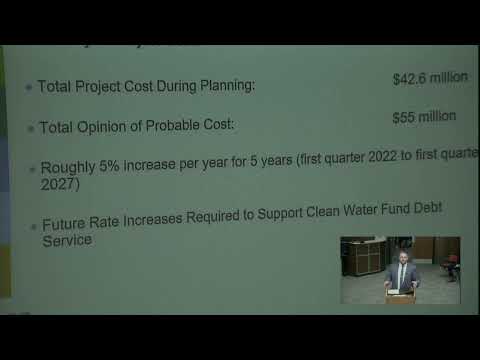
City staff and Strand Associates presented a final design for Portage City's wastewater treatment plant that replaces aging rotating biological contactors with oxidation ditches, adds a dryer for Class A biosolids, and raises the project cost estimate to roughly $55 million because of poor soils and rising construction prices.
Portage City officials and engineers from Strand Associates presented a final design update for the city's wastewater treatment plant and an updated project cost estimate on a facilities-plan item, saying the work is intended to meet upcoming Wisconsin DNR permit limits and to replace aging 1980s equipment. The firm and city staff said ground improvements and rising trade costs raised the planning estimate to about $55 million and that construction would likely finish in mid to late 2028.
The design replaces the plant's rotating biological contactors (RBCs) with two large oxidation ditches (with space for a future third), installs larger, deeper final clarifiers, adds a new return activated sludge (RAS) pumping building and a new electrical room, and upgrades the biosolids process with drying equipment and a dried-biosolids silo. Strand described reusing existing anaerobic digesters for a waste-activated-sludge (WASS) step, then drying cake from the belt press to roughly 90% solids to produce dried (Class A) biosolids for off-site disposal or beneficial reuse.
City staff emphasized the project responds to looming WPDES phosphorus limits in the DNR permit, aging infrastructure, and projected growth over a 20-year planning horizon. Strand representatives said the oxidation ditches provide larger process volume and operational reliability compared with the existing RBCs, and that the new…
Already have an account? Log in
Subscribe to keep reading
Unlock the rest of this article — and every article on Citizen Portal.
- Unlimited articles
- AI-powered breakdowns of topics, speakers, decisions, and budgets
- Instant alerts when your location has a new meeting
- Follow topics and more locations
- 1,000 AI Insights / month, plus AI Chat