Get Full Government Meeting Transcripts, Videos, & Alerts Forever!
Get email alerts on the Development Impact Fees topic
No spam. Unsubscribe anytime.
Brighton council pauses on DHI Telluride fee amendment after lengthy presentations; staff recommends denial
Summary
Developers for the 140‑unit DHI Telluride project asked council to lock in 2024 impact fees; city staff recommended denial citing code, recent fee studies and precedent risks. Council did not vote and directed further work with staff.
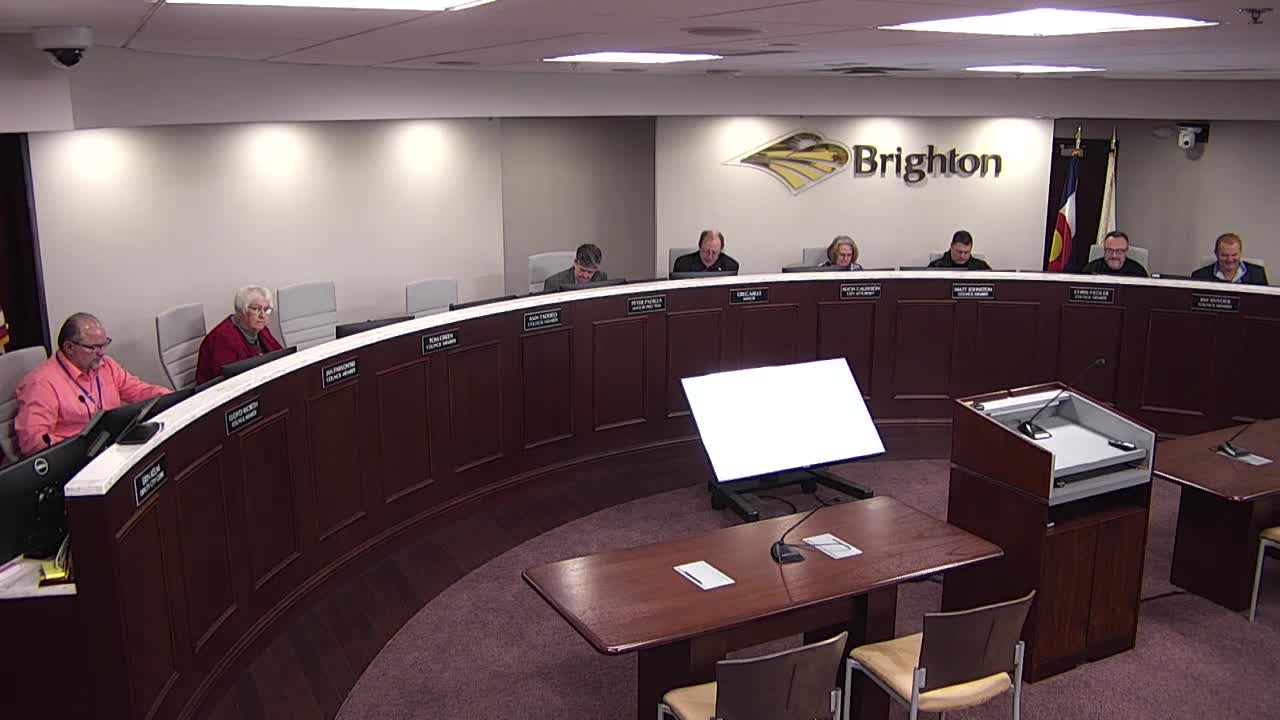
Developers of the DHI Telluride project asked the Brighton City Council on Feb. 4 to amend their development agreement so the project would pay the city's development impact fees in effect on April 1, 2024, instead of higher rates that took effect Jan. 1, 2025. City staff urged denial, and council did not make a motion; the mayor advised the parties to continue negotiating with staff.
The request matters because DHI Telluride is a 140‑unit, for‑rent paired‑home community proposed on an 11.18‑acre site immediately west of Telluride Street and north of Eagle Ridge Academy. Developers said reclassification of duplexes and multiple fee increases since the project's initial entitlement work raised the development's fees by about $1.1 million and that site construction and required off‑site improvements prevented them from pulling building permits before the fee change.
City staff, represented by Senior Planner Nick DeMario, told council the city adopted a fee study and related ordinance and fee resolutions after a multi‑year process and that the municipal code and the executed development agreement require payment of the fees in effect at building‑permit issuance. Staff detailed the public‑improvement obligations DHI agreed to construct and a previously negotiated reimbursement agreement, and said the Development Review Committee and finance staff reviewed the amendment and "vehemently recommend denial." Staff also flagged precedent risk if other in‑progress projects sought the same relief.
DHI Communities representatives said the project has been under review since 2021, that entitlements were complete by mid‑2023, and that construction began in 2024. Nick Graham, vice president of DHI Communities, and Brian Bratcher, the project's development manager, said the developer dedicated about $3.5 million in raw water shares to the city, posted bonds and mobilized construction before the fee increases were finalized. They argued that the city's requirement that DHI build additional off‑site improvements'work not explicitly required by code'delayed the developer's ability to obtain building permits and therefore to pay fees under the earlier schedule.
City staff replied that the off‑site improvements were required under the land‑use code to prevent an "undue burden" on surrounding infrastructure and that the city agreed to a reimbursement arrangement because the required expansion was not a technical recommendation of the developer's traffic study. Staff provided the reimbursement figure in the agreement as a maximum of $903,357 and said collection of higher impact fees would reduce the reimbursement strain on city finances. Staff also noted certain fees (for outside agencies such as Metro Water Recovery) cannot be modified by the city.
Council members debated timing, fairness and fiscal impacts. The council member serving as mayor pro tem emphasized the council's recent efforts to align impact fees with capital costs and warned that approving the amendment could shift costs to taxpayers and invite multiple similar requests from other pending projects. Several council members suggested continued negotiations with staff and the developer to seek compromise options, including whether any affordable‑housing units could justify fee reductions. No motion to amend the development agreement was made at the meeting.
Where it stands: staff recommended denial of the requested amendment; DHI said it would accept a staff‑draft resolution that protects the project from duplex reclassification while paying the newly adopted general‑services fee. Council directed staff and the applicant to continue working toward a compromise and did not vote on the amendment Feb. 4.
Key numbers and deadlines discussed included the following: a 140‑unit project on 11.18 acres; a developer assertion of about $1.1 million in increased fees; a staff calculation of about $1,110,208 difference between April 1, 2024 and Jan. 1, 2025 fee schedules; a reimbursement agreement maximum of $903,357; and a proposed DA amendment provision that would revert fees to the then‑applicable rates for any building permits not pulled by Dec. 31, 2025.
The council paused further action to allow additional negotiation with staff, leaving the amendment unresolved and the project moving forward under its current entitlements until the parties return with a proposed compromise or a formal motion.