City outlines wastewater upgrades and consent-order obligations; advanced treatment and reuse planned
Loading...
Summary
City staff told commissioners the wastewater plant faces state-ordered constraints and must expand treatment and implement reuse or deep-well injection under a consent order and Senate Bill 64. Initial cost estimates put full compliance in the tens of millions of dollars.
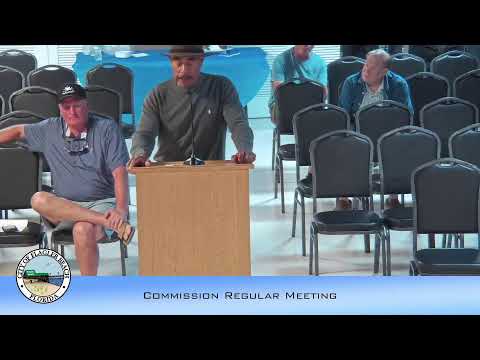
The Flagler Beach City Commission heard an overview of the city wastewater system and near-term obligations driven by a state consent order and by Senate Bill 64, which the city manager and plant staff said require eliminating the plant’s existing surface-water discharge and installing advanced treatment and reuse capacity.
City wastewater operations manager and plant staff summarized system capacity and performance: the plant was built in 1987, has a current permitted capacity of about 1 million gallons per day, and treats roughly 700,000 gallons daily. Plant managers said inflow and infiltration into the sanitary system—manhole leaks and underground pipe failures—contribute to flows well above drinking-water production and create sanitary-service and overflow risks during storms. Staff reported slip-lining and other repairs reduced inflow/infiltration in earlier phases by an estimated 50% but additional work remains.
Two state-driven requirements now constrain the plant: (1) a consent order addressing storm-related sanitary sewer overflows and elevated constituents in the discharge; and (2) Senate Bill 64, which requires elimination of surface-water discharge by the statutory compliance date and forces cities to identify an alternative discharge method. Plant staff said the city’s planned path is to pursue reuse — upgrading the plant to advanced treatment so effluent can be reused — rather than deep-well injection; however the reuse approach requires extensive upgrades including new advanced treatment trains and dewatering equipment and is costly.
Staff outlined near-term projects such as a screw press for solids dewatering (procurement in progress) and estimated that the full set of improvements to meet reuse and advanced-treatment requirements would likely exceed $40 million. City staff and the commission discussed funding options including federal and state grants, loans and bonds. The commission asked staff to continue long-range planning and to include the wastewater capital needs in upcoming goal-setting and budget workshops.
Commissioners and staff also noted long-term planning conversations around reuse potential and “toilet-to-tap” reuse concepts as pressures on groundwater and aquifers increase, but commissioners emphasized this is a multi-year, high-cost program requiring staged planning and outside funding.