Get Full Government Meeting Transcripts, Videos, & Alerts Forever!
Get email alerts on the Education Author Visit topic
No spam. Unsubscribe anytime.
Author Daniel Nayeri visits Albion Middle for all-school read; teachers say program fostered empathy
Summary
Author Daniel Nayeri visited Albion Middle School for a two-day, schoolwide reading and multidisciplinary program based on his novel The Many Assassinations of Samir, the Seller of Dreams, supported by grants from Voya, the Canyons Education Foundation and DonorsChoose.
Author Daniel Nayeri visited Albion Middle School this week for a two-day, schoolwide program built around his novel The Many Assassinations of Samir, the Seller of Dreams, bringing author talks, workshops and cross-curricular projects to students and teachers.
The visit was part of an “all-community read” conceived by teachers Stephanie Koryanis and Stephanie Nasser and supported by principal Eric Gardner and grant funding, including a $2,000 award from Voya’s Unsung Heroes program and an $80,000 grant from the Canyons Education Foundation. Organizers also used DonorsChoose funding and ordered more than 300 books for the school.
“The goal of this project was to unleash the power of one shared text,” Stephanie Koryanis, an Albion Middle teacher, said, explaining the teachers’ vision to use a single book as a jumping-off point for lessons across subjects. She said the program emphasized empathy and student engagement rather than a single classroom reading.
“it was almost like a giant snowball that picked up steam,” Eric Gardner, Albion Middle principal, said of staff and student participation. Gardner described widespread teacher buy-in and said projects ranged from artwork and pottery to music and STEM builds tied to the novel’s themes.
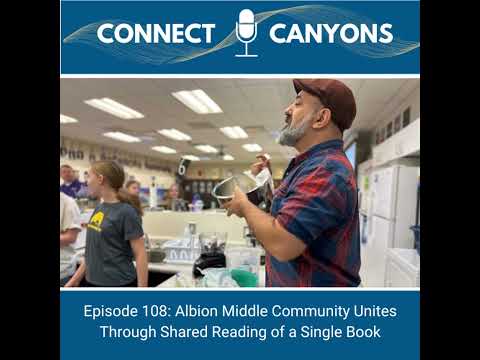
Daniel Nayeri, the author, spoke about the visit and the value of immersive, personal interactions between writers and students. “The highest achievement that any artist can have is to be an inspiration to other people to make things,” Nayeri said. He described participating in electives, cooking with students and giving detailed feedback at a writers’ workshop.
Teachers and organizers said the visit reached several hundred students. Stephanie Nasser estimated the author interacted with “six, seven hundred students individually” through classes, assemblies and signings; organizers also noted a library signing line that extended out the door. Staff said the activities intentionally included students across ability levels, including resource and special education classrooms.
Denise Haycock, development officer for the Canyons Education Foundation, described the foundation’s award as supporting an immersive experience rather than equipment. “To be able to support something like an experience … they’ll remember getting to talk to Daniel,” Haycock said.
Organizers described a multidisciplinary set of activities: English classes read and listened to audio of the book; art classes produced batik and pottery; music classes composed pieces tied to the story’s emotions; science and STEM units connected historical and physical concepts from the text. Staff and the author said these activities were intended to teach students to “learn how to learn,” applying immersion techniques to any subject.
Program funding details were discussed on the podcast. Koryanis and Nasser said Voya’s Unsung Heroes grant provided $2,000; the Canyons Education Foundation awarded $80,000; DonorsChoose contributed additional resources (amount not specified). Organizers said funds covered author fees, classroom materials, and more than 300 books for students and teachers.
Organizers credited sustained planning and multiple meetings with the author for the event’s scope. Gardner and the teachers said the school spent roughly 18 months planning the immersive program and arranging author visits, presentations and elective participation. The speakers said trust between teachers and the author was a necessary condition for allowing broad classroom access.
The visit concluded with author interactions, signings and workshops that staff said left students with a model of creative practice and empathy. Organizers said they hope the model — an all-community read anchored in multidisciplinary activities — will be a template for future events.
Votes at a glance: none. No formal votes or motions were recorded in the podcast; the discussion described grants already awarded and program activities rather than approvals made during the recorded session.