Get Full Government Meeting Transcripts, Videos, & Alerts Forever!
Get email alerts on the Child Welfare topic
No spam. Unsubscribe anytime.
Senate raises extended foster-care age to 23 after heated debate over costs and responsibility
Summary
The Idaho Senate approved House Bill 2-45 to extend eligibility for extended foster care from age 21 to 23, and to ease kinship licensing standards, after lengthy debate. The bill passed 21–14.
The Senate voted to pass House Bill 2-45, extending the age for Idaho’s extended foster care program from 21 to 23 and authorizing the Department of Health and Welfare to adopt separate licensing standards or limited waivers for relative foster caregivers. The final vote was 21 in favor, 14 opposed.
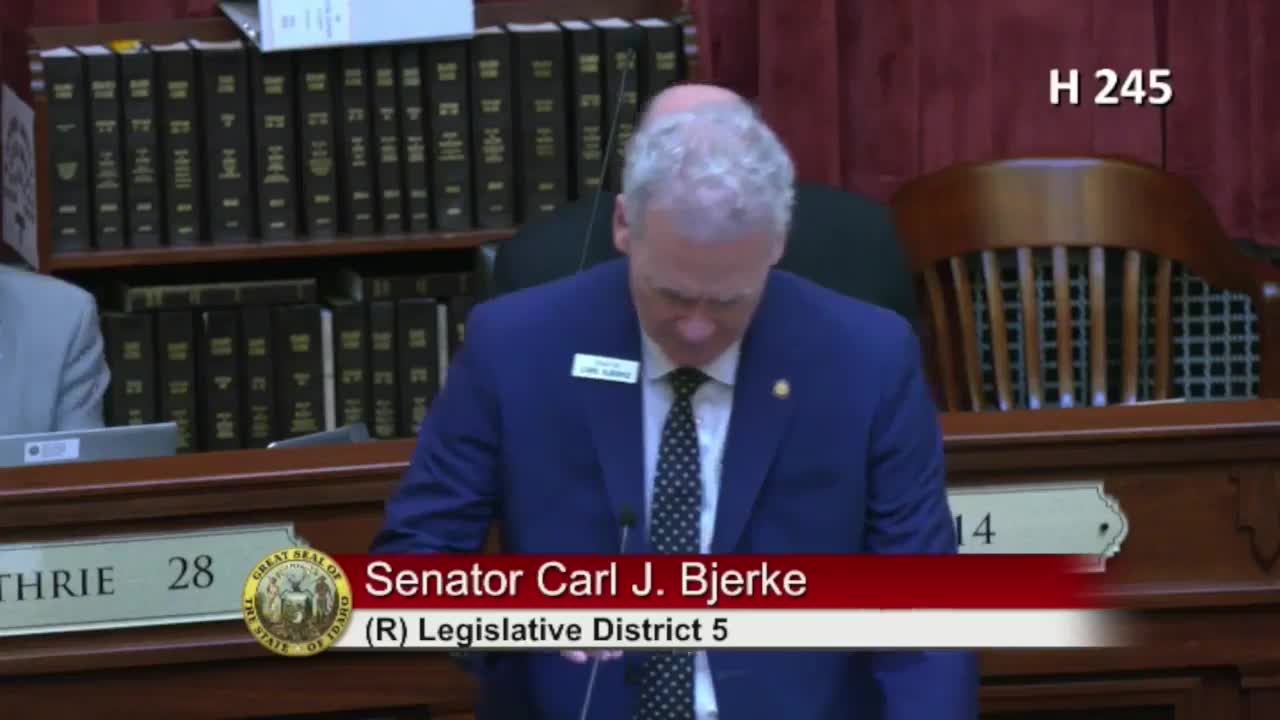
Sen. Bierke, who opened debate, said the changes are intended to reduce homelessness, incarceration and other poor outcomes for youth aging out of foster care. He cited research and statistics indicating extended care reduces food insecurity, homelessness and arrests, and increases employment and post‑secondary enrollment. Supporters portrayed the extension as a targeted, evidence‑based investment in youth at risk of “arrested development” following trauma.
Several senators described personal or district-level experience with shortages of foster parents and the need to remove barriers to kinship placements. The bill also authorizes the department to expedite placements and offers licensing variances for relatives when the department judges that a child’s health and safety are not endangered.
Opponents argued the measure could delay self‑sufficiency and questioned the role of government versus families and community organizations in supporting young adults. Senator Shippey and others said some individuals in foster care exhibit maturity that should prompt earlier independence. Debate included moral and fiscal arguments and differing views on the government’s role in long-term social supports.
After extended floor debate that included personal testimony and data citations, the Senate approved the bill 21–14. The title was approved and the bill will be returned to the House.