Get Full Government Meeting Transcripts, Videos, & Alerts Forever!
Get email alerts on the Civic Open Space Fee In Lieu topic
No spam. Unsubscribe anytime.
Riviera Beach planning board rejects fee-in-lieu for downtown civic open space
Summary
The Riviera Beach Planning and Zoning Board voted unanimously to recommend denial of a proposed ordinance that would allow developers in the Downtown Marina Zoning District to pay a fee instead of providing required civic open space.
The Riviera Beach Planning and Zoning Board voted unanimously to recommend denial of a proposed ordinance that would have allowed developers in the Downtown Marina Zoning District to provide a monetary contribution in lieu of the code’s civic open space requirement.
The item, presented by Clarence Sermons, director of development services, would have added a fee-in-lieu option for “working waterfront” projects in the downtown marine zoning district; staff said the fee would be calculated by city staff to reflect land and construction costs. Sermons told the board the draft text amendment was the result of a councilmember request and that staff had briefed city council before bringing the matter to the board for a recommendation.
Sermons described civic open space as a code requirement that applies to new downtown development of one acre or more and to additions that increase gross floor area by 20% or more. Under current code excerpts staff cited, a developer must provide at least 5% of the site as civic open space, on-site or off-site within 600 feet and within the CRA boundary. “Revenue from civic open space fees in lieu could only be used to develop civic open space, which means the funds cannot be used for general fund activities of the city or infrastructure, roads, or that kind of thing,” Sermons said during the presentation.
Sermons also told the board that a legal review found the ordinance could be drafted with a retroactive effective date of Jan. 1 of the current year, and that the text amendment could raise consistency issues with Comprehensive Plan policies 1.4.1 and 1.4.2, which guide the city’s provision of public and private open space.
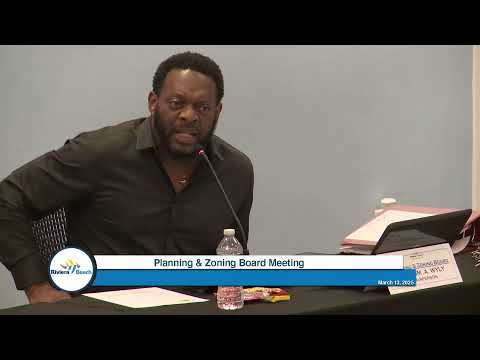
Board members said the change would risk shrinking guaranteed public space downtown and shift long-term maintenance costs to the city. “If you give [developers] that in lieu of, you'll have maybe a quarter of that because the developer used most of it for the use of their development,” Board member Fernandez said, arguing the result would be smaller, privately oriented plazas and fewer public amenities. Board member Burgess asked which councilmember requested the change; staff identified the sponsor in council as a District 4 councilmember (referred to in the packet/video as Councilmember Spirites). Several board members reiterated that even if fees produced revenue, the legal analysis showed those funds were limited to civic open space and could not be used for general infrastructure needs.
After discussion, a motion that the board recommend denial of the proposed fee-in-lieu text amendment carried 5-0. The roll call vote recorded Burgess, Fernandez, Joseph, Shepherd and Chair Wiley voting to deny. The board’s recommendation will be transmitted to city council for its consideration; city council takes final action under the city’s land-development process.
Sermons advised the board of alternative options staff has suggested if council’s goal is flexibility or infrastructure funding: tightening impact-fee or off-site improvement requirements, expanding the geographic range where civic open space may be provided (for example increasing the 600-foot allowance), or changing timing rules for when civic open space must be delivered. Sermons also noted disadvantages staff identified: potential future attempts to expand fee-in-lieu options to other downtown zones, loss of guaranteed citizen open space as redevelopment proceeds, and additional maintenance cost obligations if the city acquires new public open space developed with fee proceeds.
The board’s denial covers the draft language presented in its packet; staff will include the board’s recommendation in the transmittal to city council. The docket and meeting video cited by staff show the item stemmed from a council-level request and prior workshop presentation.