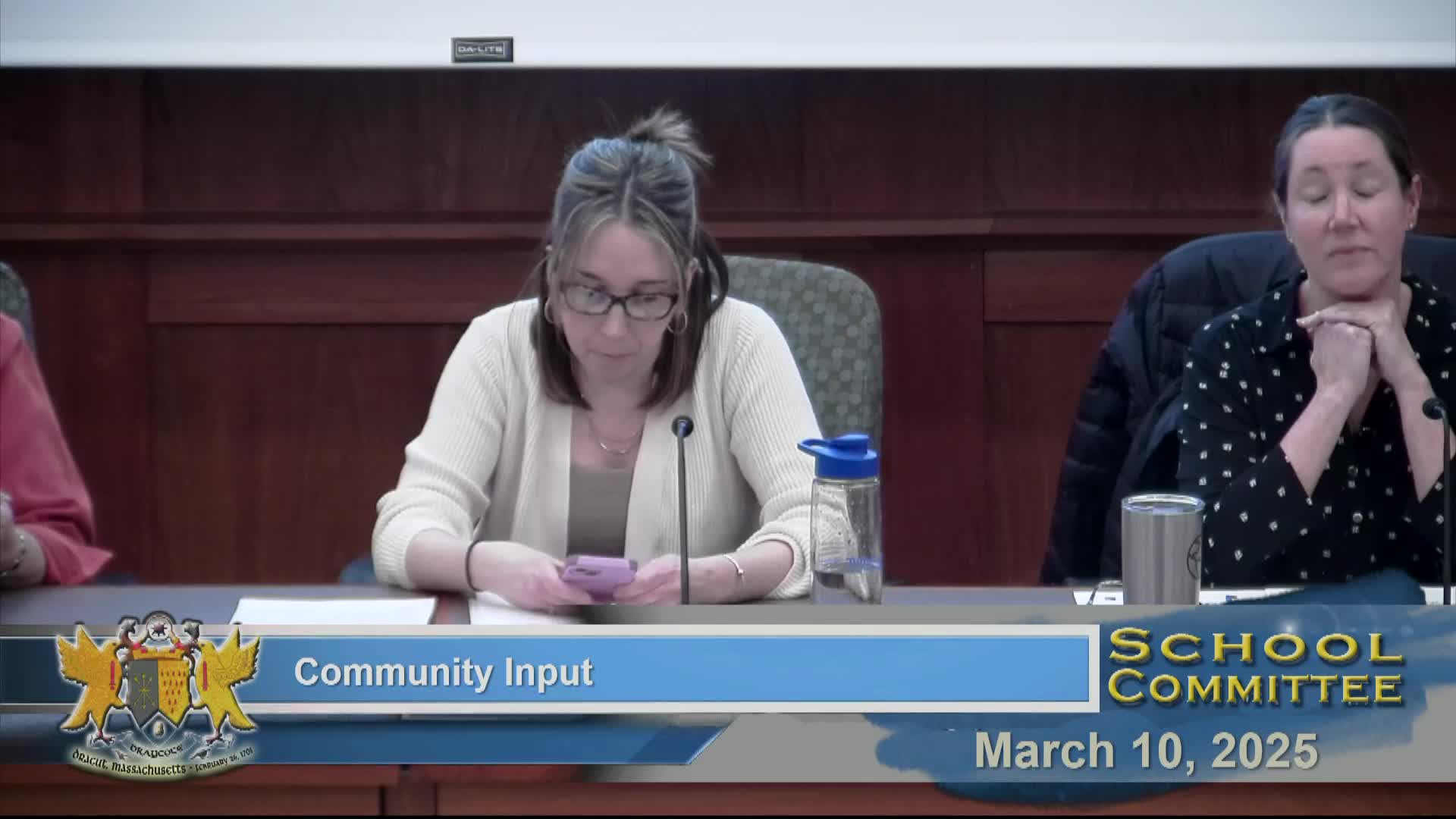
Dracut School Committee tables plan to shift school start times after split survey and bus concerns
Loading...
Summary
After a presentation and public comment, the Dracut School Committee voted to table a proposal to move all school start times 30 minutes later. Committee members cited mixed survey results, bus-driver shortages and childcare concerns; the administration had recommended a 30-minute districtwide shift as the only financially feasible option.
The Dracut School Committee voted to table consideration of changing school start times after a week of presentations, a district survey and extended public comment.
Superintendent Steven presented the district's analysis and recommended a 30-minute later start for all schools as the only financially and operationally viable option under current constraints. "Given our financial and operational constraints, the only option available to the district ' is to push start times back completely by 30 minutes for all six schools," Superintendent Steven said during the presentation, citing bus costs and districtwide logistics.
The recommendation followed a district survey that collected roughly 1,260 responses, including 277 staff, 313 students (grades 8 '11) and 670 parents and guardians. The superintendent told the committee that parents were divided: about 53% overall supported a 30-minute delay, but support varied by level; 62% of middle school parents and 60% of high school parents supported the change while elementary-level parents were roughly split. The administration also presented medical guidance from national bodies recommending later start times for adolescents and noted local comparisons showing Dracut currently starts among the earliest area high schools.
Public commenters emphasized competing concerns. Allison Cillian, a parent, warned that a 9:00 a.m. elementary start would be difficult for working families and stressed the need for detailed tardiness data before making changes: "I think data needs to be presented showing us exactly how many children are affected by this early start time," she said. Eileen Ryan, another parent, said many involved parents she spoke with had not known the item was on the agenda and urged better outreach before a decision. A high school student said younger classmates were more supportive while seniors were less interested because they're graduating.
Committee members pressed on transportation and child-care impacts. The administration said reversing the current schedule (making elementary earlier) would require two additional buses at roughly $75,000'$80,000 per bus annually, a cost the district said it could not absorb. The district also reported recent shortages of bus drivers across the region and that North Reading, the local vendor, was recruiting but had seen increased absenteeism and medical leaves that strained service.
Several members and the superintendent discussed timing the decision with future district changes. One member suggested deferring action until the new Campbell school and any related redistricting are clearer, noting that consolidation could change bus routes and walk-zone options.
After further discussion the committee voted to table the matter and revisit it once new information about the Campbell project and related town planning is available. The motion to continue consideration until the Campbell-related data is available was made from the floor and, after a second, carried on a voice vote: "All those in favor of tabling this? Aye. Opposed? Motion carries."