Get Full Government Meeting Transcripts, Videos, & Alerts Forever!
Get email alerts on the Legislative Transparency topic
No spam. Unsubscribe anytime.
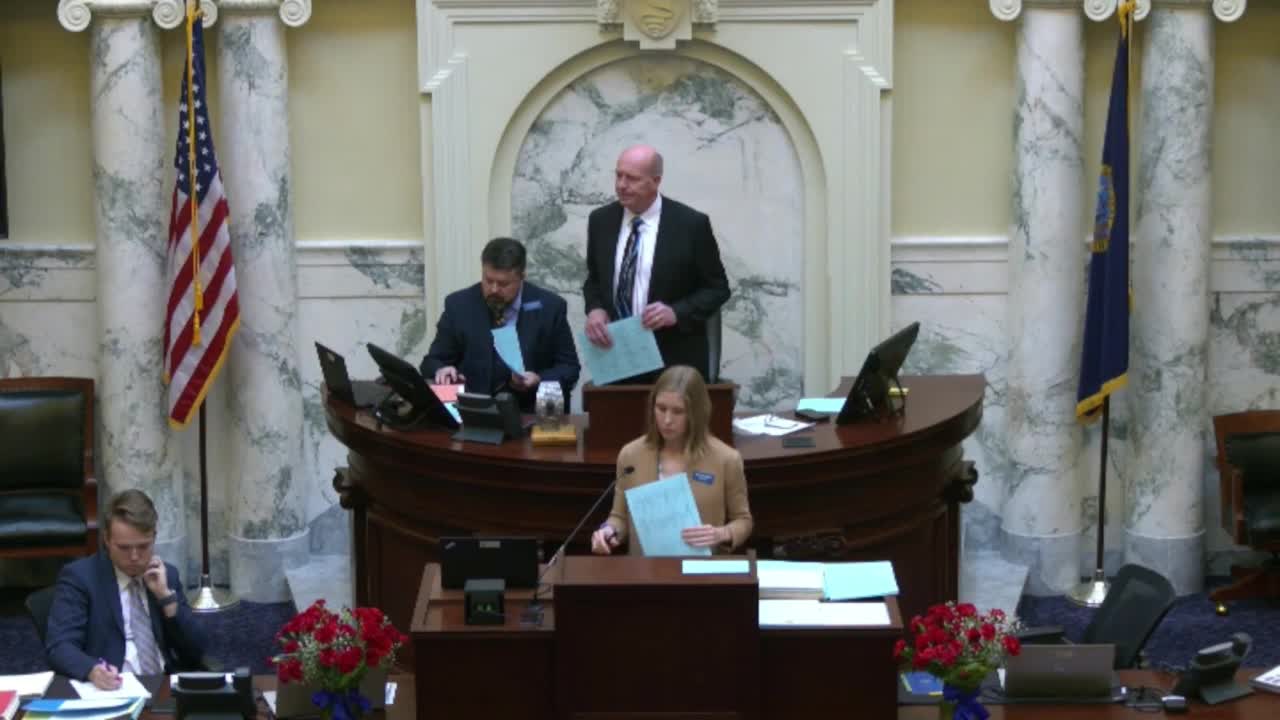
House debate spotlights bill to require lawmakers to disclose out-of-state travel paid by others
Summary
The Idaho House debated a bill requiring legislators to disclose out-of-state travel paid for by outside entities, including destination, dates, purpose and payer; floor debate revealed disagreements over scope, exemptions and enforcement, and no final House vote appears in the transcript for the day.
Members of the Idaho House debated legislation on March 12 that would require legislators to disclose out-of-state travel paid for by outside entities. The measure under consideration would require a member who receives travel paid by another entity to report the travel destination, dates, purpose and funding source within 30 days; the bill text discussed in floor remarks included a $25 per day fine for failure to file the report. The issue drew extended floor discussion but no final recorded House vote on the legislation appears in the transcript for that legislative day.
Supporters framed the bill as basic disclosure for constituents. “If somebody is paying for me to attend, that is a campaign,” said Representative, District 3 in debate favoring transparency. Representative, District 32, who presented the bill on the floor, said the purpose is to make visible the outside influences that bring legislators to conferences and seminars: the bill would require disclosure of airfare, hotel and related costs when another party pays and the reporting requirement would be posted to make the information available to the public.
Opponents argued the bill’s current language creates unequal obligations, exempting trips paid entirely out of a legislator’s own funds while requiring disclosure when an outside party pays. “To me, this creates kind of a transparency caste system,” said Representative, District 36, who opposed the bill. Other members raised concerns that field-specific conferences might shift inside the state to avoid the reporting threshold and that the bill, as drafted, did not extend the same reporting requirement to agency staff, county officials or executive-branch employees.
Questions on enforcement and scope were frequent in floor debate. One lawmaker asked whether a trip where a legislator paid airfare but an organization covered hotel and meals would still be reportable; the presenter said the bill language covered airfare and hotel and similar travel components, and thus those costs would trigger reporting. Several members suggested the bill needed changes to require equal disclosure from staff and executive-branch appointees or to remove the self-pay exemption if the goal is uniform transparency.
Floor discussion ended with members asking for refinements: some urged broadening the bill to apply equally to staff and agency heads; others asked that the self-pay exception be removed to avoid the appearance of differential treatment. The House adjourned at the end of the day without a recorded final vote on this measure in the provided transcript excerpt. Further committee or floor action will determine whether the bill returns for a final vote and whether its language is amended to address the concerns raised.