Get Full Government Meeting Transcripts, Videos, & Alerts Forever!
Get email alerts on the Administrative Law topic
No spam. Unsubscribe anytime.
Committee advances cleanup, modernizing changes to Idaho Administrative Procedures Act
Summary
Senators advanced House Bill 9, which updates Idaho’s Administrative Procedures Act to modernize contested-case rules, add time limits on emergency agency proceedings, and remove archaic requirements; bill will go to the Senate floor with a due pass.
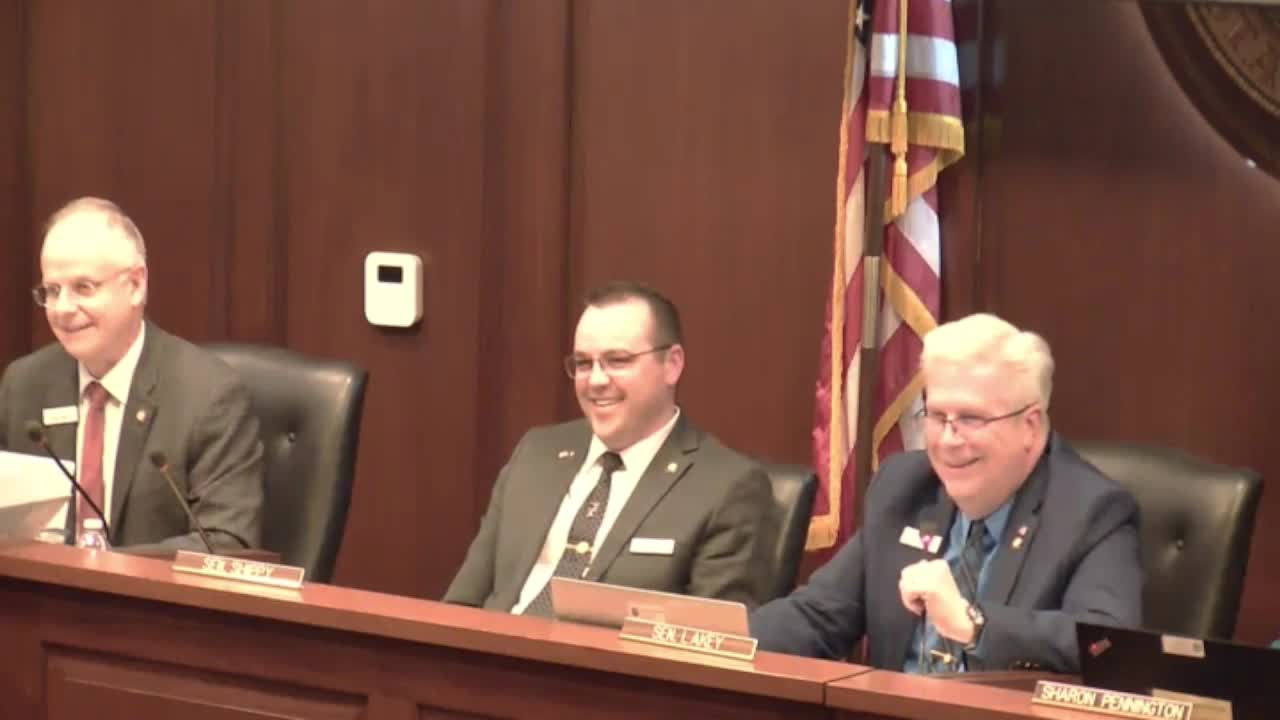
BOISE — The Senate Judiciary & Rules Committee voted to send House Bill 9, an update to Idaho’s Administrative Procedures Act (APA), to the Senate floor with a due pass recommendation after brief explanation from bill sponsors and the Office of Administrative Hearings.
Senator James Rucktee, sponsor, said HB9 largely cleans up language in the APA, aligns statutes with the Office of Administrative Hearings (OAH) rules and modernizes sections based on a more recent model act. Brian Nichols, chief administrative hearing officer for OAH, told senators the bill updates definitions, clarifies roles such as administrative law judge and hearing officer, and removes archaic references to “exceptions,” a practice the courts abolished decades ago.
Nichols said the bill also imposes a 120‑day limit to complete contested-case proceedings that begin with an agency’s emergency action, addressing a gap that could leave licensees or regulated parties in prolonged limbo. The bill formalizes agency publication of guidance or declaratory orders that agencies may rely on as precedent so parties in contested cases have clearer access to the materials agencies use.
“Everything that we’ve done…has been updated to that 2010 version to ensure that people are still getting access and fairness in these contested case proceedings,” Nichols said. He told the committee the changes remove procedural traps that have proved confusing for self-represented litigants.
Senator Kaiser moved to send the amended bill to the Senate floor with a due pass; Senator Shippey seconded. The committee approved the motion by voice vote and the chair announced the bill will be sent to the floor with a due pass.