Get Full Government Meeting Transcripts, Videos, & Alerts Forever!
Get email alerts on the Special Education Funding topic
No spam. Unsubscribe anytime.
Idaho House approves $3 million high-needs special education reimbursement fund
Summary
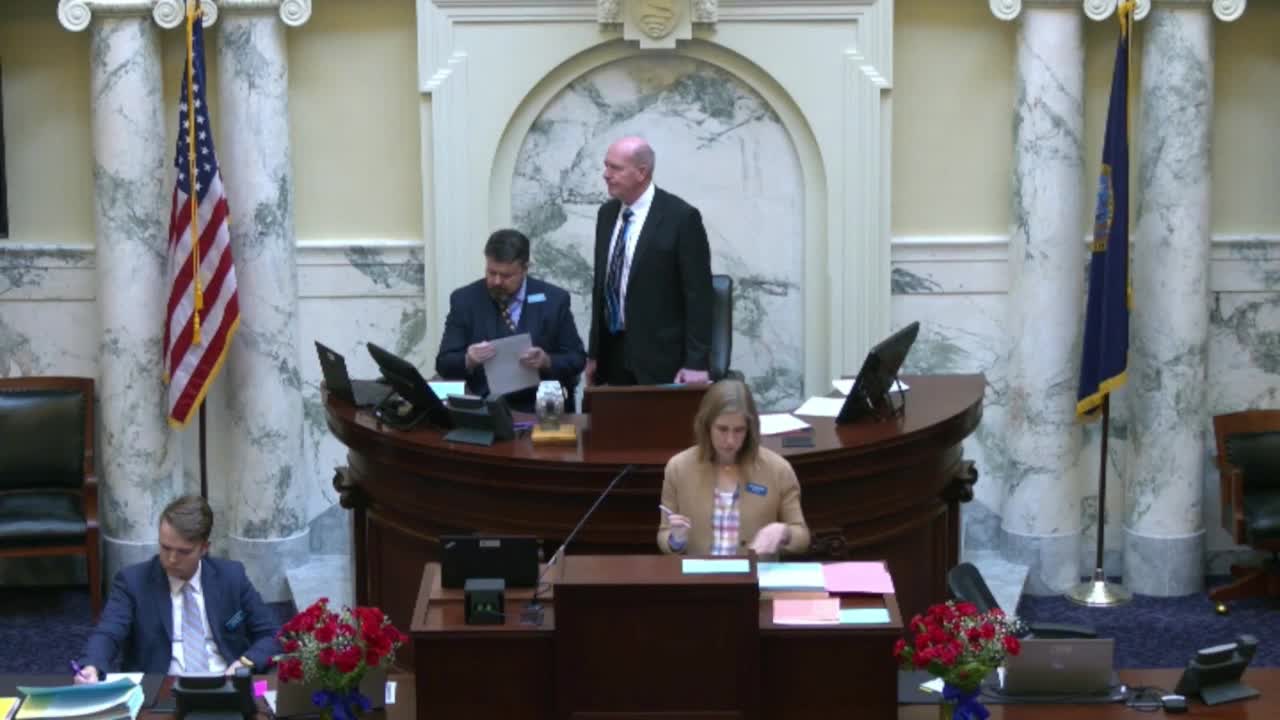
The House passed House Bill 2 91 to create a $3 million reimbursement fund to help school districts and charter schools cover extraordinary costs for high-needs students after other available funds (federal, state, Medicaid) are exhausted. The bill passed 36-34.
The Idaho House passed House Bill 2 91 on March 12, 2025, to create a high-needs special education reimbursement fund with an initial ask of $3,000,000. The bill passed on a roll-call vote, 36 ayes to 34 nays. Sponsors said the fund is a reimbursement mechanism for extraordinary education costs that school districts and charter schools are legally required to provide under federal law.
“Every student in our state with special needs has a right to an IEP,” said Representative, District 30, the bill’s sponsor, describing cases where districts face very high individual-year costs; the sponsor cited one student cost example of $134,000 per year and a district example with 83 high-needs students costing over $2,000,000 annually.
The bill establishes a process in which schools must first pursue all available funding — including federal grants and Medicaid — and then apply to the Department of Education for reimbursement for qualifying high-needs expenses. The sponsor emphasized that this is a reimbursement program, not a general grant or recurring expansion of base funding.
Opponents warned the $3,000,000 initial appropriation would be only a partial fix for what one legislator described as an “about $80,000,000 gap” between current funding and districts’ reported high-needs costs. Representative, District 15 argued the program could grow over time and urged the House to consider whether existing education budgets and spending accountability could be reformed instead of creating a new fund.
Supporters pointed to Supreme Court precedent and federal law requiring services for eligible students. Representative, District 33 and Representative, District 28 described examples from their districts and urged the state to act to relieve local property taxpayers and school budgets. One lawmaker referenced that other states maintain similar “high-needs” funds and that the Idaho Department of Education reviewed the application process to ensure compliance and documentation requirements.
The clerk recorded the final roll-call: 36 ayes, 34 nays. House Bill 2 91 will be transmitted to the Senate for consideration. The bill text and the Department of Education’s application process are on record as the mechanism for reimbursement; sponsors said they anticipate follow-up oversight to monitor claims and ensure Medicaid and other sources are pursued first.