Get Full Government Meeting Transcripts, Videos, & Alerts Forever!
Get email alerts on the Crna Scope And Liability topic
No spam. Unsubscribe anytime.
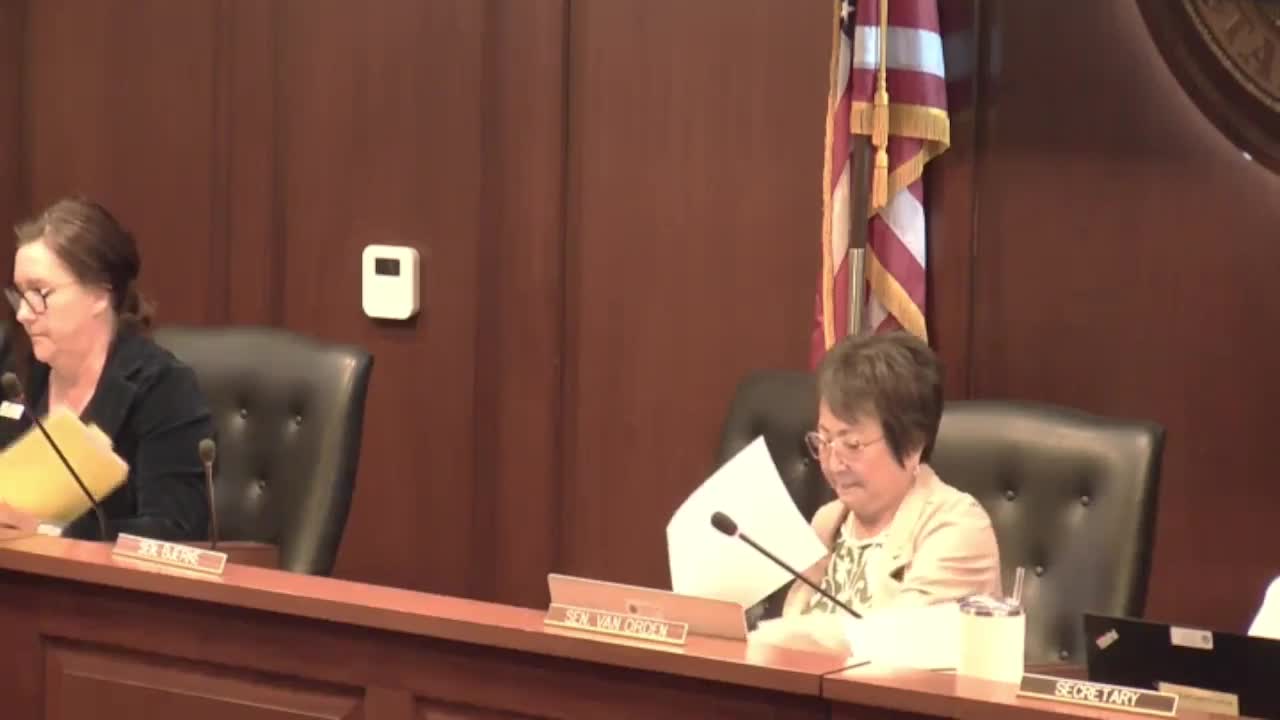
Committee advances bill to codify CRNA scope and limit physician liability in Idaho statute
Summary
The Senate Health and Welfare Committee approved House Bill 289 to place CRNA practice and related liability protections into statute, with supporters saying the change will protect rural access and reduce insurance and competition barriers.
The Senate Health and Welfare Committee voted to send House Bill 289 to the floor with a due pass recommendation after testimony from certified registered nurse anesthetists and their representatives.
Senator Carl Bjerke, sponsor, said the bill “clarifies the scope of practice responsibilities and liability protections for certified registered nurse anesthetists (CRNAs) in Idaho.” He told the committee CRNAs “practice in every setting in which anesthesia is provided and are often the sole anesthesia provider in many rural counties in Idaho.”
Maria Conan, president of the Idaho Association of Nurse Anesthesiology and a practicing CRNA, testified in support: “CRNA is an advanced practice registered nurse who provides safe, high quality, cost effective care in every setting where anesthesia is delivered. … We are the primary providers of rural anesthesia care.” Conan said the bill “codifies the type of care that we provide and have been providing for more than 2 decades and releases the surgeons and the facilities, with whom we work closely, from extraneous liability.”
Shad Westover, a CRNA and the first program director for Idaho State University’s nurse anesthesia program, told the committee CRNAs are trained to a full scope of practice and that the 2002 opt‑out for Medicare supervision has been important for rural access. “That was an opt out for Medicare billing,” Westover said, adding that CRNAs provide a majority of anesthesia services in rural hospitals and surgery centers and that the training pipeline requires critical‑care experience prior to anesthesia education.
There were no public opponents on the record. Senator Harris moved to send the bill to the floor with a due pass recommendation; the motion was seconded and approved by voice vote.
The bill would place into statute a reaffirmation of CRNAs’ autonomous role and delineate liability protections that supporters say reduce insurance costs and potential barriers to competition while protecting access to anesthesia care in rural Idaho.