Get Full Government Meeting Transcripts, Videos, & Alerts Forever!
Get email alerts on the Legislation Transit topic
No spam. Unsubscribe anytime.
Broomfield council votes unanimously to seek amendments to RTD transit‑reform bill (SB25‑161)
Summary
Council voted 10–0 to direct staff to pursue an amended position on Senate Bill 25‑161, a statewide transit‑reform measure; staff sought changes to ensure service gains benefit Broomfield and other suburban communities.
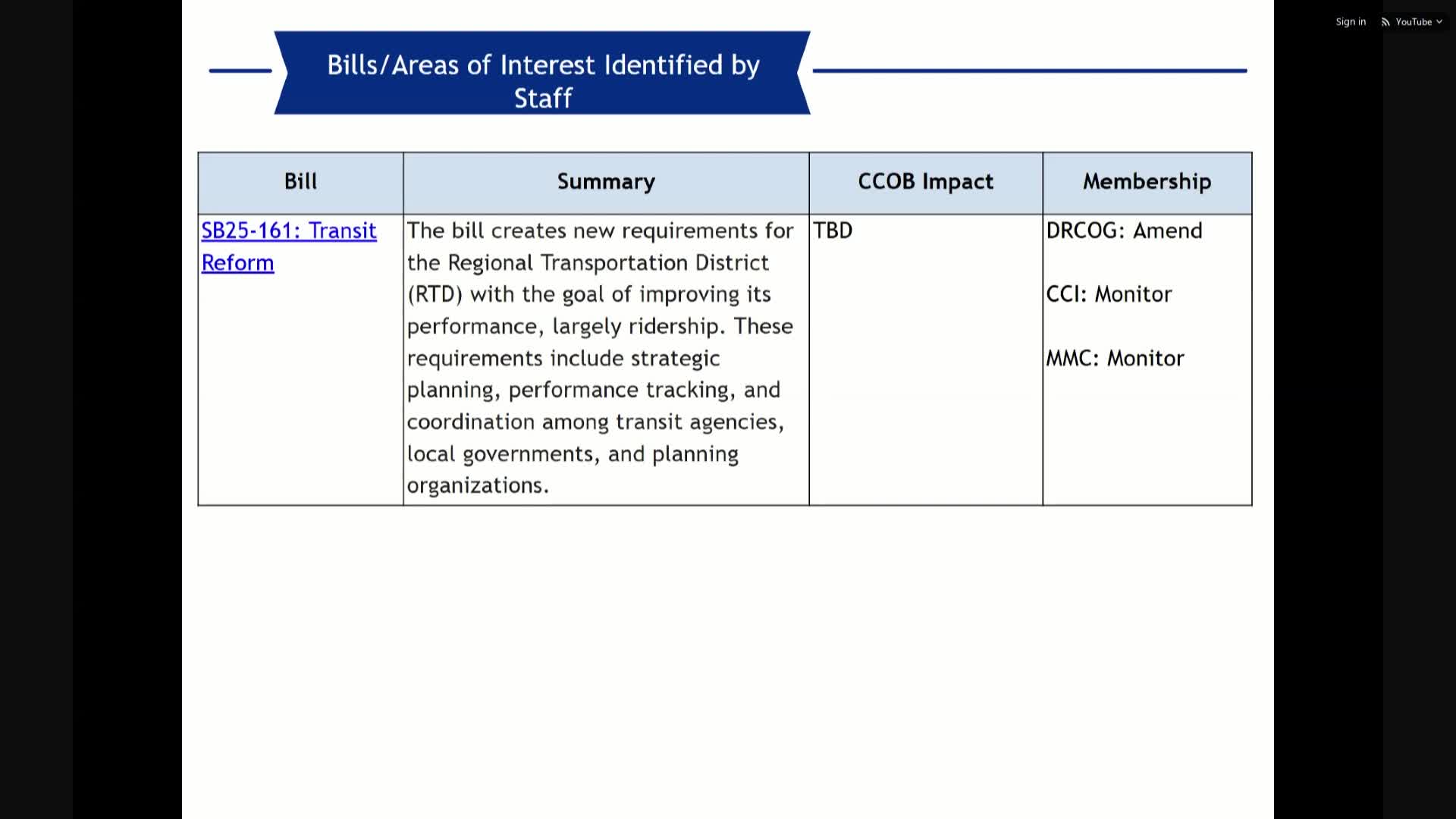
The Broomfield City Council voted unanimously March 11 to direct staff to pursue an amended position on Senate Bill 25‑161, a statewide transit‑reform bill intended to increase regional transit ridership and strengthen accountability for the Regional Transportation District (RTD).
The motion, made by Council Member Lim and seconded by Council Member Henkel, passed by recorded vote. Staff described the bill as requiring strategic planning, performance tracking and coordination among transit agencies and local governments but said the current draft lacks specificity to ensure ridership gains will be distributed across RTD’s entire service area rather than concentrated in denser urban centers.
Nut graf: Broomfield contributes more than $20 million in taxes to RTD and staff recommended an amend position to protect local services and press for county‑level reporting and other measures that would show whether RTD improvements actually increase ridership in suburban areas such as Broomfield.
Director of Strategic Initiatives Denee Bruggard summarized the bill and the local government concerns. Bruggard said staff had reviewed the bill, noted that similar bills failed in 2024, and that the bill is currently parked in appropriations pending the state budget process. Council approved a motion to adopt an amend position so staff could formally advocate for changes that protect Broomfield service levels.
Council members asked technical questions about how the bill’s ridership targets would interact with state greenhouse‑gas goals and discussed whether RTD should prioritize new service in lower‑density suburbs. Staff told council it will pursue amendments to require county dashboards and other accountability measures to guard against service loss in suburban jurisdictions.
Ending: Staff will pursue changes and return to council with updates; the bill is likely to advance only after the state’s long bill and revenue forecast are finalized.