Get Full Government Meeting Transcripts, Videos, & Alerts Forever!
Get email alerts on the Election Integrity Division topic
No spam. Unsubscribe anytime.
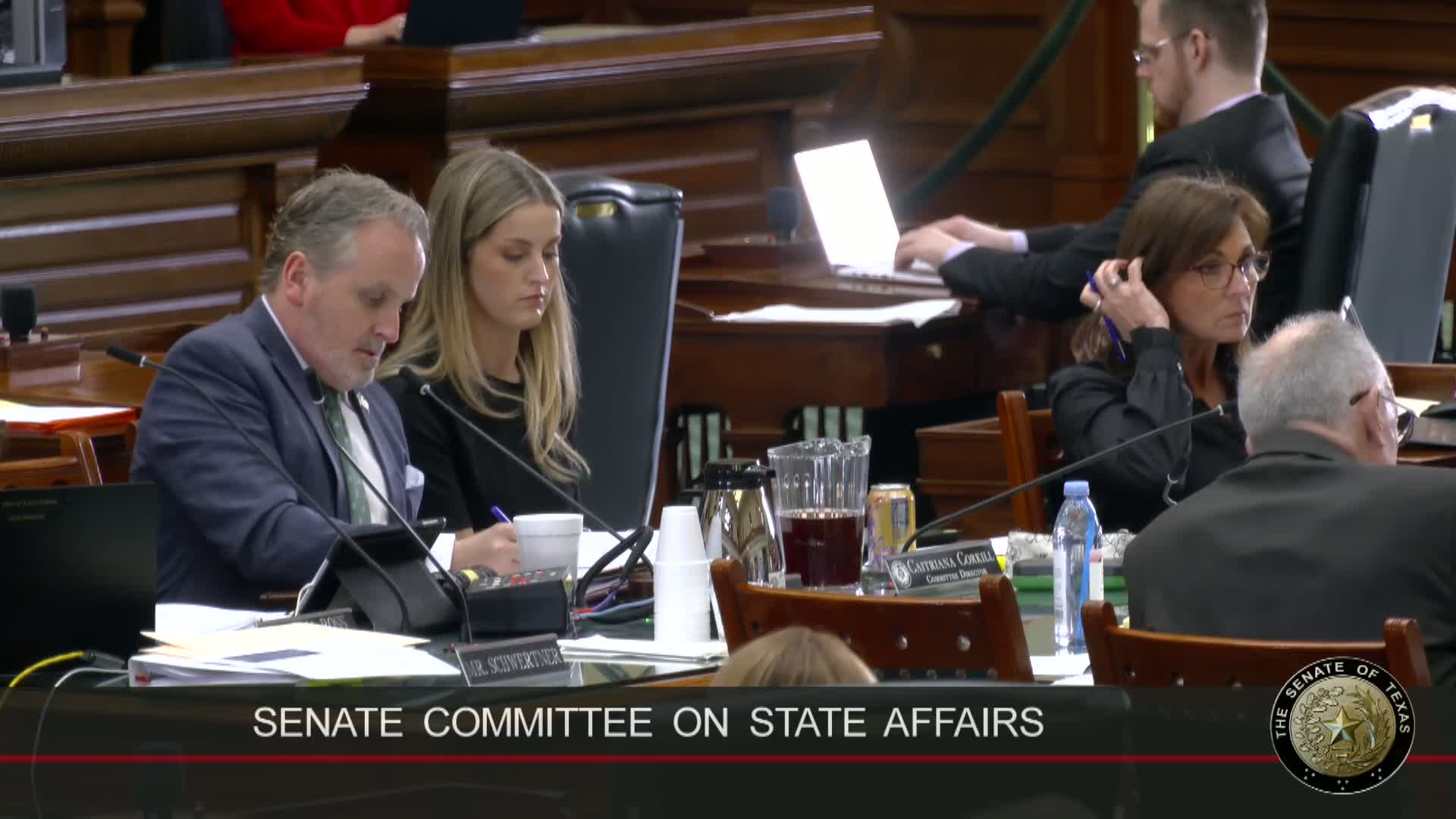
Panel debates bill to codify an election integrity division inside the attorney generaloffice
Summary
Senate Bill 318 would create a permanent Election Integrity Division in the Office of the Attorney General; OAG witnesses described operational concerns about seasonality, while civil-rights groups and efficiency critics opposed enshrining the unit permanently.
Senate Bill 318, offered by Senator Creighton, would statutorily create an Election Integrity Division within the Office of the Attorney General (OAG). The author said the division would safeguard election integrity as a continuing priority regardless of who holds the attorney general's office.
Jeff Barr, chief of the OAGElection Integrity Division, and Brent Dupree, director of law enforcement for the OAG, appeared as resource witnesses. Barr described the officepractice since 1951 and explained the practical effects of the Stevens decision on the OAG's ability to prosecute election cases. Barr told senators that election prosecutions are "seasonal" in that many investigations cluster around election cycles; he warned that formally codifying a dedicated division could create funding and staffing constraints if the unit were required to be funded and prohibited from assisting other prosecution work in slow seasons. Brent Dupree and other investigators said the investigative unit in the OAG remains busy and referred cases to local district attorneys.
Opponents, including Common Cause Texas and the Texas Civil Rights Project, urged the Committee to reject the bill. Emily Eby French of Common Cause cited low closure rates relative to the resources OAG invested (presenting figures that the AGteam worked many thousands of hours on election matters with a small number of cases closed in some periods) and argued the division has demonstrated limited results at substantial cost. Veronica Warms of Texas Civil Rights Project testified that the division has disproportionately pursued Black and Latino Texans in past investigations and warned the legislature against mandating a permanent unit that could be used aggressively by future attorneys general.
Supporters, including Ken Moore and Dr. Laura Presley (True Texas Elections), pressed for more staff and expertise, particularly on electronic voting and cyber-related election threats. Dr. Presley asked for technical specialists for electronic-fraud work and said access to voting-machine software and logs is necessary to investigate algorithm or machine-based irregularities.
Committee members asked about operational flexibility and funding, and the AGresource witnesses said the office could provide legislative language to allow staffing flexibility between units. The committee took public testimony and left SB 318 pending.