Get Full Government Meeting Transcripts, Videos, & Alerts Forever!
Get email alerts on the Aquatic Invasive Species topic
No spam. Unsubscribe anytime.
Lawmakers hear funding, prevention proposals as Oregon girds against invasive mussels
Summary
House Bill 2981 would fund invasive aquatic species prevention, monitoring and rapid-response planning; witnesses told the committee the threat is imminent and cited high response costs in neighboring states and a plan to expand inspections and early-detection monitoring.
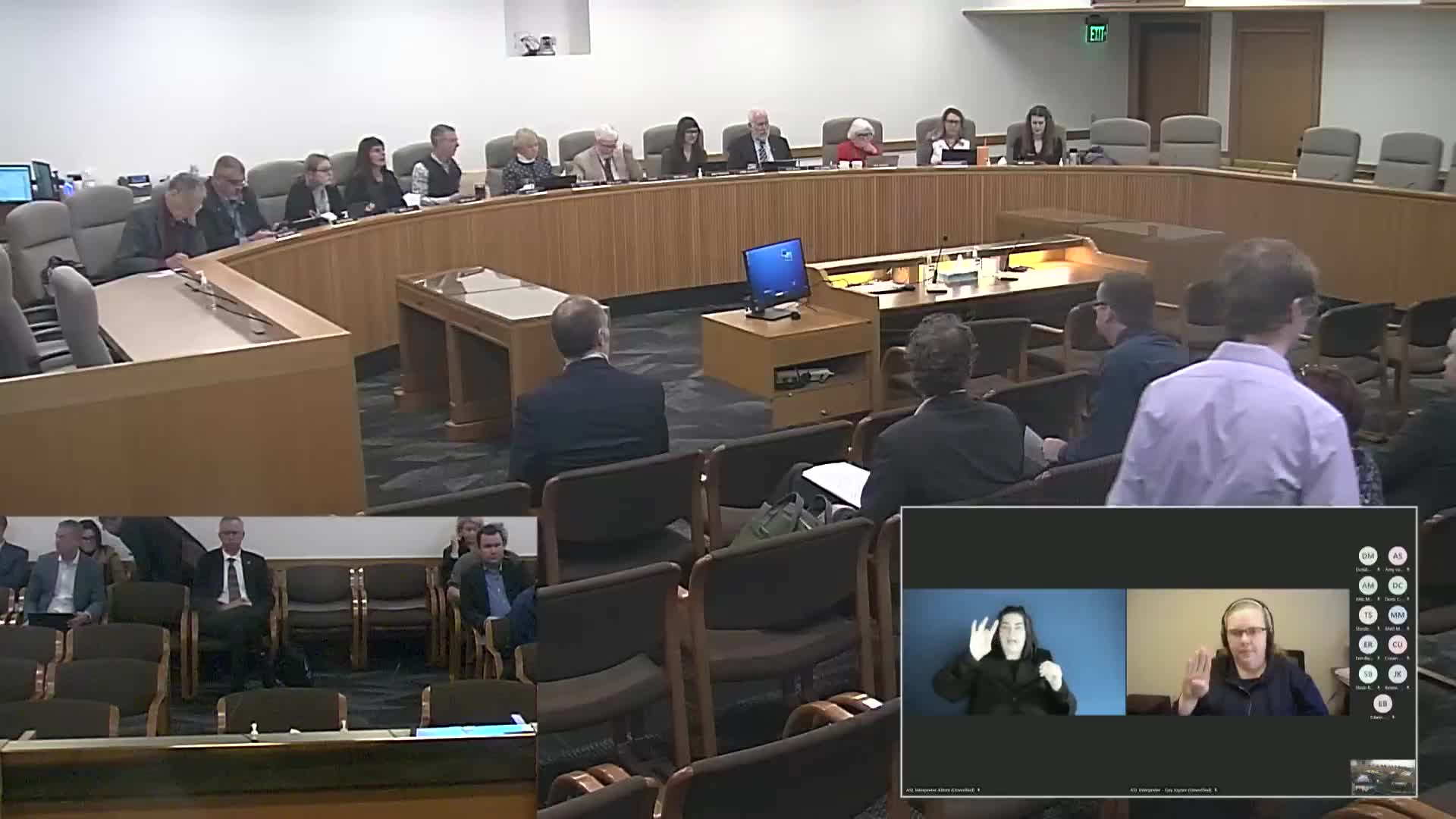
Representative Bobby Levy introduced House Bill 2981 to the House Climate, Energy, and Environment Committee, saying the dash-2 amendment provides targeted funding for prevention, monitoring and response to aquatic invasive species, including zebra, quagga and the newly detected golden mussel.
The bill and its dash-2 amendment: the amendment described in committee text would appropriate funds to multiple entities to build prevention and rapid-response capacity. Representative Levy summarized proposed allocations including $175,000 to the Department of Environmental Quality for vessel inspection and compliance work, $800,000 to the Portland State University Center for Lakes and Reservoirs for monitoring, $200,000 to the Oregon Department of Fish and Wildlife to update the state vulnerability assessment, and $50,000 and $20,000 to the Oregon Invasive Species Council for preparedness and response exercises.
Why it matters: multiple agency and regional witnesses characterized the threat of invasive mussels as immediate and costly. Keith DeHart, invasive species and wildlife integrity coordinator at the Oregon Department of Fish and Wildlife (ODFW), said the current vulnerability assessment is over 15 years old and does not include golden mussels, leaving a “blind spot.” He described transport pathways of greatest concern: ballast water, trailered watercraft and natural migration.
Early detection and prevention testimony: Robin Draheim, coordinator of the Oregon Invasive Species Council, described a bi-state working group with Washington and noted priorities of prevention, early detection and preparedness. Dr. Eric Rohi, director of the Center for Lakes and Reservoirs at Portland State University, outlined monitoring capacity and said his center’s current resources do not let it visit all water bodies identified as at risk; he and other witnesses said the proposed funds would fill critical monitoring gaps.
Costs and program details: Josh Emerson of the Oregon Department of Environmental Quality explained Oregon’s ballast-water regulation and inspection program (in place since 2017). He said DEQ’s inspection goal is 12% of arriving vessels (about 180 inspections per year based on roughly 1,500 arrivals) and that proposed funding would allow DEQ to fund its halftime ballast-water inspector as a full-time position and could boost inspections toward 24% and provide new, regular inspections at Coos Bay. Robin Draheim said Idaho spent about $3.1 million on a first treatment and another roughly $3 million subsequently. ODFW testimony estimated possible annual mitigation costs to Columbia River Basin dams of up to $500 million if mussels establish.
Regional and economic impacts: Matt Morrison, executive director of the Pacific Northwest Economic Region, said an earlier regional study estimated half-a-billion dollars per year impact if mussels establish in the Columbia Basin and urged support for prevention and preparedness investments. Farmers, irrigation managers, hydropower operators and recreation businesses were cited as stakeholders at risk.
Questions and next steps: committee members asked about detection and rapid-response tools and how funds would be used; witnesses described containment, removal and, in certain circumstances, pesticide treatments or other measures depending on site and species. No final action was taken; Chair Lively closed the hearing and committee staff said they would consider next steps and the posted amendment.
Ending: The committee closed the hearing and will consider whether to schedule a work session on HB 2981 and its dash-2 amendment. Witnesses urged rapid action to expand inspection and monitoring capacity.