Get Full Government Meeting Transcripts, Videos, & Alerts Forever!
Get email alerts on the Payroll Transparency topic
No spam. Unsubscribe anytime.
Committee hears bill to require plain‑language pay explanations; employers warn of compliance burden
Summary
Senate Bill 906 would require employers to provide plain-language explanations of pay-stub codes at hire and upon employee request; unions and workers cited confusing pay stubs and payroll errors, while business groups said the amendment may be burdensome and unclear for small employers.
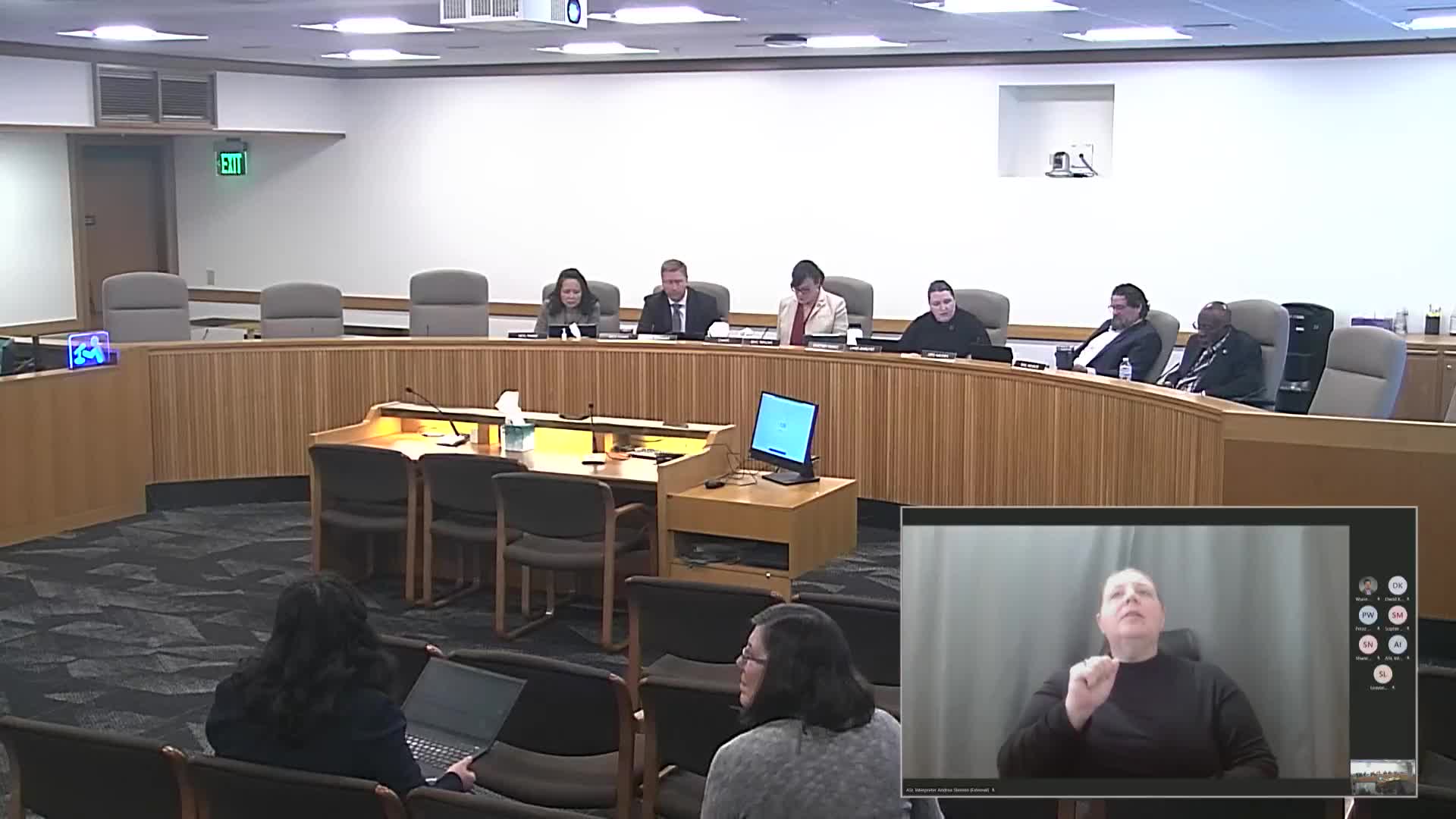
The Senate Committee on Labor and Business on Thursday received testimony on Senate Bill 906, a bill that would require employers to provide employees a written, plain-language explanation of earnings and deductions shown on required itemized statements at the time of hire and within 14 days after an employee requests it.
Proponents from the Oregon Federation of Nurses and Health Professionals said the change responds to increasingly complex payroll statements and payroll-software transitions that have left workers unable to interpret pay codes. Amanda Krause, representing OFNHP, said modern pay stubs can be full of acronyms and shorthand that make errors difficult to detect; Hannah Winchester, an OFNHP executive-board member and physical therapist, said a single pay stub she reviewed contained more than 25 different wage types. “Providing the workers of Oregon with the tools to plainly and clearly read their paycheck is a simply decent ask,” Winchester told the committee.
Business groups including Oregon Business and Industry and the Northwest Grocery Retail Association urged caution. Paloma Sparks of OBI said the dash-2 amendment that narrowed the bill was an improvement but argued full-sentence requirements and a private‑penalty regime create compliance risk, particularly for small employers that use electronic payroll providers. Amanda Dalton of the Northwest Grocery Retail Association said employers already face detailed pay-stub requirements under ORS 652.610 and warned that giving employees an ability to request explanations every pay period could create administrative burdens and potential exposure to civil penalties.
Committee discussion: Chair Taylor and others said the sponsor’s goal appeared to be a practical one — to make it easier for employees to verify pay for varying-shift work or differentials — and encouraged continued negotiation between proponents and employers. Senator Hayden raised concerns that strict look-back rules or repayment mechanics in a related bill could unintentionally discourage employers from issuing earlier pay checks; proponents and business representatives said they are working on clarifications.
Process note: Supporters told the committee proponents removed some elements from earlier drafts in response to feedback and offered to continue working with business groups on workable language. The committee closed public testimony with a request that parties continue to confer on implementation details.