Get Full Government Meeting Transcripts, Videos, & Alerts Forever!
Get email alerts on the Forest Products Local Lumber topic
No spam. Unsubscribe anytime.
Proposal would let certified small mills grade lumber for local residential builds; industry groups warn of code conflicts
Summary
Senate Bill 1061 would create a basic lumber grading training through OSU Extension and allow locally graded lumber for certain 1–2 family dwellings; proponents said it supports small sawmills and local housing builds, while national grading agencies and structural-code advocates warned about design values and code compatibility.
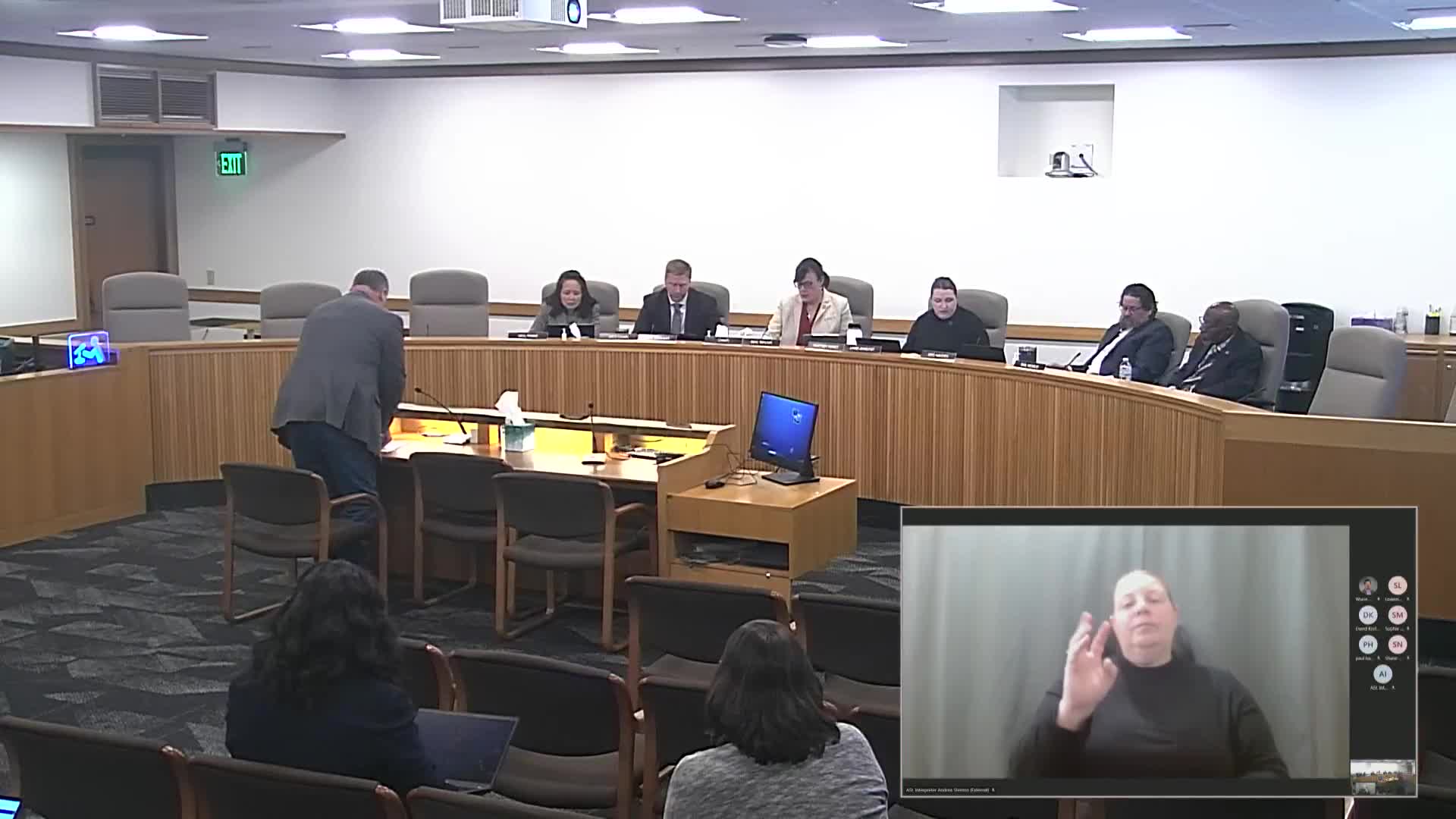
The Senate Committee on Labor and Business on Thursday heard testimony on Senate Bill 1061, which would direct Oregon State University Extension, in consultation with the Forestry Education Council and the State Board of Forestry, to establish a basic lumber grading training program and allow builders, designers or owners to use lumber tested and approved by people certified under that program.
Senator Todd Nash, sponsor of the bill, said the measure aims to help small sawmills and local builders in parts of Eastern Oregon where transporting lumber to market is uneconomical. “This would be kind of a boutique type of, a manner in which we could use local lumber for local buildings,” Nash said, adding the program was modeled on long-running efforts in Wisconsin and Tennessee.
Supporters said a narrowly tailored program could create local economic opportunities and help address housing needs. Paul Harland, president of the Northeast Oregon chapter of the Oregon Small Woodlands Association, told the committee that locally milled lumber could allow landowners to use materials that otherwise would not be economically feasible to process. Union County Commissioner Paul Andres, speaking for the Eastern Oregon Counties Association, said certification for small mills, along with recertification rules, would help maintain standards while supporting rural economies.
Oregon State University’s Wood Innovation Center director Scott Levingood described the programs in Wisconsin and Tennessee as narrow, limited to 1- and 2-family dwellings and involving recertification and building-inspector oversight. “If there is interest in moving forward on a pilot project… the trainer with the University of Tennessee has said he's willing to come to Oregon to offer a couple of training sessions,” Levingood said.
Industry and standards groups urged caution. David Kretchman, president of the American Lumber Council accreditation body, said an alternate grading route could omit the consensus-based American Lumber Standard System (ALSC) checks that establish design values. “Assigning a quality level of material sawn through a certification is not sufficient to establish design values,” Kretchman said, and urged rejection of the bill as drafted.
The American Wood Council and the AWC’s regional codes manager echoed those concerns, noting Oregon building codes reference the PS 20 standard and rely on current grade marks and design properties for spans and engineered designs. “Any program created to grade lumber that does not meet that standard will make the provisions of those codes unusable,” AWC witnesses said.
Why it matters: Proponents argued the program would unlock local, often salvage, timber for small-scale homebuilding, reduce hauling emissions and support rural economic development. Opponents warned the proposal could undermine existing code compliance and structural design assumptions unless the program preserves or maps to nationally recognized design values.
Process and next steps: Committee members asked questions about moisture content, kiln-drying, inspector oversight and grading stamp confusion. Several witnesses suggested piloting training sessions and consulting the national grading bodies before finalizing statutory language. The committee closed public testimony; no vote was taken Thursday.