Get Full Government Meeting Transcripts, Videos, & Alerts Forever!
Get email alerts on the Primary Prevention topic
No spam. Unsubscribe anytime.
Lawmakers hear advocates push to define and fund primary prevention in House Bill 3321
Summary
In a March 12 hearing, legislators and advocates urged clearer definitions and funding structures for primary prevention of youth substance use under House Bill 3321, arguing that prevention infrastructure and workforce are underfunded and that the ADPC should lead a statewide strategy.
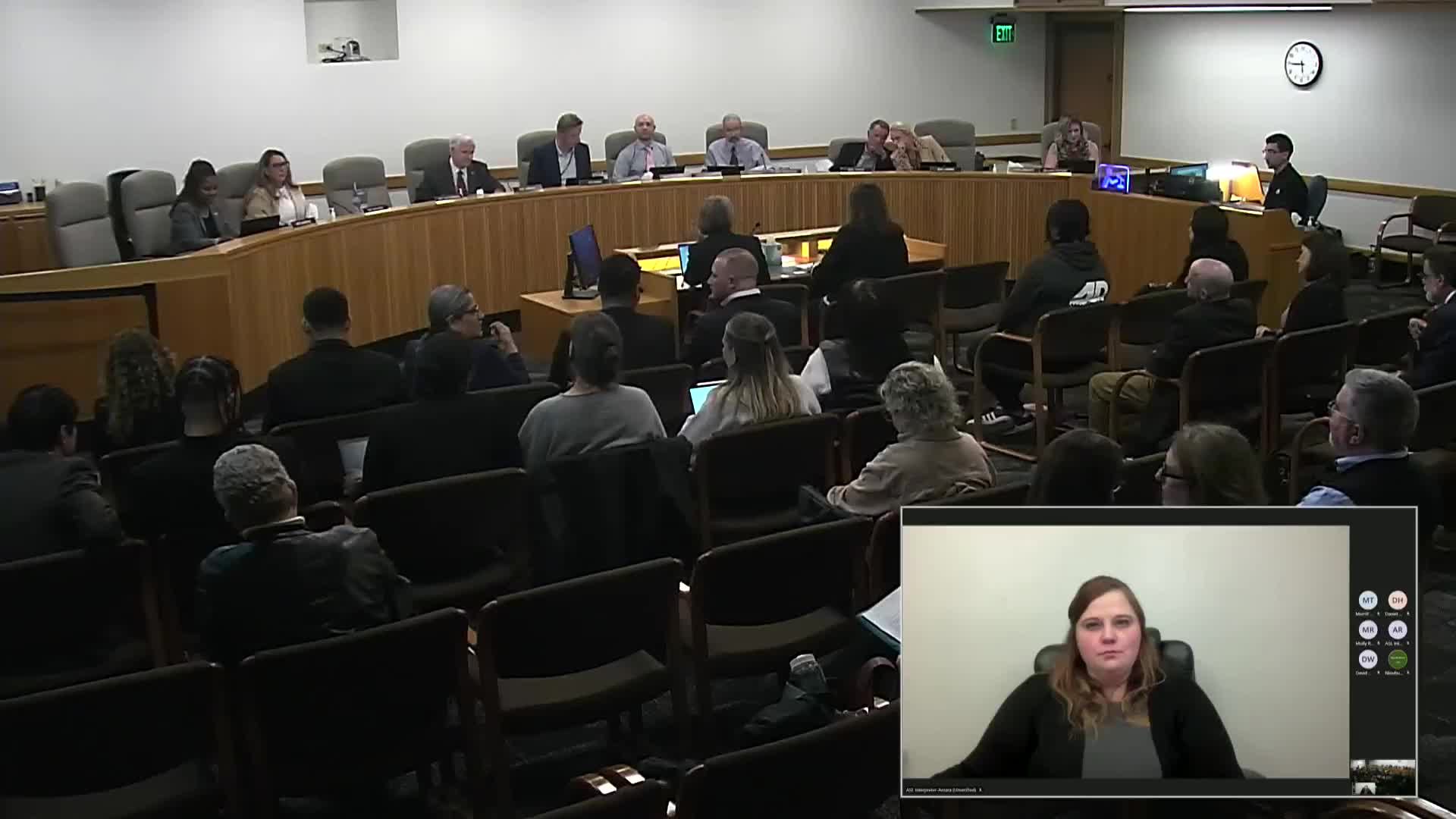
Salem — Dozens of parents, advocates, clinicians and people in recovery told the Joint Committee on Addiction and Community Safety Response on March 12 that Oregon must prioritize primary prevention of youth substance use and create accountable state leadership to coordinate prevention work statewide.
Representative Jules Walters, who introduced House Bill 3321, told the committee the measure would define primary prevention, require a gaps analysis of prevention programs and direct the Alcohol and Drug Policy Commission (ADPC) to develop a state strategy and fiscal audit of prevention funding. “By taking a strategic, data‑driven approach to primary prevention, we can build a healthier, more resilient Oregon,” Walters said.
Witnesses described prevention as the most cost‑effective way to reduce addiction and associated harms. John Epstein, whose son died after taking a counterfeit pill, said a comprehensive prevention plan is the missing “center of gravity” in Oregon’s response. “A true health‑based continuum of care starts with primary prevention,” Epstein said.
Speakers asked the committee to give ADPC authority and accountability to lead prevention strategy. Several testifiers highlighted concrete workforce and measurement shortfalls. Anna Williams, director of the System of Care Advisory Council, told legislators the state needs roughly 906 prevention specialists to meet youth prevention needs and currently has about 62.
Parents, recovery school founders and prevention advocates gave examples of how prevention gaps play out in schools and communities. Pam Pierce, a long‑time recovery advocate and recovery‑school founder, urged the committee to preserve an upstream definition of prevention that focuses on delaying or preventing first use rather than conflating prevention with treatment or harm reduction.
Senator Lisa Reynolds, a pediatrician, outlined brain‑development science that motivates early intervention: adolescent brains are still developing in ways that increase risk taking and susceptibility to addiction, she said, and earlier onset of substance use is associated with worse long‑term outcomes.
The bill’s dash‑1 amendment clarified a definition of primary prevention, required an inventory and assessment of existing programs and set a date certain for a report back to the legislature (September 15, 2026). Witnesses urged faster timelines, ongoing youth involvement in planning and that prevention investments be deployed alongside treatment and recovery work rather than replacing them.
The public hearing closed after extended testimony from parents, public‑health leaders and nonprofit groups urging the legislature to fund prevention as part of a balanced strategy for youth substance use.
Ending: Lawmakers did not take a committee vote at the March 12 hearing; testimony will inform whether the committee advances HB 3321 and any accompanying budget requests.