Get Full Government Meeting Transcripts, Videos, & Alerts Forever!
Get email alerts on the School Based Prevention topic
No spam. Unsubscribe anytime.
Committee hears testimony on bill to study and expand school-based substance-use screening, prevention and recovery supports
Summary
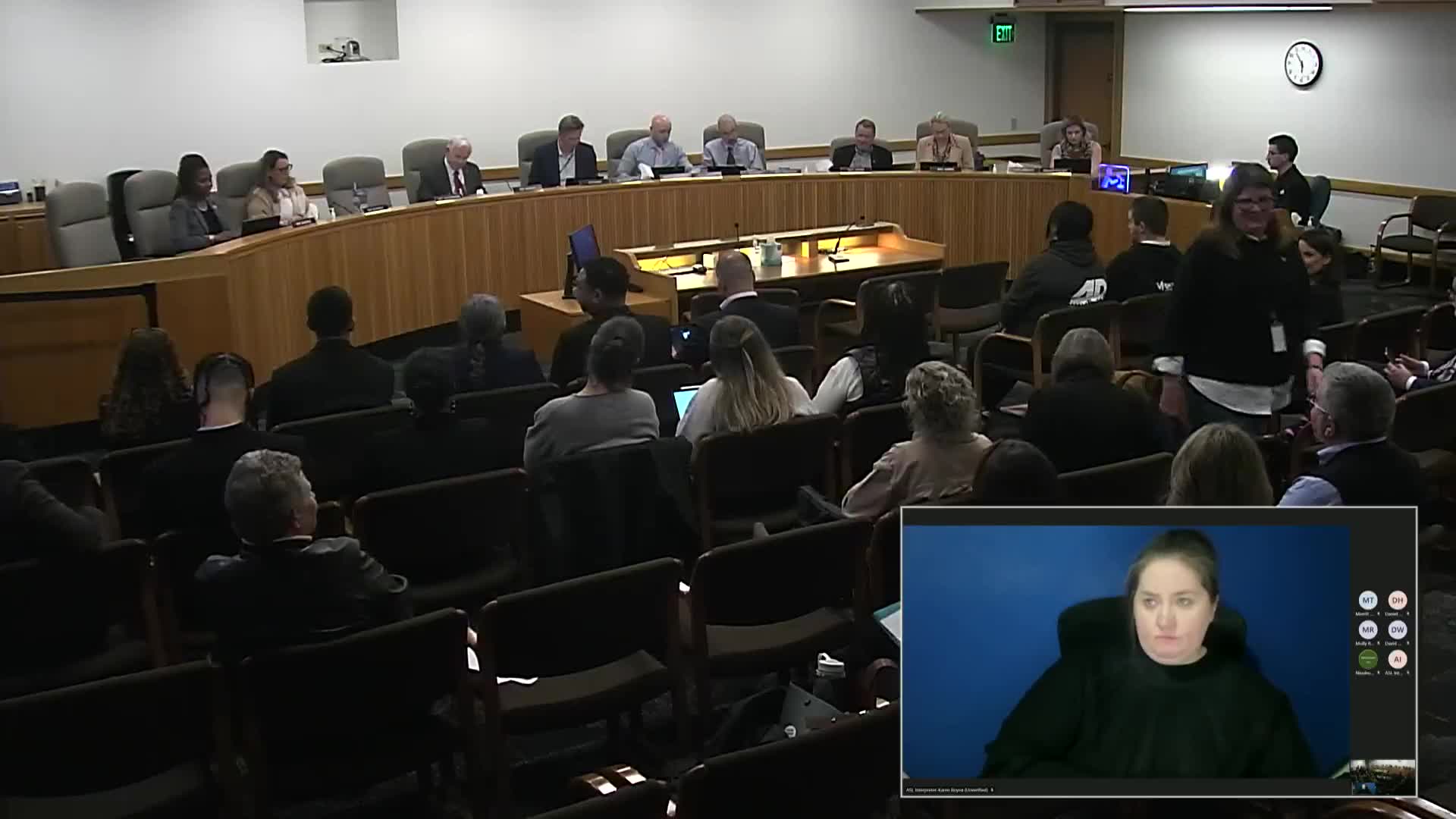
The Joint Committee on Addiction and Community Safety Response heard public testimony March 12 in Salem on House Bill 2502, which would direct state agencies to study expanding school‑based substance‑use prevention, screening, intervention and referral programs and authorize grants to help recovery high schools.
Salem — The Joint Committee on Addiction and Community Safety Response held a public hearing March 12 on House Bill 2502, a measure that would direct the Alcohol and Drug Policy Commission (ADPC), in collaboration with the System of Care Advisory Council, the Oregon Health Authority and the Department of Education, to study the feasibility of expanding school‑based substance‑use prevention, screening, intervention and referral programs and to create limited grant opportunities to support recovery services at recovery high schools.
The bill matters because state and local witnesses told lawmakers that large numbers of young Oregonians have unmet needs and that schools and recovery high schools are key places to identify youth and link them to care. “For 18 to 25, the estimate is that 83 percent who needed treatment did not receive it,” said Annalise Stolf, director of the Oregon Alcohol and Drug Policy Commission. “Our 12‑ to 17‑year‑old prevalence is about 12.5 percent — and the 18‑to‑25 range is, frankly, shocking: more than a third.”
Supporters said the bill would build the evidence base and funding pathways to reach students earlier. Cameron Burke and Caleb Gamby, co‑chairs of the Oregon Youth Addiction Alliance (OYAA), told the committee they helped form the youth alliance to ensure policy and services reflect young people’s experience. “We need upstream policies that prioritize information, education, and early intervention while ensuring accessibility to treatment,” Burke said.
Service providers and leaders from recovery schools described demand that current state resources cannot meet. Erica Fuller, a commissioner on the ADPC and CEO of Rimrock Trails Treatment Services, said fewer than 8 percent of teens with a substance‑use disorder receive treatment. Rivercrest Academy, Harmony Academy and proposed sites such as Discovery Academy were cited as models that combine academics with recovery supports. Todd Nicholson, principal administrator at Rivercrest, requested targeted grants to offset costs such as screening, nonbillable recovery services and billing infrastructure, saying cuts to the governor’s budget threaten expansion outside the Portland metro area.
Clinical and technical supports were also discussed. Dan Hoover, an addiction medicine physician at Oregon Health & Science University, described OHSU’s adolescent Substance Use Disorder ECHO program — a telelearning collaborative that has engaged clinicians from 26 counties — and said the bill’s education and technical‑assistance provisions could expand similar supports for schools.
Students and young advocates gave direct testimony about access gaps and life consequences. Giovanni Deanez, a Beaverton high‑school senior and OYAA participant, described nearly dying from severe complications and then finding recovery supports in community and school programs. Maddie and Ashley Kangas, both students who attend recovery programs and recovery high school, urged legislators to expand services for younger adolescents and to fund family‑focused supports.
Several witnesses noted that HB 2502 builds on prior legislation. Witnesses referenced House Bill 2767 (2023), which created a state framework for recovery high schools, and suggested HB 2502’s grant language would help sustain and expand those schools. Local public‑health and juvenile‑justice officials supported the study and urged an investment in primary prevention in parallel with HB 2502’s school‑based study.
The committee received technical questions about timelines and implementation; several speakers urged faster delivery of grants and supports than the draft timelines suggested. The hearing concluded with the committee temporarily closing testimony on HB 2502 to continue other business.
Ending: Lawmakers did not vote on the bill at the March 12 hearing; the session provided lawmakers with broad testimony from youth, providers and local officials who argued the state should invest in school‑based screening, prevention and recovery supports to reach youth earlier and expand recovery high‑school capacity.