Get Full Government Meeting Transcripts, Videos, & Alerts Forever!
Get email alerts on the Workplace Standards topic
No spam. Unsubscribe anytime.
Oregon hearing splits as bill to create agricultural workforce standards board advances to committee debate
Summary
The Oregon House Committee on Labor and Workforce Standards heard hours of testimony March 12 on House Bill 2548, a measure to create an Agricultural Workforce Labor Standards Board with authority to recommend statewide rules on pay, hours, safety and training for farmworkers; supporters said the board would give workers a voice, while farmers and industry groups warned it would raise costs and threaten family farms.
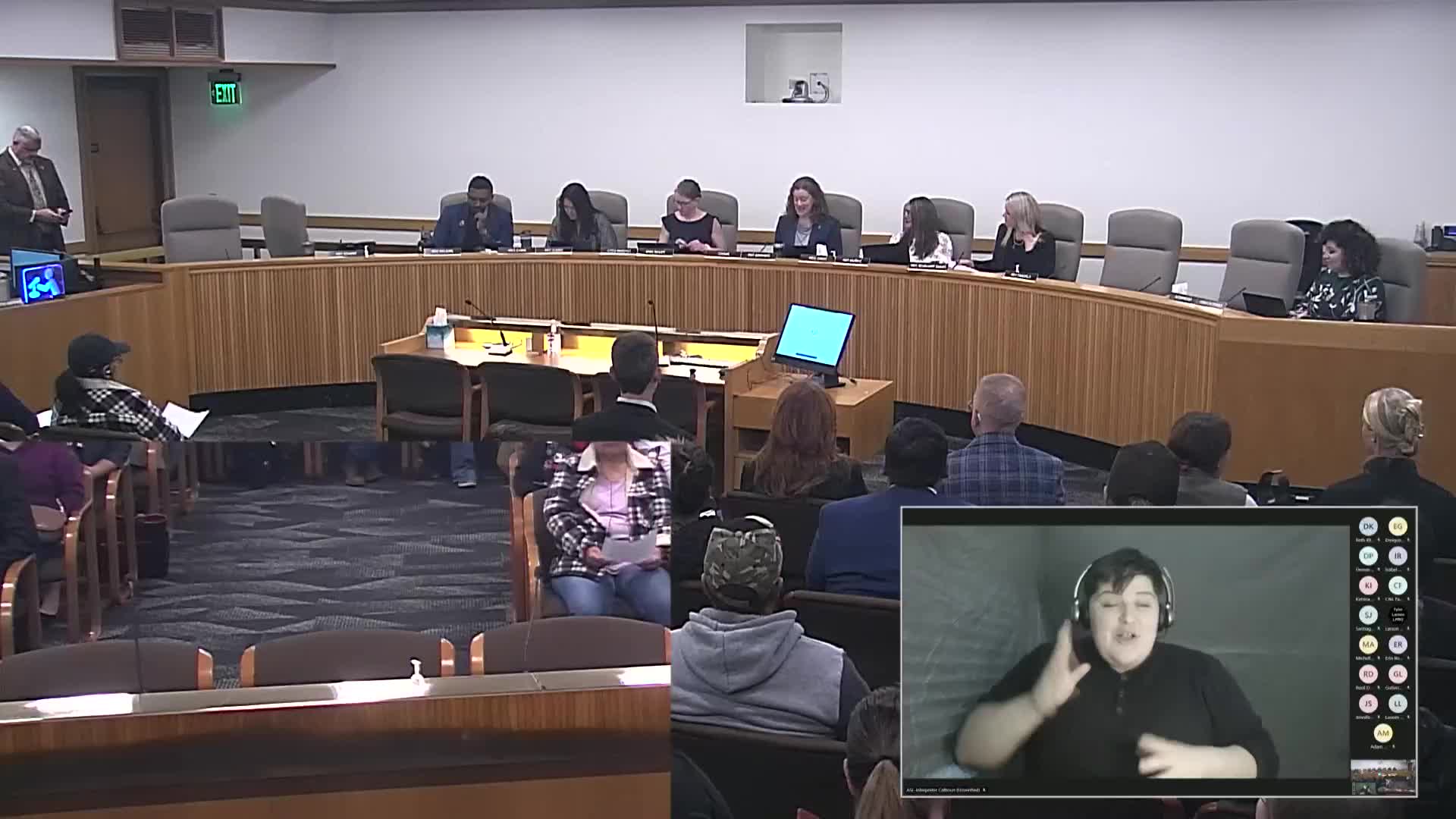
A House committee on March 12 heard hours of testimony for and against House Bill 2548, which would create an Agricultural Workforce Labor Standards Board with authority to recommend statewide standards on compensation, hours, rest breaks, workplace health and safety, and training for agricultural employers and employees.
Proponents told the Committee on Labor and Workforce Standards that the board would give tens of thousands of Oregon farmworkers a voice and a consistent forum to address recurring safety and wage problems. Representative Andrea Valderrama, sponsor of the bill, said the board would give farmers and farmworkers equal representation and the ability to petition state agencies to implement standards.
"This bill is about self determination," Representative Andrea Valderrama said. "Farm workers and farmers deserve a seat at a table." She described the measure as setting minimum standards and establishing a rulemaking process through the Bureau of Labor and Industries (BOLI) or the Department of Consumer and Business Services (DCBS).
Supporters from labor and community groups pressed the committee to act. "Our members have shared experiences of unsafe working conditions, low wages, and unjust terminations," Ira Coyo Martinez of Pineros y Campesinos Unidos de Noroeste (PCUN) said in testimony supporting HB 2548. Alberto Gallegos of SEIU Oregon added: "Farm workers aren't asking for special treatment. They're asking for what they've earned and for what others already have."
Opponents, including many family farmers, trade groups and rural elected officials, said the bill would create an unelected board with far‑reaching power, eliminate at‑will employment for agriculture by imposing a "just cause" termination standard, and expose small farms to lawsuits and large compliance costs. "What this bill will actually do is create more bureaucracy, more costs, and more barriers to make it harder for farms to survive," said Representative Shelley Boshardt‑Davis, speaking as a farmer and committee member.
The Oregon Farm Bureau, industry associations and numerous individual farmers warned the board could require wage and rule changes that family farms cannot afford. Jenny Dressler of the Oregon Farm Bureau said the bill "creates an unelected and unaccountable governing body with the authority to set wages and additional safety regulations" and warned of legal and fiscal risks for small operators.
Several witnesses — including lawyers and policy advocates supporting the bill — described workforce standards boards in other states as models. Martha Sonato of the Oregon Law Center and Kate Sussman of the Northwest Workers' Justice Project pointed to examples in New York, California and Minnesota where sector boards or commissions have recommended or set rules for specific industries.
Key provisions and points raised at the hearing
- Board powers and process: HB 2548 (dash‑2) would establish an 11‑member board with equal representation of farmworker and employer members and seats for relevant state agencies. The board would study conditions, hold public hearings, and recommend standards; those recommended standards would be implemented by petitioning the appropriate state agency (for example, BOLI or DCBS) to adopt rulemaking.
- Just‑cause termination: The bill would create a statutory for‑cause termination standard for agricultural employers, with enumerated exceptions (for example, bona fide economic layoff, expiration of a seasonal or temporary work period, or documented egregious misconduct). Supporters said the change is intended to reduce retaliation and retaliatory firings; opponents warned it would eliminate at‑will employment for farms and invite lawsuits.
- Remedies and fees: The dash‑2 text discussed civil penalties and damages for violations and includes a provision that the court "shall award reasonable attorney fees and costs to a prevailing plaintiff." Multiple farm witnesses said the asymmetry — fees awarded only to prevailing plaintiffs — would leave employers exposed to high legal bills even for frivolous claims.
- Training and enforcement: The bill would require uniform training standards for workers and supervisors, and set minimums for workplace conditions beyond current rules in some areas. Supporters said that training would inform workers of their rights and reporting paths; opponents asked whether the board's recommendations would duplicate or conflict with Oregon OSHA and existing BOLI standards.
- Economic and market concerns: Several farm witnesses and county officials stressed that Oregon farmers are price takers in global markets, cited rising costs and low commodity prices, and warned that mandated higher wages or compliance costs could force mechanization, consolidation or farm closures. Representative Anna Sharp and other witnesses cited figures used in testimony — for example, that about 97% of Oregon farms are family owned and that roughly 40% of Oregon agricultural output is exported — to underline industry vulnerability.
What happened and next steps
Chair Graber opened the public hearing on HB 2548 and noted the committee extended its scheduled time because more than 80 people signed in to testify in person. The testimony included multiple panels of legislators, technical experts, labor organizations, farm‑industry groups and dozens of farmworkers who testified in Spanish and English about workplace experiences. Erin (legislative staff) summarized the dash‑2 amendment and told the committee the measure carries a subsequent referral to Ways and Means and contains an emergency clause and deferred operative dates for some remedies.
The committee did not take a vote on the bill during the hearing. No final committee action was recorded on March 12; the bill remains in committee for further consideration and possible amendment.
Why it matters
HB 2548 would reshape labor relations in Oregon agriculture if enacted. Supporters say the board would correct longstanding exclusions that have left many farmworkers without collective mechanisms to shape wages, safety and job protections. Opponents argue the bill would strip business decision‑making from farm owners, increase litigation risk, and hasten consolidation that could reduce local jobs.
What to watch
- How the committee addresses concerns about the attorney‑fee language, the scope of rulemaking authority, and protections for seasonal work. - Whether the dash‑2 text is further amended to narrow or clarify rulemaking procedures and implementation (including relations with BOLI, DCBS, and Oregon OSHA). - Any fiscal analyses or economic impact statements prepared for Ways and Means that quantify potential cost impacts on different farm sectors.
The committee closed the public hearing at the end of a day of testimony and did not record a vote on HB 2548. The bill remains under consideration and will be subject to additional committee work and possible referral to Ways and Means per testimony at the hearing.