Get Full Government Meeting Transcripts, Videos, & Alerts Forever!
Get email alerts on the Education Charter Schools topic
No spam. Unsubscribe anytime.
Charter leaders and critics clash as committee hears bill to equalize charter funding
Summary
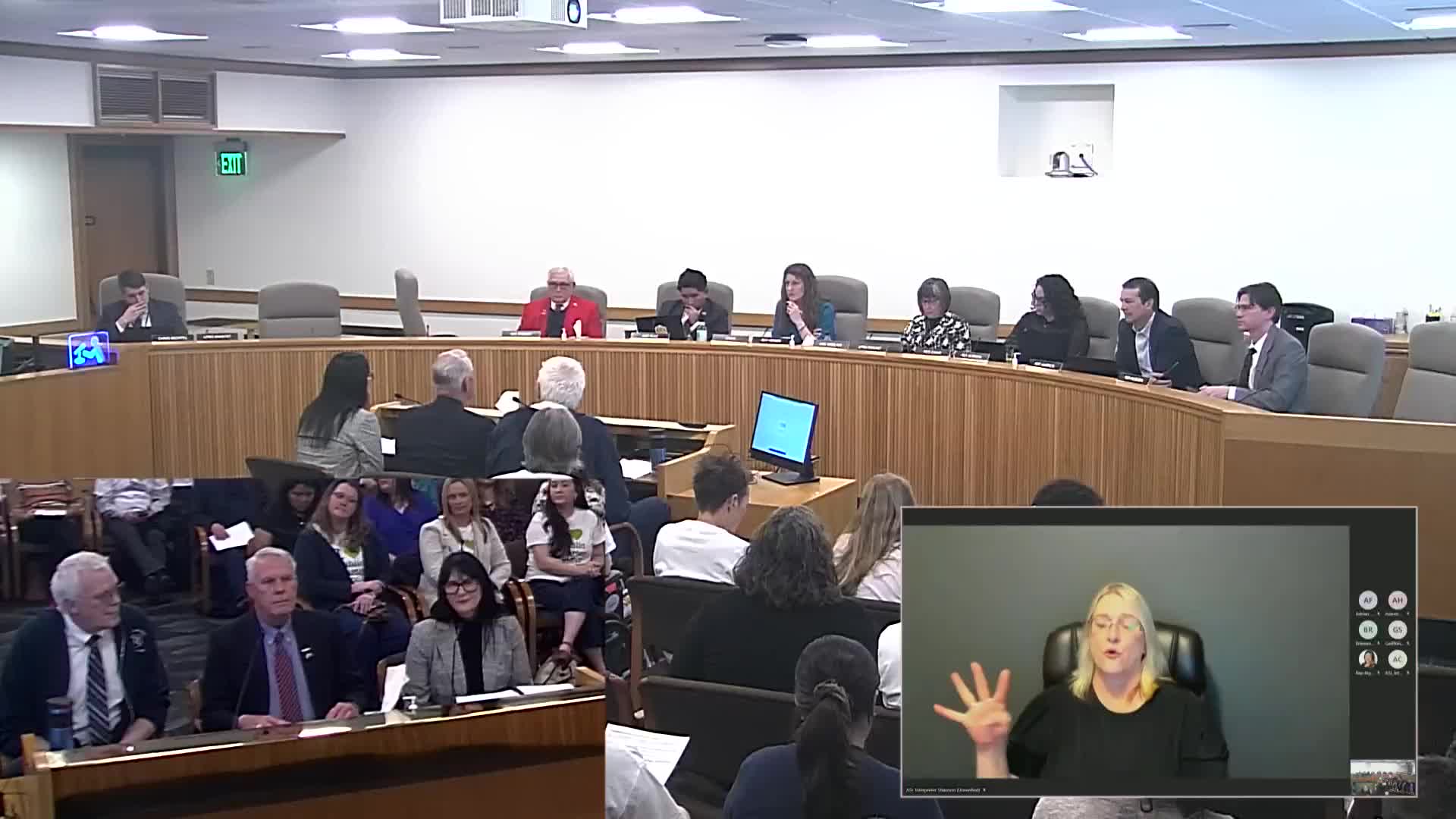
House Bill 3,444—proposed legislation to increase state funding parity for public charter schools—drew a large in-person turnout during a lengthy House Education Committee hearing.
House Bill 3,444—proposed legislation to increase state funding parity for public charter schools—drew a large in-person turnout during a lengthy House Education Committee hearing. The measure would require school districts to pay non-virtual public charter schools 95% of the district’s general-purpose grant per weighted average daily membership and would make those charters eligible for certain local, state and federal funding programs, including student achievement and transportation grants, according to the staff summary.
Supporters—charter leaders, parents and students—testified that current Oregon law leaves many charter schools underfunded and forces them to divert limited operating dollars to basic facilities, transportation and staffing costs. Melissa Barnes Delacchia, superintendent of Bend International School, said charters are “disadvantag[ed]” under the current model and listed operational effects including staff retention problems, facility maintenance needs and reduced campus services.
Several speakers quantified the disparity in different ways. A parent, Kate Hansen, told the committee that charter students in some testimony “are funded at only 48¢ on the dollar compared to their peers in traditional public schools.” Multiple charter leaders said the statutory funding formula has produced inconsistent results across grade levels and funding categories—witnesses described 95% pass-through for some high-school funding but lower shares for K–8 and weighted formulas, and some cited EcoNorthwest reporting that charter funding often falls well below parity.
Opponents and cautious stakeholders included the Oregon Education Association, the Oregon School Boards Association and COSA. Louis DeSitter (OEA) said OEA opposes HB 3,444 and suggested that any increase in public dollars should come with more public accountability, for example public appointment mechanisms or other governance changes. OSBA’s Adrianne Anderson and COSA’s Morgan Allen said districts should retain local authority over funding choices and that statutory changes from two decades ago merit a comprehensive review rather than a single funding increase.
Other testimony focused on specific operational challenges: charter leaders described having to fund facility mortgages out of operating dollars, limited access to bonds and grants, transportation limitations, and higher proportional PERS or health-benefits costs. Testimony also included parents and students who described charter schools providing specialized or place-based instruction, or K–12 options that better served particular families.
Ending: The committee closed the hearing after an extended session and reminded witnesses to submit written testimony; multiple witnesses and associations signaled readiness to negotiate details, and committee members signaled the issue will require further policy work.