Get Full Government Meeting Transcripts, Videos, & Alerts Forever!
Get email alerts on the Utility Regulation Pbr topic
No spam. Unsubscribe anytime.
Lawmakers and experts back measure letting PUC adopt performance-based regulation for utilities
Summary
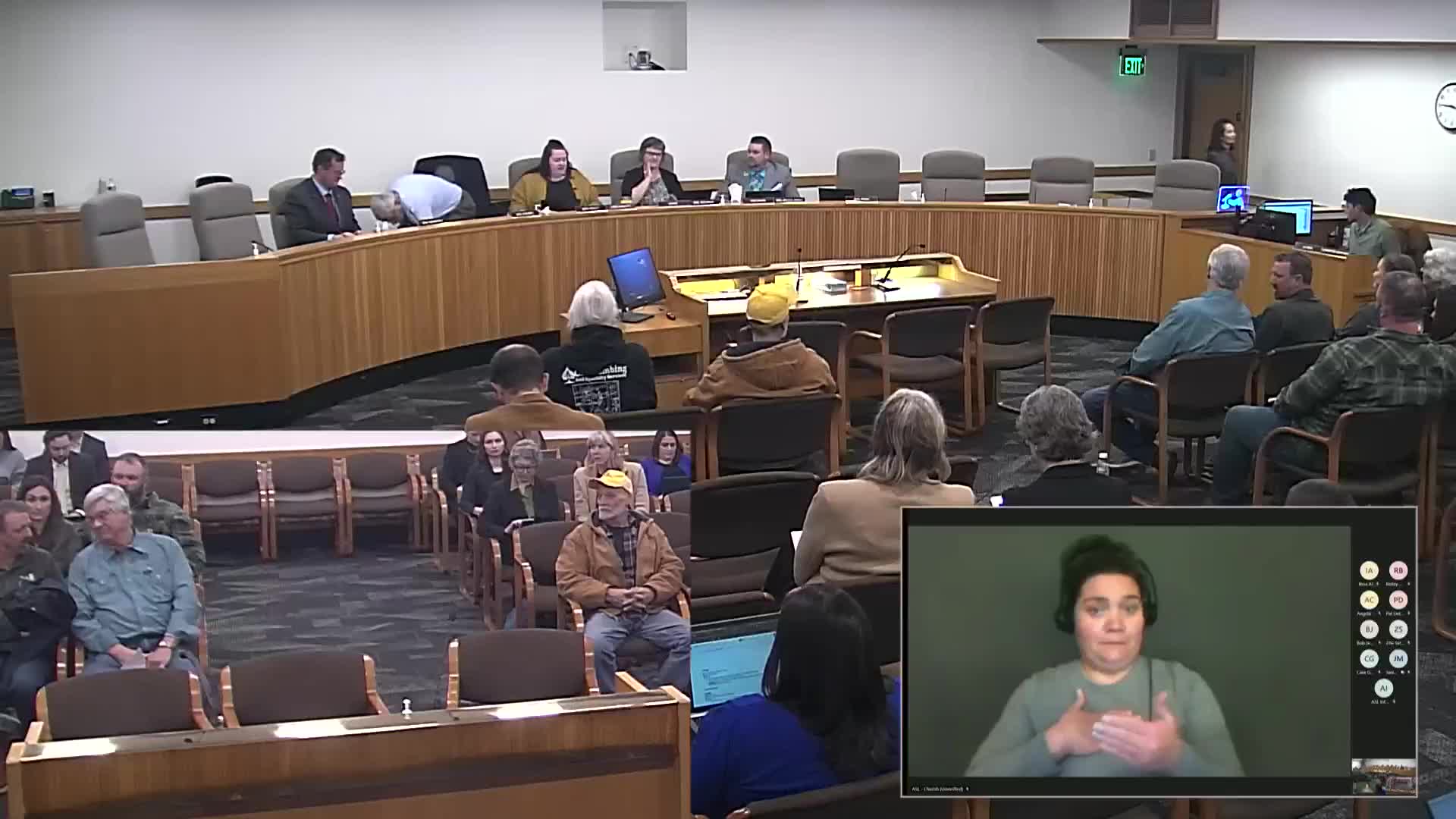
The Senate Committee on Energy and Environment heard testimony March 12 on Senate Bill 688, which would authorize the Oregon Public Utility Commission to develop and adopt a performance‑based regulatory framework for investor‑owned electric utilities.
The Senate Committee on Energy and Environment heard testimony on March 12 on Senate Bill 688, a measure that would authorize the Oregon Public Utility Commission to develop and adopt a framework for performance‑based regulation (PBR) of investor‑owned electric utilities.
Sponsor remarks: Senator Khan Pham, a sponsor of the bill, told the committee PBR would allow the PUC to tie utility compensation to measurable outcomes: "performance based regulation... tying financial incentives to actual performance outcomes that align with our policy goals," including affordability, resilience, safety, efficiency, clean electricity and reliability.
Why it matters: Proponents said Oregon’s traditional rate‑of‑return framework rewards capital expenditures and can misalign utilities’ financial incentives with public goals. Witnesses argued PBR tools — decoupling, multiyear rate plans, CapEx/OpEx equalization, performance incentive mechanisms and scorecards — can redirect utility activity toward affordability, energy efficiency, distributed energy resources and wildfire‑safety objectives.
Expert testimony: Janine Migden of (presentation team) explained the core incentive problem: under traditional regulation utilities earn returns by expanding rate base and therefore have incentives to favor capital investments. "Utilities will execute on whatever gives them the highest return," she said, arguing PBR designs can align utility returns with public policy outcomes.
PUC perspective and resources: Nolan Moser, executive director of the Oregon Public Utility Commission, testified the commission already employs some PBR‑like tools in limited areas but lacks in‑house expertise for more advanced mechanisms. "Any framework adopted under this legislation must include clear baselines, must be objective, verifiable, and achievable," Moser said; the dash‑2 amendment includes funding for outside experts to help design a framework and sets reporting timelines.
Consumer and stakeholder views: Consumer advocates and regional clean‑energy groups, including OregonCUB and Climate Solutions, supported the bill as a step toward better aligning utility outcomes with consumer and climate goals. Bob Jenks of OregonCUB urged the committee to view SB 688 together with concurrent bills addressing rate shocks and cost allocation, characterizing SB 688 as a longer‑term tool that changes utility incentives over time. Local governments and the League of Oregon Cities testified that municipal leaders seek a modern grid that supports distributed resources and resilience.
No vote today: Committee members asked questions about metrics, wildfire‑safety tradeoffs and how PBR would interact with multiyear rate plans. The bill hearing closed with committee staff noting some testimony will be carried over; no committee vote was taken at the March 12 session.
Ending: SB 688 passed its initial public‑hearing stage on March 12 when the committee closed the record for additional submissions. The dash‑2 amendment narrows priorities and supplies modest funding for PUC technical assistance; the committee signaled follow‑up work to develop metrics and to consider how PBR might be applied incrementally.