Get Full Government Meeting Transcripts, Videos, & Alerts Forever!
Get email alerts on the Public Safety Unmanned Aircraft topic
No spam. Unsubscribe anytime.
Senate committee hears bill to criminalize drone interference with wildfire and emergency response
Summary
Senate Bill 1125 would create felony penalties for using unmanned aircraft systems (drones) to interfere with wildfire suppression, law enforcement or emergency response. Committee members questioned the definition of “interfere” and discussed existing statutes and incidents; the public hearing was closed with no vote.
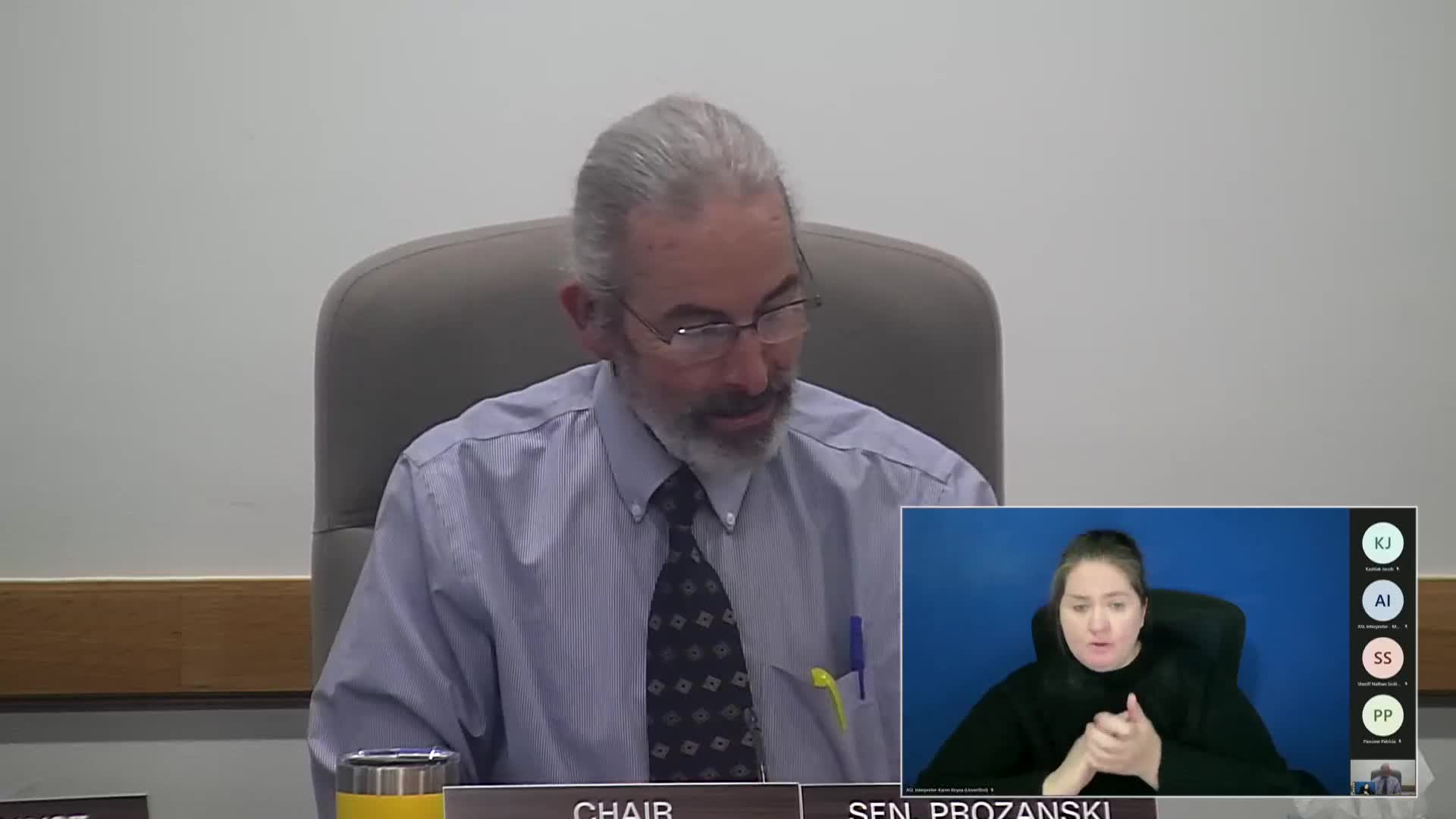
On March 12, the Senate Committee on Judiciary held a public hearing on Senate Bill 1125, a measure that would expand criminal penalties for people who use unmanned aircraft systems (commonly known as drones) to interfere with wildfire suppression, law enforcement or other emergency response efforts.
The bill’s introduced language creates a crime for knowingly, intentionally or recklessly causing death or serious physical injury by causing a drone to interfere with an emergency response; a dash-1 amendment discussed in the hearing would add penalties that include a Class C felony for causing interference and a Class B felony for causing property damage by interference. The measure, as presented by committee staff, would apply to conduct occurring on or after the bill’s effective date.
Committee members emphasized the bill’s focus on wildfire suppression after several high-profile incidents in other states and at least one instance reported by the Oregon Department of Forestry in 2022 that temporarily suspended use of a helicopter during a structural fire because of drone interference. Tisha, the committee staff member who introduced the bill overview, told the committee that the Forest Service and the Department of Forestry have reported interruptions to suppression and safety risks from unmanned aircraft.
Senator Thatcher raised concerns about the statutory phrase “interfere,” saying she wanted to avoid criminalizing bystanders who simply record events. Committee counsel and staff pointed the panel to an existing statute, ORS 162.257, which uses the term “interfering” in the context of firefighters and emergency medical services; staff advised that “interfere” is broad enough to include obstruction in the context of the bill.
Senator Manning and others noted related problems — drones peering into private property and conflicts with manned aircraft — and suggested the state may need to act where federal aviation rules do not provide immediate remedies. The committee also discussed whether the bill should reach other areas of interference beyond fire suppression, noting a House bill with broader language was under consideration.
No formal amendment or final action was taken in committee; the public hearing was closed to permit further consideration. The bill remains under the committee’s review and no vote was recorded during this meeting.
The committee record includes testimony and staff briefing describing past incidents and the proposed penalty structure; committee members asked staff and counsel to provide further drafting options and clarifications on definitions and mental-state elements.