Get Full Government Meeting Transcripts, Videos, & Alerts Forever!
Get email alerts on the Historic Preservation 142 E First topic
No spam. Unsubscribe anytime.
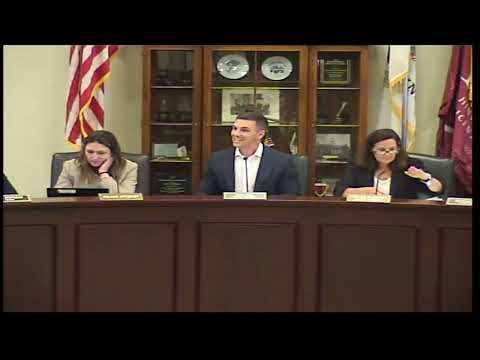
Hinsdale trustees hear debate over demolition of 142 East First Street; no vote, matter set for Sept. 16
Summary
At its Sept. 2 meeting the Hinsdale Village Board of Trustees heard extended discussion about a certificate of appropriateness request to demolish the contributing historic house at 142 East First Street and build a new single‑family home.
At its Sept. 2 meeting the Hinsdale Village Board of Trustees heard extended discussion about a certificate of appropriateness request to demolish the contributing historic house at 142 East First Street and build a new single‑family home. The item was presented after the Historic Preservation Commission (HPC) denied the COA on Aug. 6 by a unanimous 4–0 vote; the matter was forwarded to the village board for review within the 60‑day period provided in the village code.
The house, commonly called the William Whitney House or the Hallmark House, was first constructed in 1869 and is documented as a contributing structure in the Robins Park Historic District. Village staff told trustees the property is listed on the National Register of Historic Places (1989) and was placed on the village’s locally significant structures list in 2023. The board was told that the final decision by the village board on a COA is advisory and “shall not prohibit the applicant from proceeding with a proposed course of action upon receiving all other required approvals and permits.” The village must render a decision on the COA within 60 days of the HPC vote (staff said no later than Oct. 5).
Trustee Stifler framed the issue as one of process and streetscape protection, saying the Title 14 revisions that created the current demolition review were intended to “protect streetscapes and to slow down the demolition process in the Robins Park Historic District.” Stifler said those rules were crafted to give the village “the only voice that these historically significant structures have,” and argued the Whitney House “deserves a pause.”
The applicant, Robert Samala, owner of Legacy Homes Samala, Inc., defended his project and described the house as structurally compromised. Samala said he had inspected the home multiple times and that local professionals told him “remodeling is hopeless,” citing unlevel floors and a crumbling limestone foundation. Samala said he obtained a bid of $390,000 “just to lift it up, move it over to the side, and put a new foundation in.” He asked the board to take a vote that evening so he could move forward, saying the delays were increasing his carrying costs: “I’m asking you to show me the courtesy of taking a vote tonight.”
Bruce George of Charles Vincent George Architects, the project architect, clarified procedural history and design adjustments. George disputed statements that the property had been removed from a preexisting planned unit development (PUD), saying the PUD “didn’t ever exist before we tried to create a P.U.D.” He also described changes made after design‑review feedback, including adding a covered porch, stonework and gas lanterns to reduce the glassed‑front appearance the review team criticized.
Trustees and the design review team raised multiple stylistic and massing objections during the public discussion and in prior review sessions: too much fenestration on street‑facing facades, large massing, and the absence of a clearly articulated historic architectural style appropriate to the Robins Park district. Members had suggested possible mitigation such as reducing window sizes, adding a front porch, and incorporating identifiable historic elements (for example Italianate or other district‑appropriate details).
Preservation advocates had also weighed in before the HPC hearing: staff reread an email from Philip Buchanan of Naperville preservation and a later letter from Landmarks Illinois urging preservation of the building. The HPC’s Aug. 6 denial cited the home’s historic character and the proposed new construction’s incompatibility with the district’s guidelines.
No formal board vote was taken on Sept. 2. The village clerk and staff told the board the COA denial was properly forwarded and that the board must act within the statutory window. Trustees scheduled further consideration of the matter; staff told the applicant corrections and permit materials were outstanding and anticipated to be delivered imminently. The board will take up the matter again on Sept. 16.
For now the HPC denial stands, and the village board’s eventual advisory decision will be recorded in its official minutes. Interested parties and the applicant were directed to continue permit exchanges with staff and to appear at the next board meeting for a formal action or further discussion.