Get Full Government Meeting Transcripts, Videos, & Alerts Forever!
Get email alerts on the Fingerprinting Policy topic
No spam. Unsubscribe anytime.
Fingerprinting bill draws split testimony over records and immigrant consequences
Summary
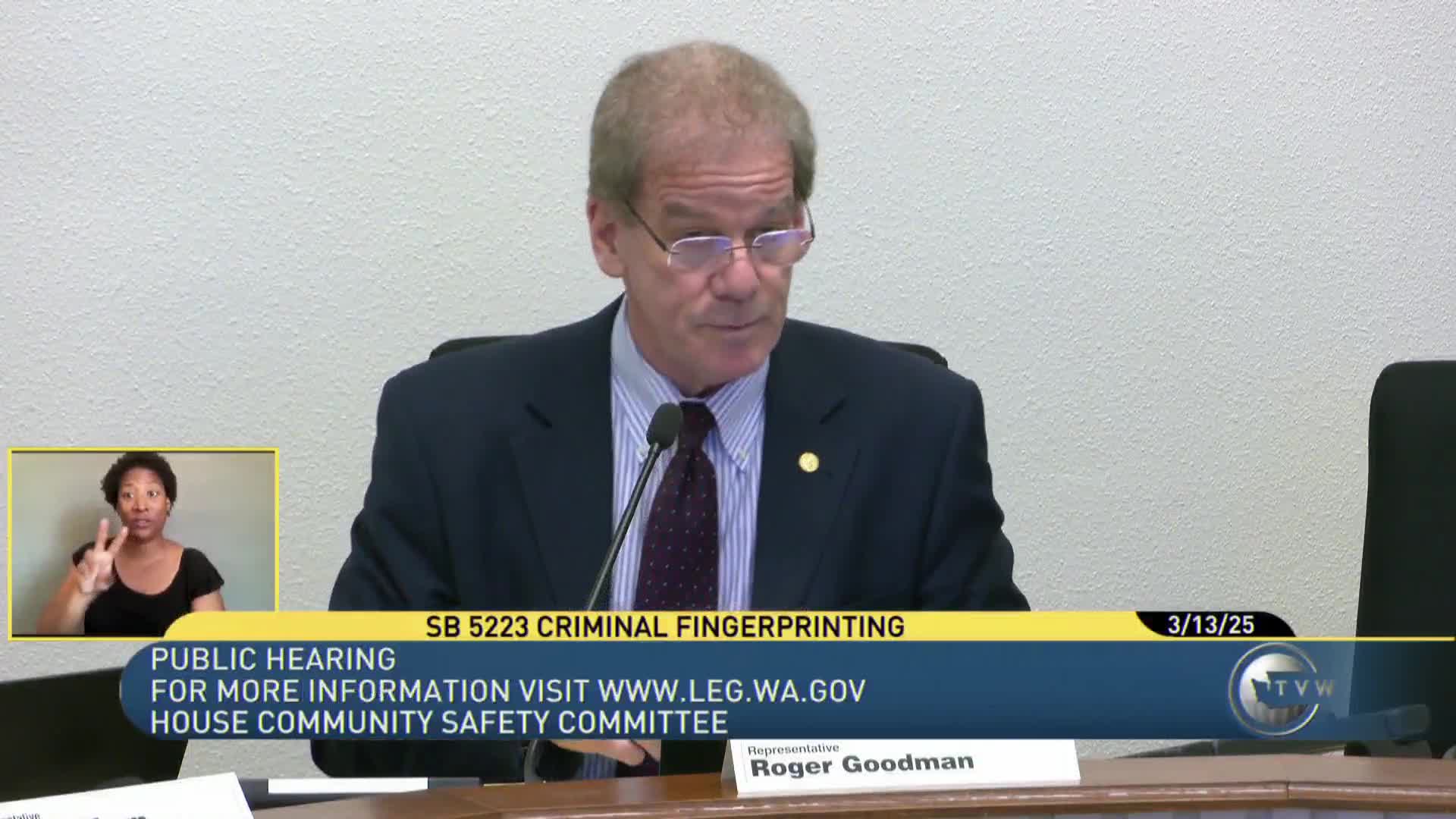
Senate Bill 52-23 would allow judges to ensure fingerprinting at arraignment for gross misdemeanors and permit law enforcement to photograph and fingerprint people who are cited or issued summonses rather than arrested.
Senate Bill 52-23 would do two things: (1) authorize judges at arraignment or preliminary hearing for gross misdemeanors to ensure a defendant has been fingerprinted and that the arrest-and-fingerprint form has been transmitted to the Washington State Patrol identification unit; and (2) authorize chief law-enforcement officers to photograph and record fingerprints of adults who are cited and released or issued a summons rather than arrested.
Captain Dion Glover of the Washington State Patrol testified the bill responds to gaps in current practice that leave court records incomplete when fingerprints are not captured during an arrest. “This limited information hinders the court's ability to maintain…necessary information for fingerprints for criminal cases,” Glover said, adding that improved fingerprint capture helps ensure the correct person is associated with a record.
Supporters said the change would help the Washington State Patrol’s Criminal History and Identification Section create or update criminal-history records and reduce mistaken identity caused by matches based only on name and birthdate. Staff described current law as requiring photographing and fingerprinting when an adult is lawfully arrested for a felony or gross misdemeanor and transmitting prints to WSP’s identification section within 72 hours; judges already must ensure this for felonies but current statute is silent about courts’ authority at arraignment for gross misdemeanors.
Opponents from immigrant-rights and defense organizations urged the committee not to move the bill. Paul Benz of the Washington Coalition for Police Accountability said the change would increase fear in immigrant and undocumented communities and harm trust with police. Shoma Lahiri Gupta of One America and Malou Chavez of the Northwest Immigrant Rights Project warned that adding more individuals to federal criminal databases—even before a finding of guilt—could expose people to immigration enforcement, especially in light of federal changes such as the Lake and Riley Act that can require immigration detention for certain charged offenses. "Adding more community members to a criminal database, especially without a finding of guilt, does not make our communities safer," Lahiri Gupta said.
Carrie Reardon of the Washington Defender Association and the Washington Association of Criminal Defense Lawyers testified that the bill could lead to people being summoned from court into custody for fingerprinting, that it lacks safeguards against misuse, and that it may put presumed-innocent people into federal databases accessible to immigration authorities. Reardon also noted the bill’s permissive language (“may”) leaves local practices uncertain and could result in uneven application across jurisdictions.
Committee members asked staff and witnesses to clarify what current law requires for felonies and gross misdemeanors and how the proposed language would change the timing and authority for fingerprinting. Staff summarized: law enforcement must photograph and fingerprint adults when making a lawful arrest for a felony or gross misdemeanor and must transmit prints to WSP within 72 hours; judges are required to ensure that happens at preliminary hearing/arraignment for felonies, but statute is currently silent for gross misdemeanors. SB 52-23 would give courts that same authority for gross misdemeanors and allow law enforcement to fingerprint at cite-and-release or summons stages.
There was no committee vote; members said they would take a careful look at the bill and the range of testimony before moving forward.