Get Full Government Meeting Transcripts, Videos, & Alerts Forever!
Get email alerts on the Hate Crime Law topic
No spam. Unsubscribe anytime.
Sponsors, prosecutors push change to hate-crime language to cover mixed motives; critics warn of vagueness
Summary
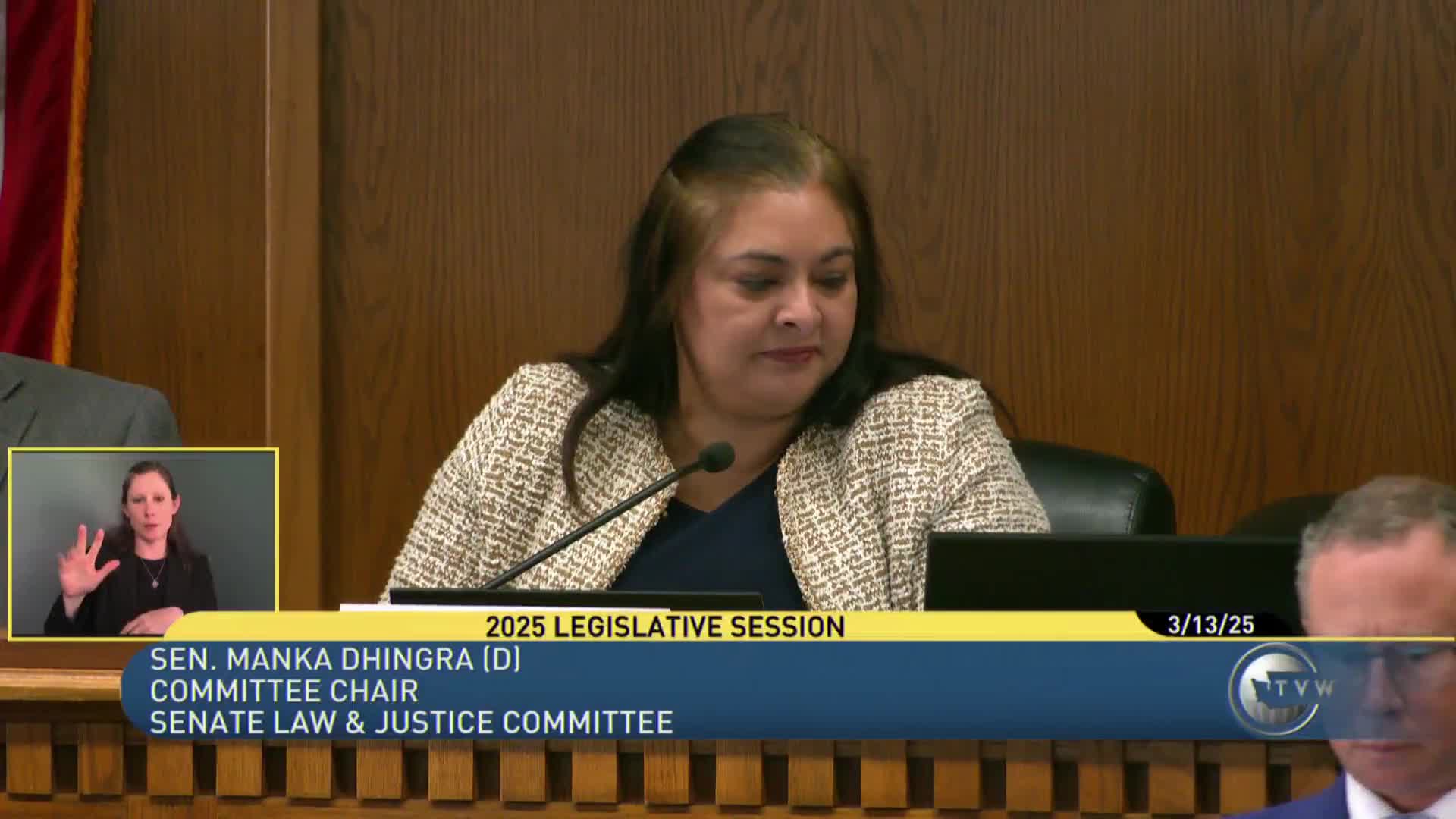
The Law & Justice Committee on March 13 heard testimony on Engrossed House Bill 1052, which would define “because of” in the state hate‑crime statute to mean “in whole or in part because of,” allowing mixed‑motive prosecutions when bias is at least one cause of the offense.
The Law & Justice Committee on March 13 considered Engrossed House Bill 1052, which would clarify the state hate‑crime statute by specifying that proscribed conduct committed “in whole or in part because of” a victim’s protected characteristic qualifies as a hate crime. Staff counsel described the current statute’s elements and the proposed change directing jurors that bias need only be a cause in fact of the offense even when other motives also exist.
Yesenia Manzo, King County’s hate-crimes prosecutor, urged the committee to adopt the bill in its original form and opposed adding a “substantial factor” requirement. Manzo said jurors have repeatedly expressed confusion over the existing “because of” language and that the absence of a statutory definition has led juries to require bias be the sole motive. “The in whole or in part because of language is essential to enforcing hate crime laws and being able to hold defendants accountable,” Manzo testified, and she described a trial where jurors found the defendant racist but acquitted on the hate-crime charge because they could not find bias was the only motive.
Sponsor Representative Cindy Ryu told the committee the change would align the statute with prosecutorial practice in mixed-motive cases and help jurors apply the law. Civil‑liberties and free‑speech opponents objected. Sharon Damoff testified in opposition, arguing hate‑crime laws criminalize thought or motivation rather than the act and warned the proposed language would require juries to act as “mind readers.” Arielle Novick of the Anti‑Defamation League testified in support, saying the bill clarifies mixed‑motive prosecutions and ensures communities affected by bias crimes are heard.
The committee discussed but did not resolve whether to add “substantial factor” language; staff and the sponsor noted a fiscal note is available. No vote was taken at the March 13 hearing.