Get Full Government Meeting Transcripts, Videos, & Alerts Forever!
Get email alerts on the Institutional Education Justice Involved topic
No spam. Unsubscribe anytime.
Bill extends OSPI transition timeline for education of justice-involved students, asks for more planning
Summary
House Bill 18-27 would modify duties tied to OSPI assuming responsibility for delivery and administration of basic education to justice-involved students and extend the timeline from Sept. 2027 to Sept. 2028; staff estimated OSPI expenditures of about $19,000 per year for planning. OSPI and ESDs told the committee that student transitions, credit
House Bill 18-27 would modify the statutory duties tied to the Office of Superintendent of Public Instruction (OSPI) assuming responsibility for delivering and overseeing basic education for certain justice‑involved students and would extend the statutory timeline for that transition from September 2027 to September 2028.
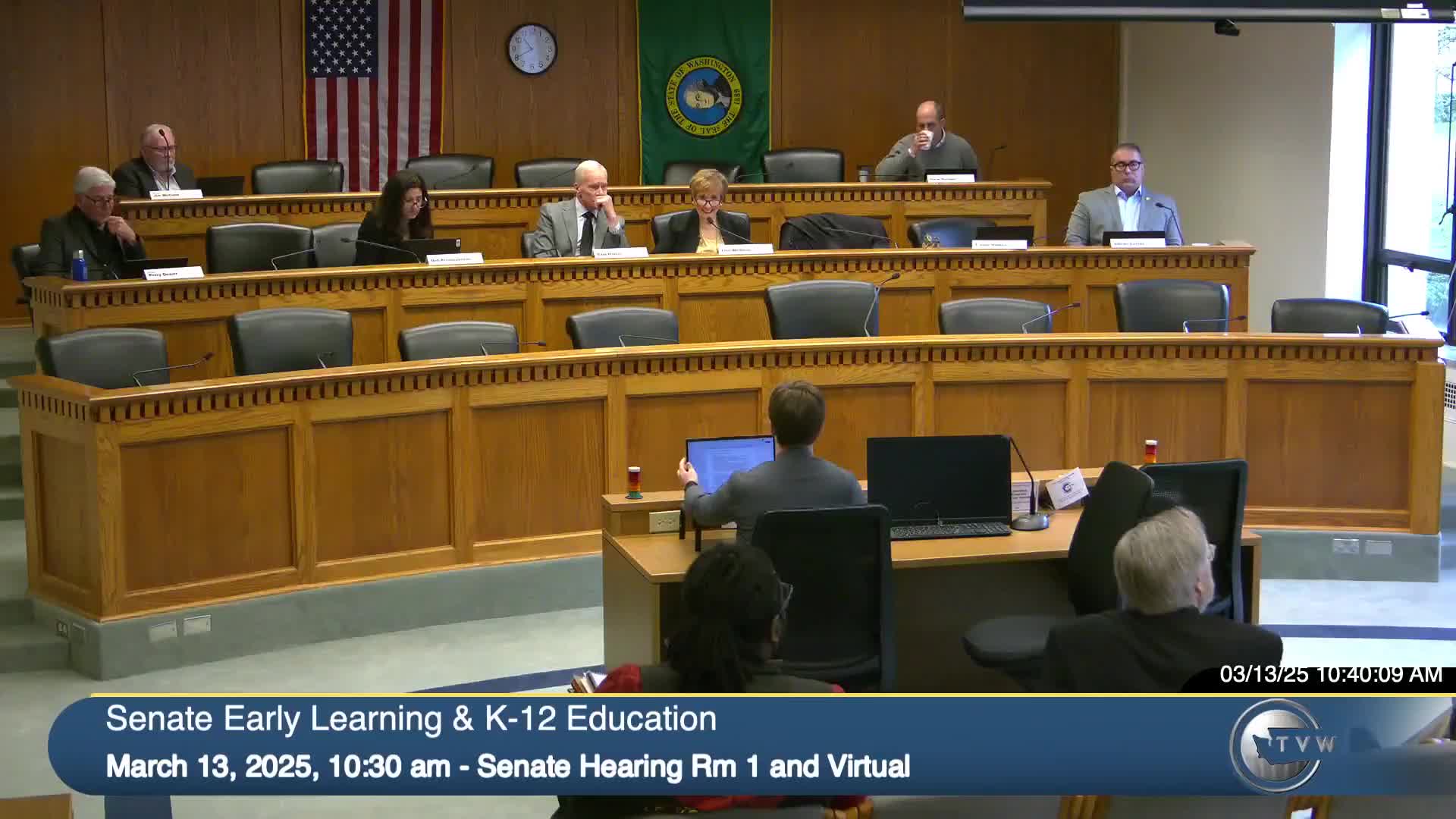
Committee staff Alex Fair Fortune summarized the legislative background: 2023 legislation made OSPI responsible for delivery and oversight of basic education services to certain justice‑involved students beginning in 2027 and established a Joint Select Committee on Governance and Funding for Institutional Education to recommend changes. The committee's report recommended that OSPI research service delivery options, including expanded roles for educational service districts (ESDs). The bill heard on this date modifies OSPI's duties, extends planning time by one year, requires OSPI to consult with stakeholders and to examine an additional service delivery option that preserves school districts’ roles. A fiscal note provided to the committee reflected estimated expenditures of approximately $19,000 per year for OSPI staff time.
OSPI witnesses and K‑12 stakeholders described the complex service delivery environment for juvenile justice education. Misha Chernisky, representing the superintendent of public instruction, told the committee there were 21 juvenile detention centers (JDCs) across the state and that education in those facilities is delivered by 16 entities: 12 school districts and four ESDs. Chernisky provided data showing 2,431 unduplicated students served and 3,884 duplicated student occurrences (the higher figure counts students who cycle in and out of facilities during a school year). She and other witnesses described frequent transfers between school districts, detention centers, long‑term rehabilitation centers such as Green Hill and Echo Glen, and community facilities that complicate credit transfer and continuity of instruction.
Simone Bowe of the Washington Education Association said educators favor thoughtful, well‑funded transitions that preserve educators' working conditions and allow districts that currently provide institutional education to remain engaged where appropriate. Representatives of ESDs urged additional stakeholder engagement time and recommended piloting new models before making statewide structural changes. ESD witnesses described an existing Education Advocate program that provides transition case management and noted that, last year, more than 91 percent of students supported by education advocates re-enrolled and returned to school after incarceration.
Supporters told the committee the extra year would permit OSPI and stakeholders to more thoroughly evaluate governance, funding and service delivery options, pilot models where appropriate, and address staffing, funding and labor implications before shifting statewide responsibility. The transcript records discussion and testimony but no formal committee vote on the measure during this hearing.