Get Full Government Meeting Transcripts, Videos, & Alerts Forever!
Get email alerts on the Civil Procedure topic
No spam. Unsubscribe anytime.
Judges, sponsor seek small change to small-claims notice language to preserve judicial discretion
Summary
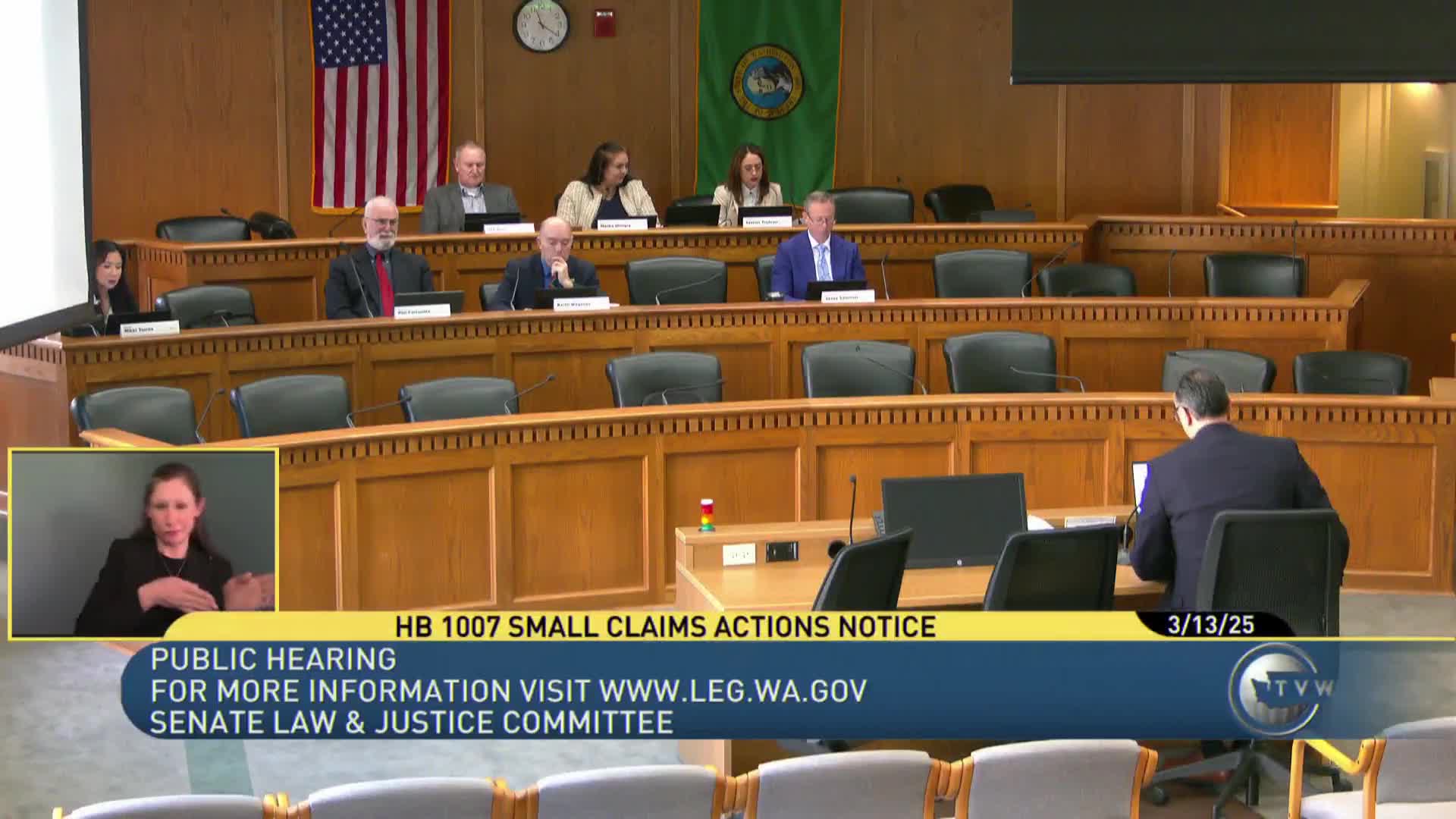
On March 13 the Law & Justice Committee heard House Bill 1007, a technical amendment that would change small‑claims notices to say a default judgment “may” be entered if a defendant fails to appear, rather than “will.”
The Law & Justice Committee considered House Bill 1007 on March 13, a technical change to the notice requirements in small‑claims proceedings. The bill would require court notice to state that failure to appear “may” result in a default judgment rather than saying a judgment “will” be entered.
Sponsor Representative Loe told the committee the amendment would allow judges discretion in situations where the plaintiff lacks proof of loss or where a defendant’s failure to appear stems from an unforeseen emergency. “This just gives our judges a little bit of discretion,” Loe said, describing the proposal as a “small little cleanup bill.”
Pierce County District Court Judge Carl Williams and Melissa Johnson of the District and Municipal Court Judges Association supported the change, telling the committee the amended language reflects current practice and the law around defaults would remain unchanged. Williams said the bill “reflects the current practice and actual law” and that requiring a notice that promises a specific outcome can create unfair expectations for litigants.
No committee action was taken; the bill remained at the hearing stage after supporters urged its passage as a technical correction.