Get Full Government Meeting Transcripts, Videos, & Alerts Forever!
Get email alerts on the Childcare Staff Qualifications topic
No spam. Unsubscribe anytime.
Bill would extend timeline and offer experience pathway for childcare worker qualifications
Summary
House Bill 16-48 would let licensed childcare providers in Washington delay meeting certain educational and credential requirements until at least Aug. 1, 2030, or five years from hire, and would create a DCYF‑led stakeholder group to recommend improvements to qualification and verification systems.
House Bill 16-48 would extend the timeframe for licensed child care providers to meet staff qualification requirements and create a temporary stakeholder group to identify strategies for improving staff qualification rules and verification processes.
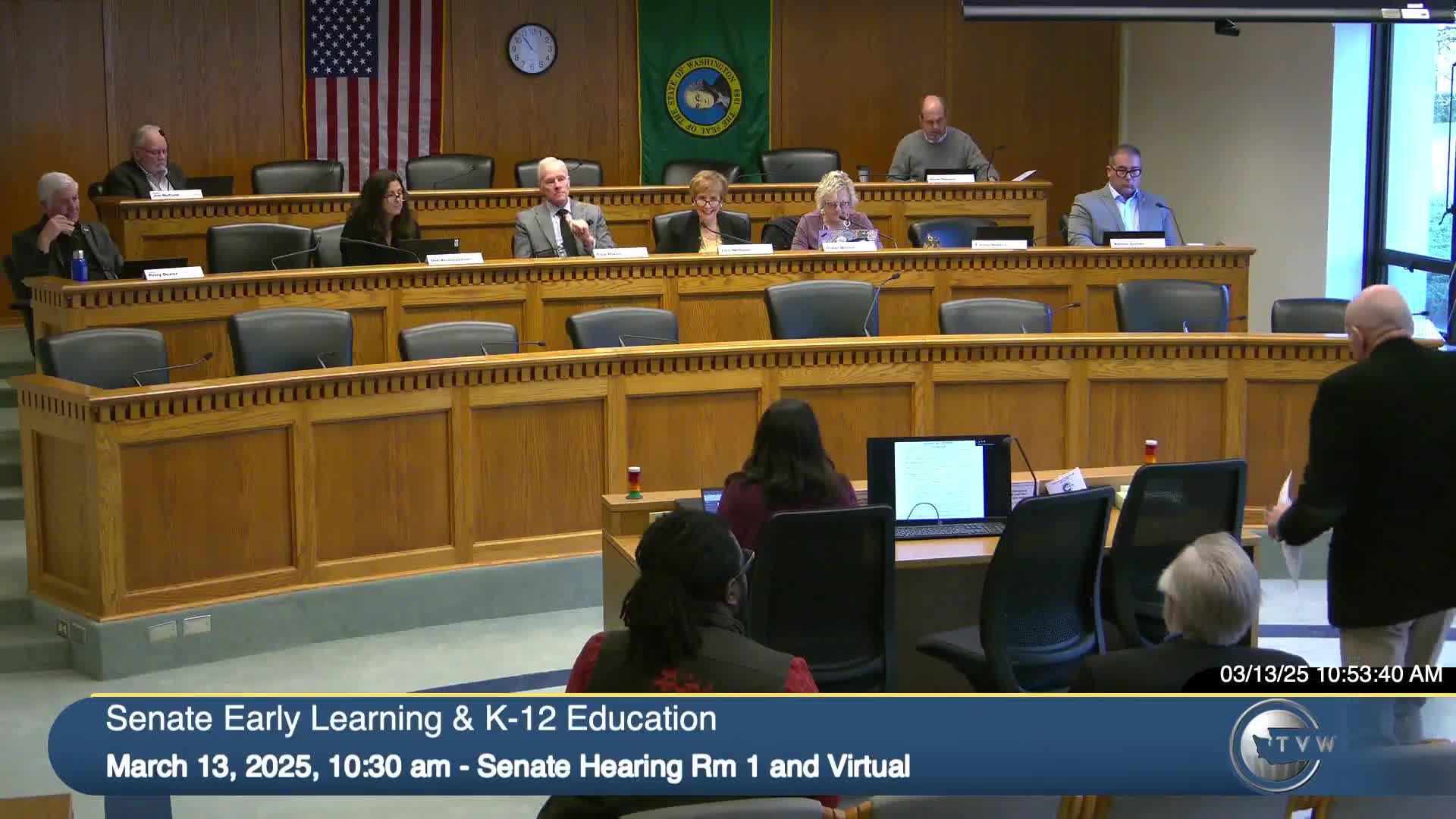
Eileen Cotto, committee staff, told the committee the bill directs the Department of Children, Youth and Families (DCYF) to allow licensed providers until at least Aug. 1, 2030, or five years from the date of hire — whichever is later — to comply with rules that require a provider to hold an initial or state certificate, complete community‑based training pathways, or demonstrate an experience‑based competency after at least five years of continuous service in a licensed facility. "The bill before you directs DCYF to allow licensed childcare providers until at least 08/01/2030 or 5 years from the date of hire, whichever is later, to comply with childcare licensing rules that require a provider to hold an initial, short or state certificate," Cotto said. She also said DCYF must convene a temporary stakeholder group and produce a report by Dec. 1, 2026; the fiscal note indicates no fiscal impact and the stakeholder group is to be convened using existing resources.
Sponsors and many provider witnesses said the extension responds to persistent workforce shortages, pandemic disruption and limited access to training and scholarships in some communities. Representative Tom Dent, a sponsor, said the bill is the product of multi-year work with childcare providers and associations and is intended to give experienced providers relief while state partners develop more accessible training and credential pathways. "This bill is a result of them working with staff. It's not me sitting now with staff and doing this. ... I think that they know their business much better than I do and that's why I listen to them and I've tried to help them get to this point," Representative Tom Dent said.
Opponents and some higher-education and early‑childhood professional groups urged amendments. Heather Robison, an early childhood instructor at Bates Technical College, said experience alone should not substitute for postsecondary education and that the bill should require credit‑bearing or accountable pathways if experience were to be accepted. Several other speakers, including instructors, student‑teachers and parent advocates, said formal education and ongoing professional development improve outcomes for children and that eliminating annual in‑service training as a condition for experience‑based competency would be harmful.
Committee members and DCYF representatives discussed the availability of community‑based training (PACE), scholarship supports such as Early Achievers and community college offerings, and whether current capacity could meet demand. DCYF testified that roughly 25% of the early‑childhood workforce currently meets requirements through existing pathways, and extending the deadline would increase that share. Several providers said PACE cohorts and scholarships are not yet large enough to serve statewide demand.
The transcript records testimony for and against the bill but no formal committee vote. The stakeholder group and report deadline in the bill will shape next steps if the Legislature advances the measure.