Get Full Government Meeting Transcripts, Videos, & Alerts Forever!
Get email alerts on the Animal Cruelty topic
No spam. Unsubscribe anytime.
Committee weighs wide-ranging changes to animal cruelty, fighting laws
Summary
Engrossed Substitute House Bill 1149 would expand criminal definitions and penalties for animal cruelty and animal fighting, reduce the confinement period that permits bystanders to provide food and water, and authorize broader entry and seizure powers for officers. Proponents said the changes close enforcement loopholes and align penalties with
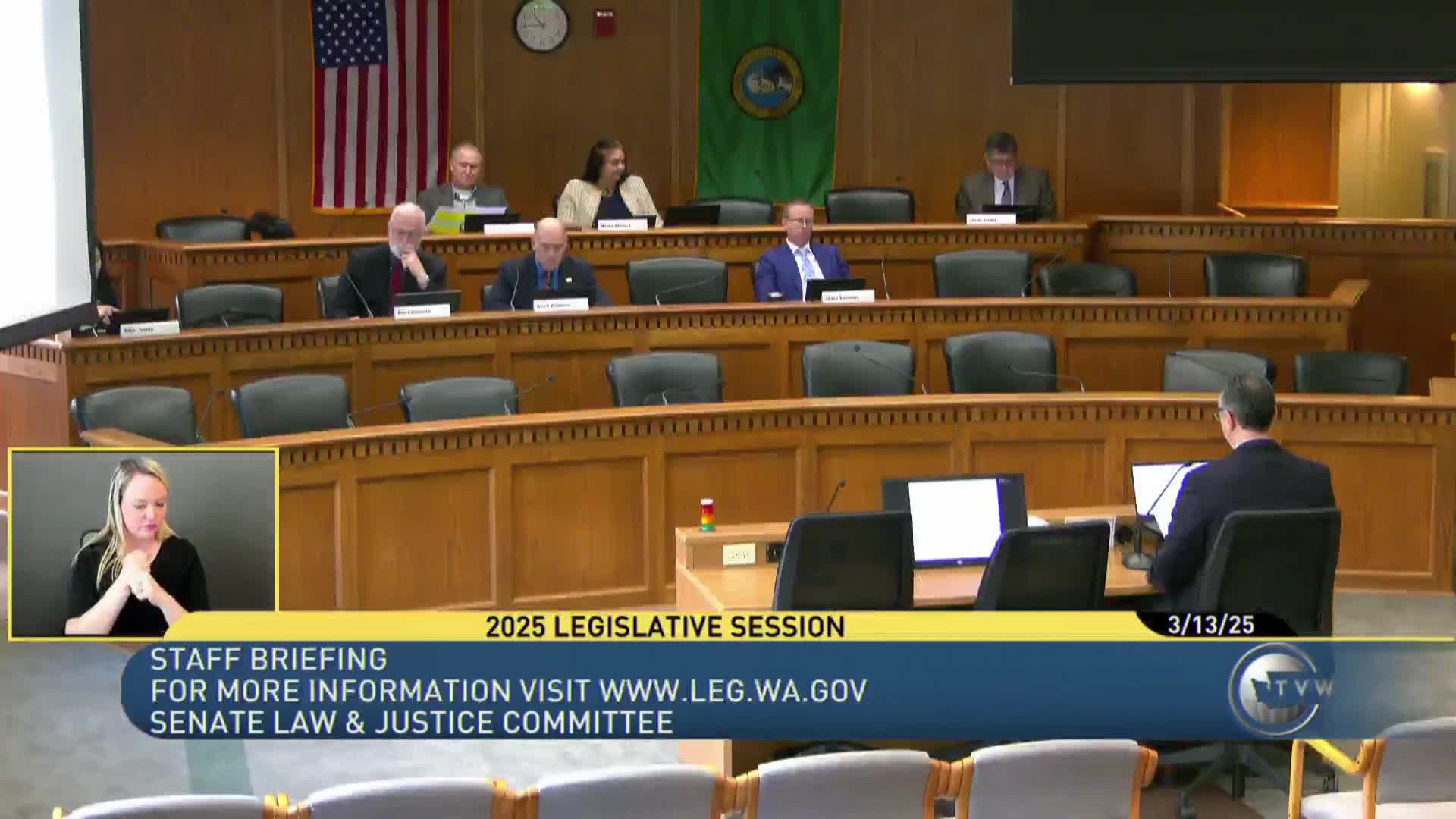
The Law & Justice Committee held an extended public hearing on Engrossed Substitute House Bill 1149 on March 13. The bill, as described by staff counsel Patrick Moore, would expand the crimes of animal cruelty and animal fighting, modify enforcement tools and penalties, and change certain investigatory thresholds.
Moore briefed the committee on key changes: expanding the definition of animal fighting to include aiding or abetting, designating animal fighting as a ranked felony on the sentencing grid (with higher ranking where intentional mutilation is involved), imposing permanent prohibitions on animal ownership for animal-fighting convictions, reducing the time an animal must be confined without necessary food and water from 36 to 24 hours, and authorizing law enforcement or animal control officers to enter before that 24-hour period if they have probable cause that an animal’s health or life is in imminent danger.
Multiple animal-welfare organizations and prosecutors urged enactment. Kirsten Gregory of Posada Safe Haven said research “overwhelmingly demonstrates a strong connection between animal cruelty, animal fighting, and violent crimes against humans.” Sarah Hawk of Joint Animal Services described an August 2023 local case where severe mutilation and minimal penalties prompted calls for tougher sentencing. Nathaniel Block, a Skagit County deputy prosecuting attorney, said the bill closes evidentiary and enforcement loopholes that have allowed offenders to avoid accountability, and that clearer definitions of terms such as “necessary food” would help juries.
The Washington State Sentencing Guidelines Commission testified in opposition to Section 7’s proposed ranking, arguing that its recommended ranking for animal fighting (with and without mutilation) should be seriousness level 3 rather than level 4 for mutilation-related offenses; the commission said level 4 would be inconsistent with other level-4 offenses. Animal‑owner and agricultural groups raised constitutional and due-process concerns about expanded entry and seizure authority. Debbie Goodrich of Flight Club Foundation (an avian rescue organization) warned against officers seizing animals before owners can respond, and asked for clearer protections for short-term caretaking practices.
Defense and civil-liberty groups also expressed concerns about expanded owner liability and possible overbreadth. A spokesperson for the Washington Defender Association said a provision that broadened owner liability had been the subject of negotiation and requested further clarification. Law-enforcement and gambling regulators testified they commonly encounter animal-fighting cases and supported stronger tools to disrupt related organized-crime activity.
The committee heard many public witnesses, including students and local shelter staff. No vote was taken; proponents and opponents asked sponsors and staff to continue refining specific sections, including sentencing rankings and language on owner liability and warrant standards.