Get Full Government Meeting Transcripts, Videos, & Alerts Forever!
Get email alerts on the Maritime Career Technical Education topic
No spam. Unsubscribe anytime.
Bill asks CTE task force to add maritime careers, ferries representative and Coast Guard credential pathway
Summary
House Bill 11-67 would add a WSDOT Ferries Division representative to the statewide career and technical education task force and direct the task force to develop recommendations to expand maritime career pathways aligned with U.S. Coast Guard credentialing.
House Bill 11-67 asks the statewide career and technical education (CTE) task force to expand and strengthen pathways for maritime careers and adds a representative from the Washington State Department of Transportation Ferries Division to the task force.
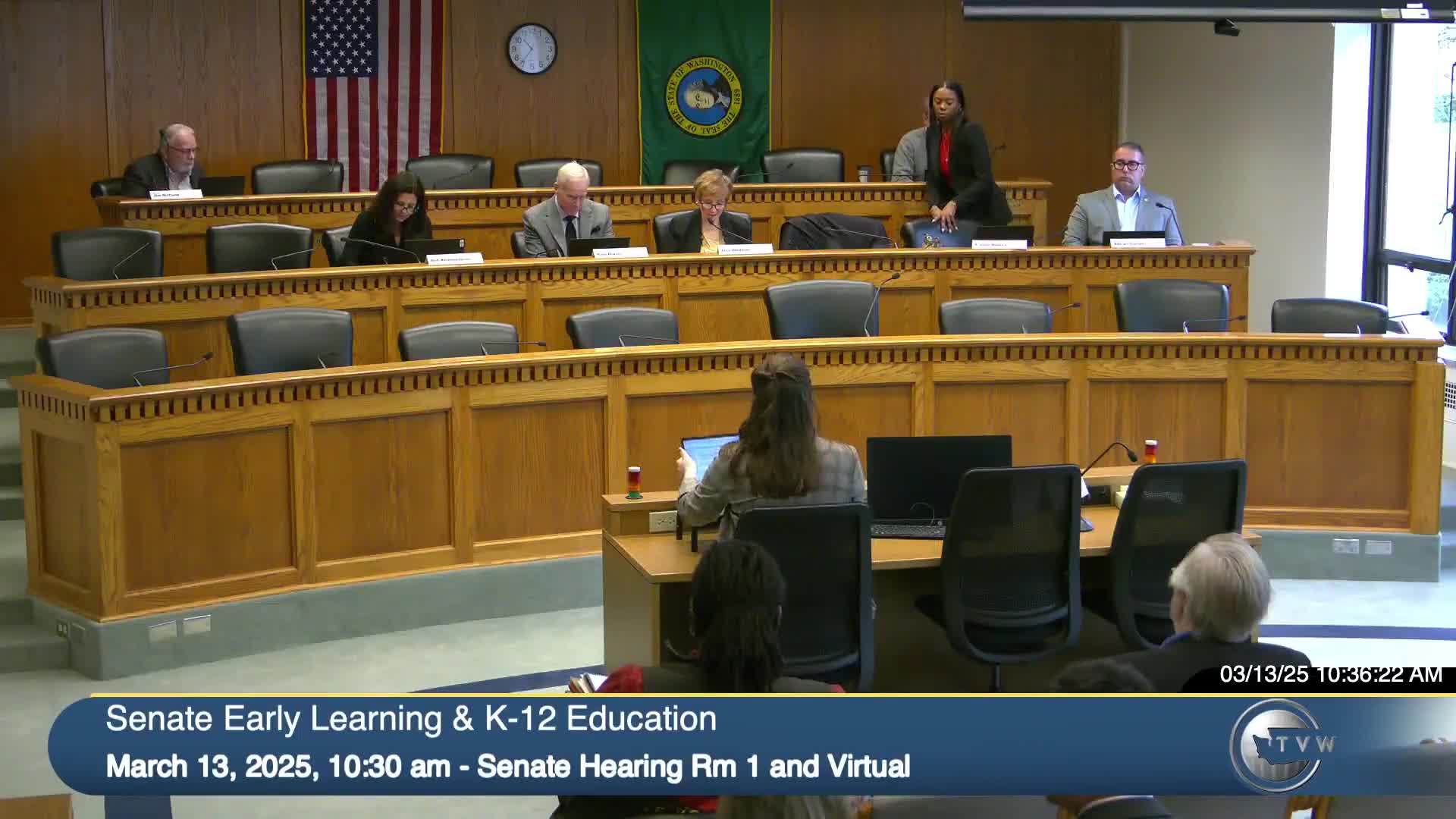
Committee staff Elena Becker described the bill as building on the work of the CTE core plus model and the task force established in 2024. "The bill before you asks the task force to do two additional things. First, it modifies the task force's membership by adding a representative from the Washington State Department of Transportation or WSDOT's Ferries Division. And the bill also directs the task force to develop recommendations for expanding and strengthening opportunities that lead or articulate to public and private post secondary education programs approved by the U.S. Coast Guard for awarding the standards of training, certification, and watchkeeping credentials," Becker said. She said a preliminary fiscal note shows no fiscal impact to OSPI; the Department of Transportation's fiscal analysis was still outstanding.
Representative Shavers, who carried the bill in the House, told the committee the measure would help close workforce gaps in maritime trades and build on existing CTE work. "Washington State has a rich maritime heritage, a rich maritime culture. And this will allow us to utilize that, tap into that, you know, ensure that our driven and talented young adults can serve in these public sector roles," Representative Shavers said.
Several industry and program witnesses testified in support. Tim Canoe, executive director of the Washington Association for Career and Technical Education, said maritime training can supply work skills for rural and urban employers, including ferry operations and dam-related industries. "With this type of training ... it starts with this kind of training," Canoe said, urging passage and noting minimal fiscal cost.
Dave Gehring, executive director for Core Plus Maritime, said the program already enrolls more than 2,000 students in nearly 30 high schools statewide in boat-building and related skills and that adding marine transportation would create a pathway to deckhand and merchant-marine positions. Captain Ryan C. Davis and Tony Adams, a professional mariner employed with Washington State Ferries and tribal maritime leader, described the Coast Guard certification processes and the ability for students as young as 16 to begin accruing sea time that can count toward later credentials. Captain Davis noted the Coast Guard form CG‑719S and other certificate requirements that programs helping students meet credentialing standards should address.
Witnesses with career-technical centers emphasized the diversity of maritime careers — including shipbuilding, composites manufacturing, recreational boating and underway transportation — and recommended the task force clearly define maritime sectors and align industry sponsors, school programs and credentialing opportunities.
No formal committee votes were recorded in the hearing transcript. Committee staff and witnesses said the bill would proceed to further committee work and that the task force's recommendations would be the venue for technical alignment and any fiscal implications.